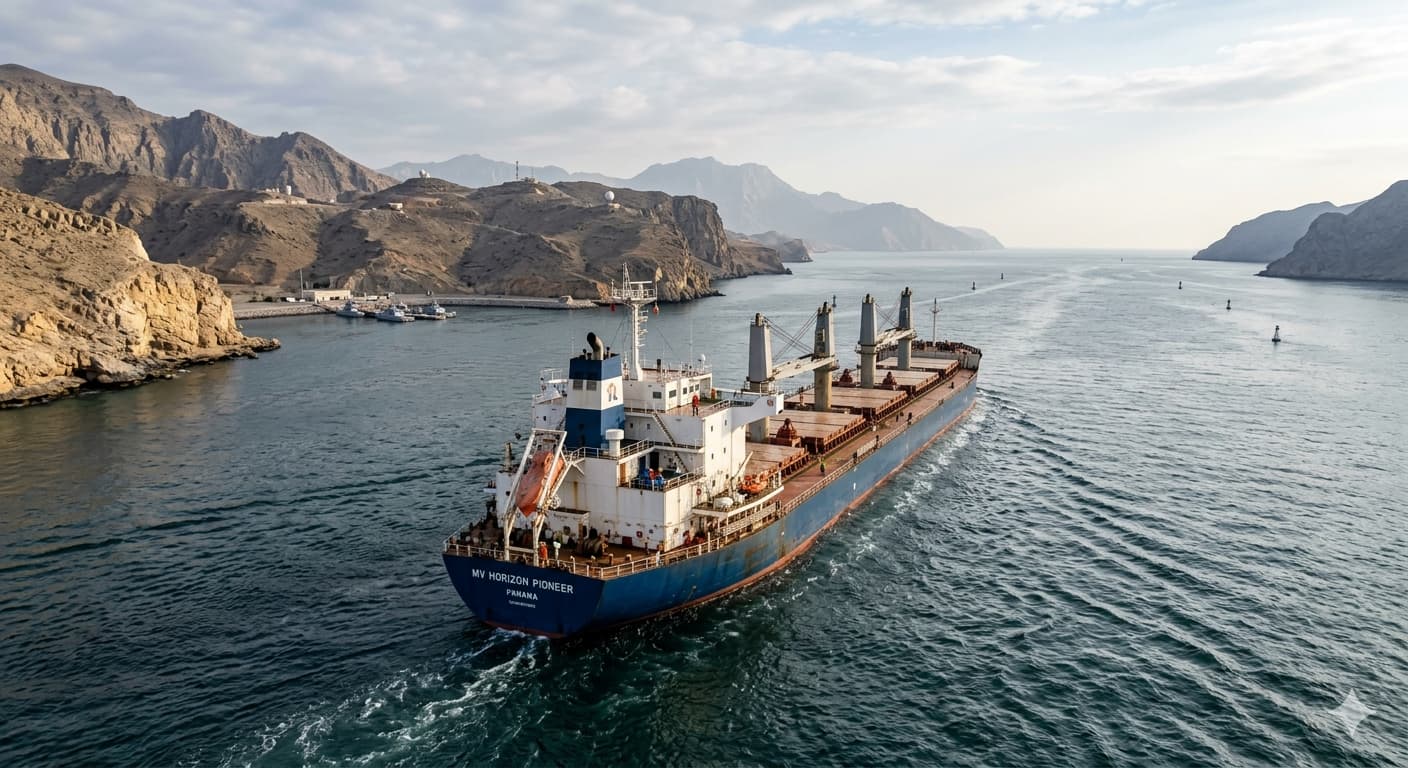
FROM CURIOSITY TO CHAIRPERSON: A JOURNEY SHAPED BY SCALE
There are careers built by circumstance, and there are careers built by conviction. Dr. Vandana Singh belongs firmly in the second category. With nearly three decades navigating the complexities of aviation and air cargo across India and Southeast Asia, her rise to Chairperson of the Aviation Cargo Federation at FAII is not the product of proximity to opportunity. It is the product of a deliberate, principled pursuit of impact in one of the world’s most demanding industries.
“Aviation is one of the few industries that connects economies in real time,” Dr. Singh reflects. “It is dynamic, precision-driven, and globally interconnected. I was drawn to that scale and complexity.” But it was cargo specifically that captured her imagination. Invisible to most, air cargo is the circulatory system of global trade, ensuring medicines arrive on time, perishables cross borders without spoilage, and industries stay operational through disruption. Dr. Singh understood its weight long before the world was reminded of it during the supply chain shocks of recent years.
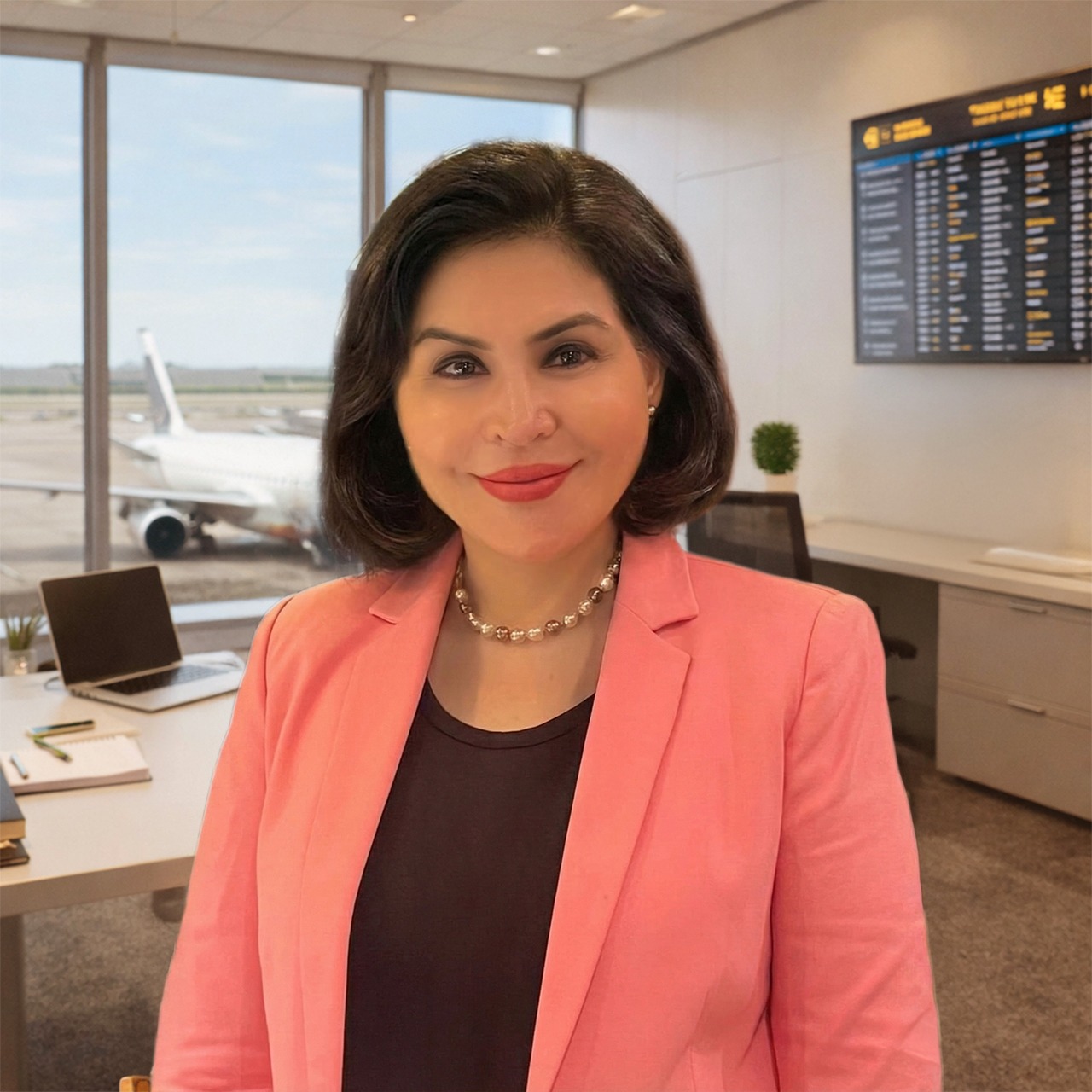
“Sustainable growth in aviation cargo is built not only on capacity but on trust. Long-term partnerships, disciplined execution, and the ability to navigate volatility became central to my professional philosophy.”
Her early years managing cross-border accounts across India and Southeast Asia were formative. Exposure to diverse regulatory systems, cultures, and operational frameworks cultivated something rare in a young professional: the ability to think strategically rather than transactionally. The insight that would define her entire career arrived not in a boardroom but through lived experience in the field.
“A defining moment in my leadership journey was realising that sustainable growth in aviation cargo is built not only on capacity but on trust,” she says. “Long-term partnerships, disciplined execution, and the ability to navigate volatility became central to my professional philosophy.” That philosophy has since become her calling card.
“Sustainable growth in aviation cargo is built not only on capacity but on trust.”
STRENGTHENING INDIA’S POSITION AS A GLOBAL AIR FREIGHT HUB
As Chairperson of Aviation Cargo at FAII, Dr. Singh finds herself at the intersection of policy, infrastructure, and ambition at a pivotal moment in India’s logistics evolution. Expanding pharmaceutical exports, electronics manufacturing, and the explosive growth of cross-border e-commerce have elevated air cargo from a support function to a strategic national asset.
Her agenda at FAII is ambitious and grounded. The focus spans enhanced airport cargo infrastructure, multimodal connectivity, regulatory simplification, and digital integration across stakeholders. “Speed and transparency are essential in global cargo competitiveness,” she explains. “India must reduce dwell times, streamline customs procedures, and adopt digital documentation frameworks at scale.”
Beyond domestic efficiency, Dr. Singh is championing a bolder vision: positioning India not merely as a consumption market but as a transshipment and consolidation hub. Situated between Europe and Southeast Asia, India’s geographic advantage is undeniable. What remains is the policy alignment and infrastructure execution to convert that geography into competitive advantage. This is where her advocacy is most pointed.
WHEN RELATIONSHIPS OUTPERFORM RATES: THE TRANSFORMATION OF GLOBAL ACCOUNT MANAGEMENT
Few shifts in commercial aviation have been as consequential as the move from rate-centric competition to value-centric partnership. Dr. Singh has not just observed this transformation. She has been one of its architects.
Global account management, in her view, has become an exercise in strategic alignment. Clients no longer seek simply the lowest price per kilogram; they seek customized cargo solutions, capacity commitments, risk mitigation strategies, and performance metrics. “Sales is no longer about selling space,” she states plainly. “It is about co-creating logistics strategies aligned with customers’ supply chain goals.”
The insight she returns to most often is one that sounds simple but requires years to truly understand: relationship capital often becomes more valuable than financial capital. Trust-based partnerships create resilience during disruptions, whether caused by geopolitical shifts, fuel price volatility, or sudden capacity constraints. When the world fractures, it is the partnerships built on integrity that hold.
“Relationship capital often becomes more valuable than financial capital. Trust-based partnerships enable resilience when disruptions strike.”
LEADING WHERE FEW WOMEN HAVE STOOD BEFORE
Aviation cargo has long been a male-dominated arena. Board-level representation for women has historically been sparse, and the path to senior leadership has rarely been clearly marked. Dr. Vandana Singh walked it anyway, and her account of that journey is striking in its clarity and absence of bitterness.
“Early in my career, credibility often had to be demonstrated repeatedly,” she acknowledges. “Leadership meetings, negotiations, and strategic discussions were not always inclusive spaces.” Her response was not to seek accommodation but to build an undeniable record. “Results create recognition. I ensured that my decisions were data-backed, commercially sound, and operationally viable.”
She is clear-eyed about what change requires: consistency and time. “Change in perception does not happen overnight. It happens gradually when leadership is demonstrated with clarity, resilience, and professionalism.” There is no grievance in this observation, only the measured confidence of someone who decided early on that performance would be her most powerful argument.
TECHNOLOGY AS TRANSFORMATION, NOT DECORATION
Dr. Singh’s approach to technology mirrors her approach to everything else: grounded, purposeful, and oriented toward genuine impact. She is not swayed by buzzwords. Her assessment of what will shape global cargo operations by 2026 reflects both forward vision and operational discipline.
Three developments stand out in her analysis. The first is end-to-end digital cargo platforms that integrate airlines, freight forwarders, customs, and ground handlers into a single coherent ecosystem. The second is AI-driven demand forecasting and route optimization, which she sees as transformative for capacity utilization and cost control. The third is sustainability, specifically the adoption of Sustainable Aviation Fuel and transparent carbon reporting, which she views as both an ethical imperative and a commercial necessity.
“Technology must not be viewed as an add-on,” she insists. “It must be embedded into operational culture.” Blockchain-based documentation, predictive analytics, and terminal automation are not distant aspirations for Dr. Singh. They are near-term tools that must be implemented with the same discipline applied to any other operational commitment.
INDIA’S GEOPOLITICAL MOMENT AND THE E-COMMERCE SURGE
India’s emergence as a major force in global e-commerce is reshaping cargo demand in ways that are only beginning to be fully understood. Faster delivery expectations, cross-border small parcel volumes, and the demand for time-sensitive logistics are expanding at a pace that challenges existing infrastructure.
Simultaneously, India’s geopolitical positioning presents an opportunity that Dr. Singh discusses with unmistakable urgency. As global supply chains diversify away from single-source dependencies, India has the potential to become a resilient alternative manufacturing and distribution hub. The corridors connecting East and West run through Indian airspace. What determines whether India captures that opportunity is infrastructure modernization, trade facilitation reforms, and cargo capacity expansion executed with genuine commitment.
At FAII, Dr. Singh is working to ensure that the aviation cargo ecosystem is positioned to meet this moment. The work involves not only policy advocacy but the harder task of building a culture of collaboration among stakeholders who have historically operated in isolation.
BUILDING THE ECOSYSTEM: COLLABORATION AS COMPETITIVE STRATEGY
“Collaboration is central to cargo efficiency,” Dr. Singh says, and her work at FAII gives that conviction institutional form. The federation facilitates dialogue among airlines, freight forwarders, airport operators, policymakers, and technology providers, creating a forum where unified standards and collective problem-solving replace fragmented, reactive approaches.
Her philosophy of partnership extends to the boardroom and beyond. Long-term business relationships, in her framework, are built on strategic compatibility, mutual financial sustainability, clear service benchmarks, and open communication. Volume is not the goal. Alignment is. “Partnerships thrive when both parties are prepared to invest, not only financially but in transparency and collaboration.”
This same collaborative instinct shapes her vision for inclusivity within the sector. Structured mentorship programs, transparent promotion pathways, and bias-free evaluation systems are not aspirational gestures for Dr. Singh but operational necessities. Diverse leadership teams, she argues with conviction, bring broader perspectives and measurably improved decision-making outcomes.
A LEGACY WRITTEN IN IMPACT, NOT TITLES
When Dr. Vandana Singh speaks about the legacy she hopes to leave, she does not reach for the language of personal achievement. Her vision is larger and more enduring than any individual career milestone.
“I hope to contribute to positioning India as a globally respected air cargo hub built on efficiency, integrity, and innovation,” she says. For women leaders watching her journey, she offers something equally significant: proof that resilience, discipline, and long-term vision can overcome structural barriers that were not designed to yield easily.
“Leadership is not defined by gender,” she states with quiet certainty. “It is defined by impact.” If the next generation of aviation professionals enters this industry with greater confidence and fewer limitations, she considers that a legacy worth every difficult mile of the journey.
In an industry that moves at the speed of global trade, Dr. Vandana Singh is one of the clearest reasons to believe that India’s most important flight has not yet taken off.