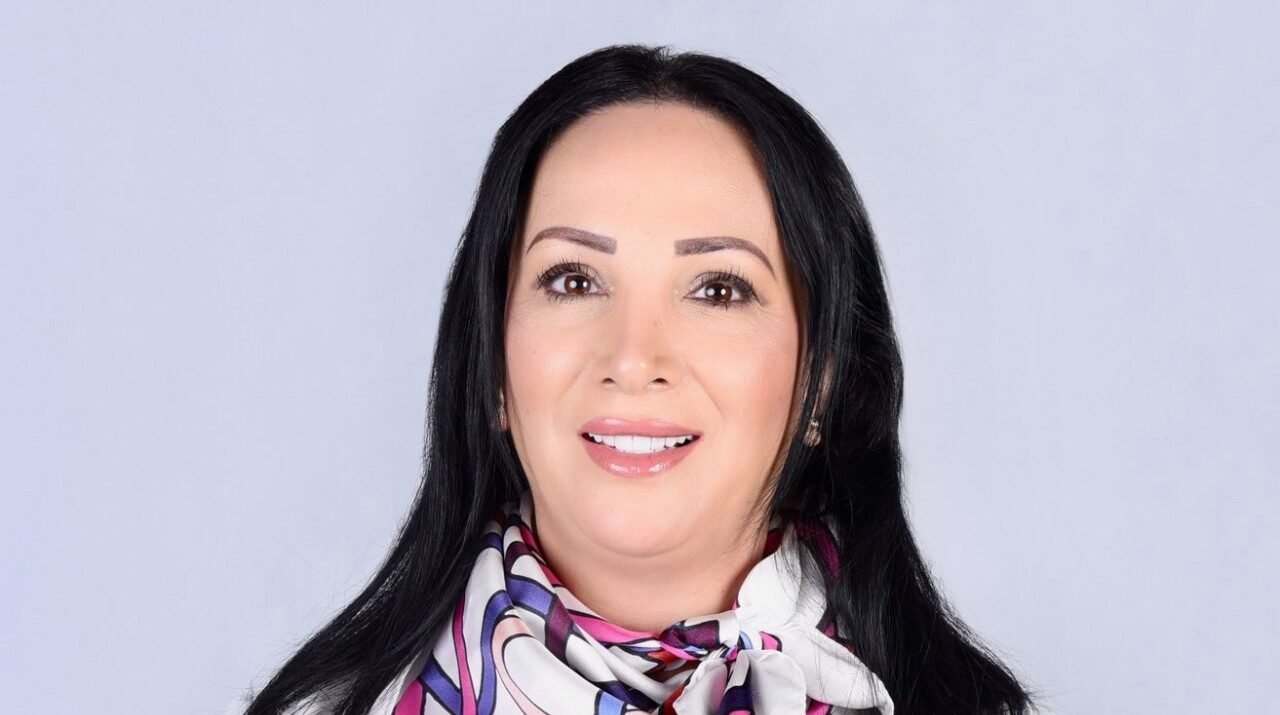
In an era when healthcare is being reshaped by technology, data, innovation, and rising expectations, meaningful leadership requires the ability to see beyond a single perspective. Dr. Lina Fahima Al stands at the intersection of clinical insight, business strategy, and innovation, bringing together more than two decades of experience and a multidisciplinary academic journey to address some of healthcare’s most complex challenges.
Her transition from nursing into healthcare strategy and business development was a natural evolution driven by a desire to understand healthcare beyond the clinical setting. Working on the frontline gave her firsthand insight into how decisions involving technology, resources, processes, and leadership can directly influence patient outcomes. It also inspired a broader question that would shape her professional journey: How can healthcare become more efficient, sustainable, innovative, and ultimately more effective for the people it serves?
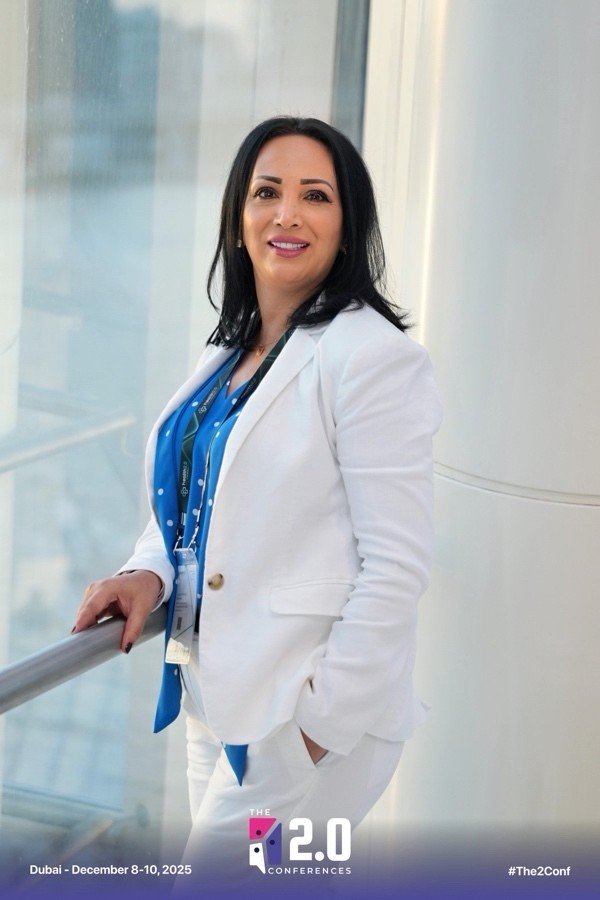
Bridging Clinical Insight, Strategic Vision, and Innovation to Shape a Smarter and More Human Future for Healthcare
Today, her approach remains deeply connected to that clinical foundation. She leads with empathy while maintaining a strong focus on evidence, outcomes, and practicality, ensuring that strategic decisions remain connected to the people responsible for implementing them.
A MULTIDISCIPLINARY FOUNDATION FOR STRATEGIC LEADERSHIP
Dr. Lina’s perspective on healthcare has been shaped by an academic journey spanning nursing, healthcare management, business administration, innovation, and a doctorate in business administration. Each discipline has contributed a different lens through which she evaluates challenges and opportunities.
Nursing taught her the realities of patient care. Healthcare management developed her understanding of systems and organizations. Her MBA strengthened her knowledge of strategy, finance, and business, while her doctorate enhanced her ability to analyze complex problems and translate evidence into strategic decisions. Her studies in innovation further reinforced her commitment to questioning traditional approaches and seeking better solutions.
This multidisciplinary foundation has shaped a consulting philosophy centered on connecting clinical relevance, financial sustainability, operational practicality, and measurable value. For Dr. Lina, a strategy cannot succeed merely because it looks compelling on paper. It must address why a problem exists, understand who is affected, examine what the data reveals, and establish how the solution can realistically be implemented.
By bridging the perspectives of healthcare professionals, business leaders, and decision makers, she focuses on transforming ideas into actionable strategies capable of creating lasting value.
REDEFINING HEALTHCARE THROUGH STRATEGY AND SUSTAINABLE GROWTH
Healthcare organizations today face the difficult task of balancing clinical quality, financial pressures, regulatory requirements, technological change, and growing patient expectations. According to Dr. Lina, one of the most common challenges is not necessarily the absence of good ideas, products, or services. Instead, organizations often struggle to translate their potential into sustainable growth and measurable impact.
Her approach begins with understanding the organization as a whole, including its market, stakeholders, competitive environment, and operational realities. From there, she identifies gaps and opportunities while developing practical strategies around business development, market access, partnerships, stakeholder engagement, portfolio development, and growth.
Equally important is her commitment to bridging strategy and execution. Strategic objectives must become clear priorities, measurable actions, and realistic timelines. As she believes, healthcare organizations can reduce complexity and make better informed decisions only when strategy remains closely connected to practical implementation and the clinical purpose behind the business.
INNOVATION WITH PURPOSE, NOT INNOVATION FOR ITS OWN SAKE
For Dr. Lina, healthcare innovation must always answer a fundamental question: Does it create meaningful value?
Innovation should improve patient outcomes, clinical efficiency, safety, access, or the overall healthcare experience. She believes organizations must create environments where people can question existing processes, share ideas, and test new approaches. At the same time, creativity must be supported by disciplined evaluation.
Clinical evidence, patient safety, regulatory requirements, operational feasibility, and financial sustainability must all be considered when assessing new ideas. She also believes frontline healthcare professionals should play a central role in innovation because their understanding of clinical realities can strengthen both the quality and adoption of new solutions.
Her experience in innovation, including Executive Education at INSEAD, reinforced her belief that creativity and disciplined execution must work together. When managed effectively, innovation can strengthen operational excellence by helping organizations work smarter, reduce waste, improve outcomes, and deliver better care.
LISTEN BEFORE YOU LEAD: THE HUMAN SIDE OF TRANSFORMATION
Despite the accelerating influence of technology, Dr. Lina believes sustainable transformation begins with people.
Technology can be redesigned and processes can be improved, but lasting change happens when people understand its purpose and feel involved in the journey. One principle that consistently guides her leadership is simple: listen before you lead.
Understanding different perspectives, recognizing resistance, and identifying the practical challenges faced by teams are essential before meaningful change can take place. She also emphasizes clarity and alignment, ensuring people understand not only what is changing, but why it matters and how success will be measured.
Her leadership combines empathy with accountability. Teams need support through uncertainty, but they also need clarity regarding expectations and outcomes. By aligning people, processes, and technology, she seeks to create transformation that delivers both immediate results and long term sustainability.
CREATING VALUE THROUGH COLLABORATION AND ADOPTION
One initiative that reflects this philosophy involved the market development and adoption of innovative medical technologies. The challenge extended far beyond introducing a new product. It required understanding clinical needs, engaging stakeholders, navigating procurement and regulatory processes, and demonstrating sufficient value to support sustainable adoption.
Working across healthcare professionals, hospital decision makers, commercial teams, and operational stakeholders, Dr. Lina helped develop an approach connecting clinical value with business sustainability. Market analysis, stakeholder engagement, education, and continuous adaptation were all essential to the process.
The experience reinforced an important lesson: sustainable growth in healthcare is built on value, not simply sales. A solution must address a genuine clinical or operational need, while the people using it must understand and believe in its value.
It also demonstrated that meaningful transformation requires patience, persistence, strong relationships, and a deep understanding of the healthcare system.
LEADING THE NEXT ERA OF INTELLIGENT HEALTHCARE
Looking ahead, Dr. Lina sees artificial intelligence and data driven decision making as major forces shaping the next decade of healthcare. AI has significant potential across clinical decision support, predictive analytics, workflow optimization, and administrative automation. She also recognizes the potential of generative AI when supported by strong governance, data privacy, clinical oversight, and clear accountability.
Remote patient monitoring, digital health platforms, real time health data, and interoperable systems will also transform how organizations manage patients, resources, and outcomes.
Yet technology alone will not determine success. The real competitive advantage will come from how effectively organizations integrate technology into their operating models and use data to make better decisions.
The healthcare leaders of the future, she believes, must understand both technology and strategy. They must recognize what is possible, where genuine value can be created, how solutions can be implemented responsibly, and how innovation can improve outcomes without adding unnecessary complexity.
A VISION FOR THE MIDDLE EAST AND THE NEXT GENERATION OF LEADERS
Dr. Lina envisions a Middle East that moves beyond adopting global healthcare innovations and increasingly becomes a leader in developing and implementing them. With the region’s resources, talent, and ambition, she sees an opportunity to build healthcare systems that are more integrated, preventive, technology enabled, and centered around measurable outcomes.
Regional collaboration, digital health, AI, preventive care, personalized medicine, and stronger public and private partnerships will all contribute to this transformation. However, she believes equal investment must be made in people, leadership, education, research, and healthcare professionals capable of thinking beyond traditional boundaries.
Being recognized as one of the Middle East’s Leading Women in Healthcare Strategy and Innovation in 2026 represents both an honor and a responsibility. For Dr. Lina, the recognition reflects the value of bringing together different disciplines, experiences, and perspectives to create meaningful change.
Her message to the next generation, particularly women in healthcare, is one of courage and possibility. Clinical knowledge and lived experience can extend far beyond traditional roles and influence healthcare as leaders, strategists, innovators, and decision makers.
She encourages women not to wait for permission to lead, but to build expertise, find their voice, take calculated risks, and create opportunities for themselves and others. As she believes, when one woman advances, she can open the door for many more.
THE LEGACY OF LEADING CHANGE WITH PURPOSE
Dr. Lina Fahima Al represents a new generation of healthcare leaders who understand that the future cannot be shaped by clinical expertise, technology, or business strategy in isolation. The most meaningful progress happens when these perspectives work together.
Her journey from nursing to healthcare strategy, business development, and innovation demonstrates that leadership is not defined by following a single path. It is shaped by continuous learning, intellectual curiosity, the courage to challenge established thinking, and the ability to turn ideas into meaningful action.
As healthcare continues its transition toward a smarter, more connected, predictive, personalized, and accessible future, her philosophy remains firmly grounded in the human purpose behind transformation. Technology can enhance healthcare, but it cannot replace clinical judgment, empathy, and leadership.
For Dr. Lina, the future is not simply about becoming more digital. It is about becoming smarter, more connected, more accessible, and ultimately more human. And for those willing to challenge the status quo and ask whether there is a better way, the opportunity to shape that future has never been greater.