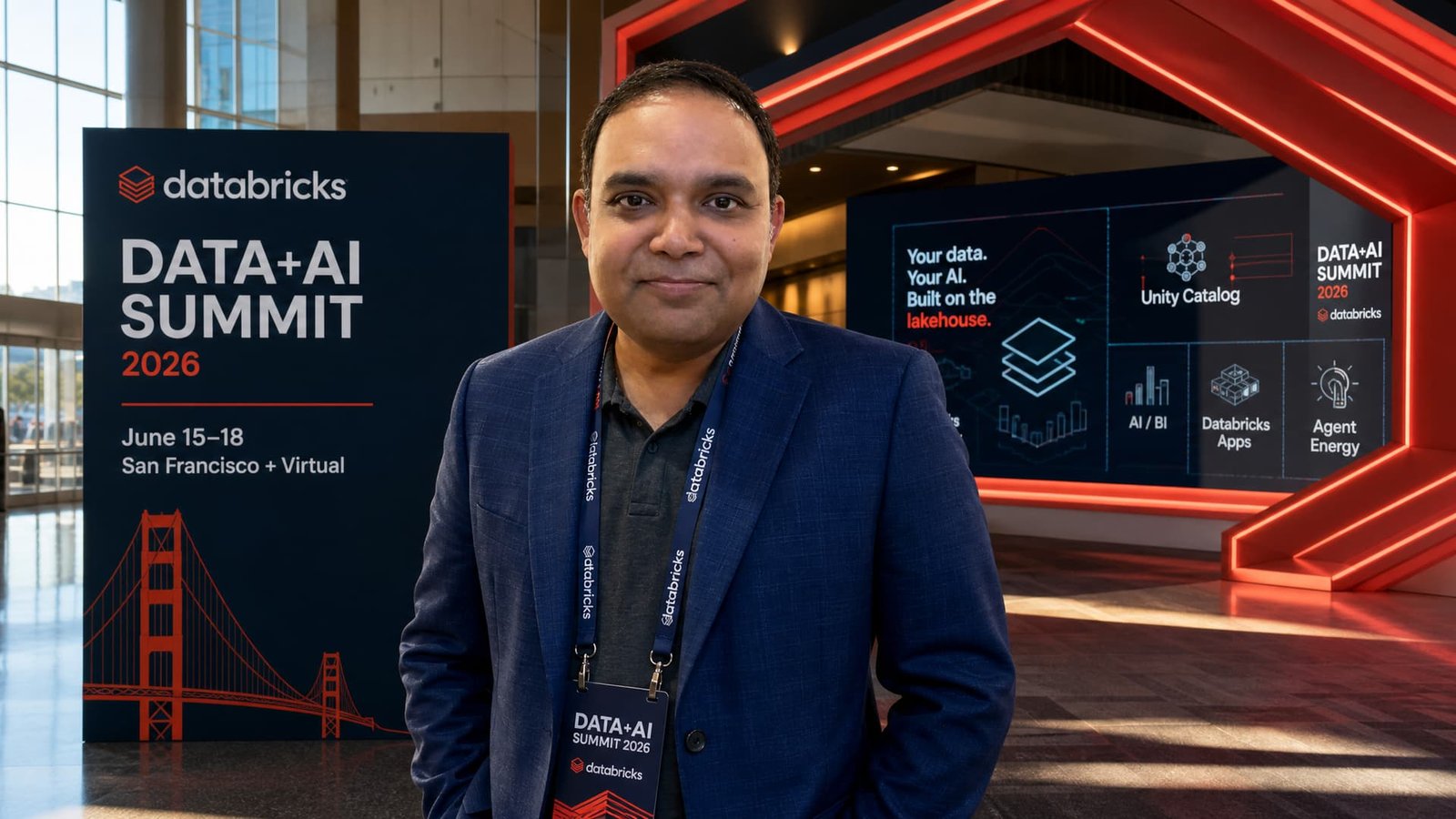
In an era where organizations are surrounded by unprecedented volumes of information, the ability to transform data into meaningful intelligence has become one of the defining advantages of modern business. For Mr. Bhaskar Dey, this opportunity has shaped a career spanning more than 18 years across data, artificial intelligence, analytics and digital transformation.
His journey began with a powerful observation. Organizations possessed enormous amounts of valuable information, yet many lacked the right tools, frameworks and strategic direction to convert that information into meaningful action. He saw that companies making decisions through data could move faster, respond more effectively to market changes and build stronger competitive advantages. That realization became the foundation of his professional journey.
Today, what continues to inspire him is the tangible impact technology can create for businesses and people’s livelihoods. From optimizing processes through artificial intelligence to mentoring teams that go on to lead innovation, his work reflects a commitment to creating measurable and lasting value. He is particularly energized by the growing democratization of AI, which is enabling organizations of different sizes to access advanced analytics and machine learning capabilities.
STRATEGY ROOTED IN INDUSTRY REALITY
Working across sectors including CPG, Hi Tech, Telecommunications, Retail and Supply Chain has reinforced one important principle in Bhaskar’s approach: every industry has its own challenges, operating realities and business priorities.

“Technical skills can be built over time, but nurturing long term customer relationships is what matters the most.”
Rather than imposing a universal technology strategy, he begins with deep industry immersion. Understanding pain points, regulations, market dynamics and the competitive environment provides the foundation for building an effective roadmap.
For CPG organizations, the emphasis may be on demand forecasting, consumer behavior analytics and supply chain efficiency. In the technology sector, product innovation analytics, customer churn prediction and real time performance monitoring can become critical priorities. Telecommunications requires sophisticated network and customer analytics, while retail organizations increasingly depend on inventory optimization, customer journey mapping and omnichannel intelligence. Supply chain transformation demands predictive capabilities that support demand and supply balancing, risk mitigation and logistics optimization.
For Bhaskar, strategy must reflect the organization’s structure, maturity and objectives. By assessing data maturity, technology infrastructure and business priorities, he develops tailored roadmaps that balance immediate business opportunities with long term capability building.
AI AS A BUSINESS TRANSFORMATION
Artificial intelligence presents opportunities that are changing the very nature of how organizations operate. Bhaskar sees the potential for AI to automate complex cognitive work, deliver personalization at scale and enable business models that were previously difficult to imagine.
Generative AI is accelerating productivity and making advanced capabilities more accessible across knowledge based work. Organizations that implement AI effectively can improve the speed and quality of decision making, increase operational efficiency and enhance customer experiences.
Yet the path to AI adoption is not without challenges. Data quality remains fundamental. AI systems depend on reliable data, and organizations without strong infrastructure and governance can struggle to scale their initiatives. Talent availability, ethical accountability, explainability and organizational readiness also require serious attention.
Bhaskar believes successful organizations will avoid treating AI as merely a technology project. Instead, they must approach it as a wider business transformation that brings together talent, infrastructure, governance and culture.
WHEN DATA CREATES MEASURABLE BUSINESS VALUE
One of the most powerful examples of Bhaskar’s data driven approach involved a major telecommunications provider facing customer churn of more than 25 percent annually, resulting in significant revenue losses.
Although the organization had access to substantial amounts of data, it lacked the analytical framework required to turn information into action. A comprehensive customer analytics platform was developed by integrating billing information, network usage patterns, customer service interactions and competitive intelligence.
Advanced machine learning models helped identify churn risk factors with 87 percent accuracy. More importantly, customers could be understood according to the specific reasons behind their potential departure. Some were highly sensitive to pricing, others were affected by service quality and others faced competitive alternatives.
This insight enabled targeted action rather than a single retention strategy. Dynamic pricing supported price sensitive customers, service improvements addressed specific regional issues and focused offers helped protect high value customers. Early warning capabilities also enabled proactive engagement.
Within 18 months, the organization reduced churn to 18 percent and recovered approximately $10 million in annual revenue. Beyond the financial results, the transformation changed how decisions were made, helping the organization move from reactive and intuition based decision making toward a more predictive and evidence based culture.
BUILDING THE FOUNDATION FOR DATA ROI
For Bhaskar, successful data transformation must always answer a fundamental question: what business value is being created?
His approach to data ROI begins with a robust data foundation supported by modern cloud based platforms, clear governance, strong quality standards and defined ownership. Without these fundamentals, large volumes of information can quickly become difficult to manage rather than a source of competitive advantage.
The next priority is democratizing insights. A reliable source of truth, supported by modern business intelligence platforms and self service analytics, allows more employees to explore information and make informed decisions without unnecessary bottlenecks.
He also emphasizes the importance of prioritization. Not every analytics initiative delivers equal value. Organizations should evaluate opportunities according to potential impact, complexity and strategic alignment, while building momentum through initiatives that can be effectively operationalized.
However, technology alone is not enough. Bhaskar believes a genuinely data driven culture requires training, data literacy and the celebration of successful outcomes. Organizations must also measure adoption, insight quality and business impact, continuously refining their approach as their capabilities evolve.
THE POWER OF AN INTELLIGENT TECHNOLOGY ECOSYSTEM
Modern business transformation depends on technologies working together rather than in isolation. Bhaskar views cloud ecosystems as the scalable foundation that allows organizations to access computing resources, experiment rapidly and expand successful initiatives.
Platforms such as Databricks can support enterprise scale data processing and AI development, while Tableau helps make complex information more accessible through visualization and analytics. Adobe’s capabilities can connect customer experience data with intelligent campaign activation, while Google’s AI and data technologies can strengthen predictive and generative AI capabilities.
When these capabilities are effectively integrated, they create a continuous cycle of insight, action, learning and optimization. The result is not simply a collection of technology platforms, but an ecosystem designed to help businesses become more intelligent and responsive.
LEADING PEOPLE THROUGH THE AGE OF INTELLIGENT INNOVATION
Bhaskar’s leadership philosophy extends beyond technical expertise. He believes high performing teams require intellectual curiosity, adaptability and a genuine willingness to understand not only how something works but why it matters.
Psychological safety is equally important. Innovation depends on experimentation, learning and the ability to acknowledge mistakes. Leaders who create fear around failure can unintentionally suppress the creativity required for meaningful discovery.
He also values diverse perspectives. Bringing together data engineers, analysts, domain experts and business stakeholders can produce stronger solutions by combining technical knowledge with business understanding.
Purpose alignment, coaching and mentorship are central to his approach. When individuals understand how their work contributes to wider business outcomes, they develop greater ownership and motivation. At the same time, autonomy must exist alongside accountability, giving talented people the freedom to solve problems creatively while maintaining responsibility for results.
CULTURE IS THE TRUE CATALYST OF TRANSFORMATION
One of Bhaskar’s strongest convictions is that technology is rarely the only factor determining the success of digital transformation. Organizational culture, leadership and change management often make the difference between adoption and failure.
Organizations can invest heavily in advanced platforms yet struggle if employees are not ready to change how they work. A culture that encourages experimentation, challenges assumptions and learns from failure creates the conditions for data and AI initiatives to succeed.
Leadership must reinforce this culture through action. When senior executives genuinely use data to inform decisions, they establish credibility for analytical thinking across the organization. Change management is equally essential because transformation affects roles, skills and established decision making processes.
Bhaskar advocates balanced investment across technology infrastructure, culture and change management, and talent development. His experience demonstrates that intelligent transformation requires organizations to develop all three dimensions rather than focusing overwhelmingly on technology.
A VISION FOR THE FUTURE OF INTELLIGENT ENTERPRISE
Looking toward 2026 and beyond, Bhaskar sees several developments shaping the next phase of business innovation. Agentic AI could enable systems to operate with increasing autonomy within defined boundaries. Real time AI decision making, supported by edge computing, may allow organizations to move from delayed analysis toward immediate action.
Multimodal AI will expand the ability of systems to understand text, images, video and audio together, creating new opportunities for customer experience and insight generation. Data mesh and federated analytics architectures may also encourage more domain driven data ownership while maintaining strong governance.
AI sustainability and efficiency will become increasingly important as organizations seek ways to manage computational demands through more efficient models and architectures.
Bhaskar’s long term vision is an intelligent enterprise where data driven decision making becomes embedded throughout the organization. His vision is not centered on technology for its own sake, but on intelligent systems that provide meaningful and context aware inputs to help people and businesses make better decisions.
For aspiring professionals, his message is equally clear: develop deep expertise while understanding adjacent disciplines, build strong business acumen, remain committed to continuous learning and focus on meaningful impact rather than titles alone. Technical skills can be developed over time, but communication, customer centricity and the ability to build lasting relationships remain essential to long term success.
As artificial intelligence continues to reshape industries, Bhaskar Dey represents a leadership approach grounded in both innovation and business value. His journey demonstrates that the future belongs not simply to organizations with access to the most advanced technologies, but to those capable of connecting data, intelligence, people and purpose to create sustainable transformation.