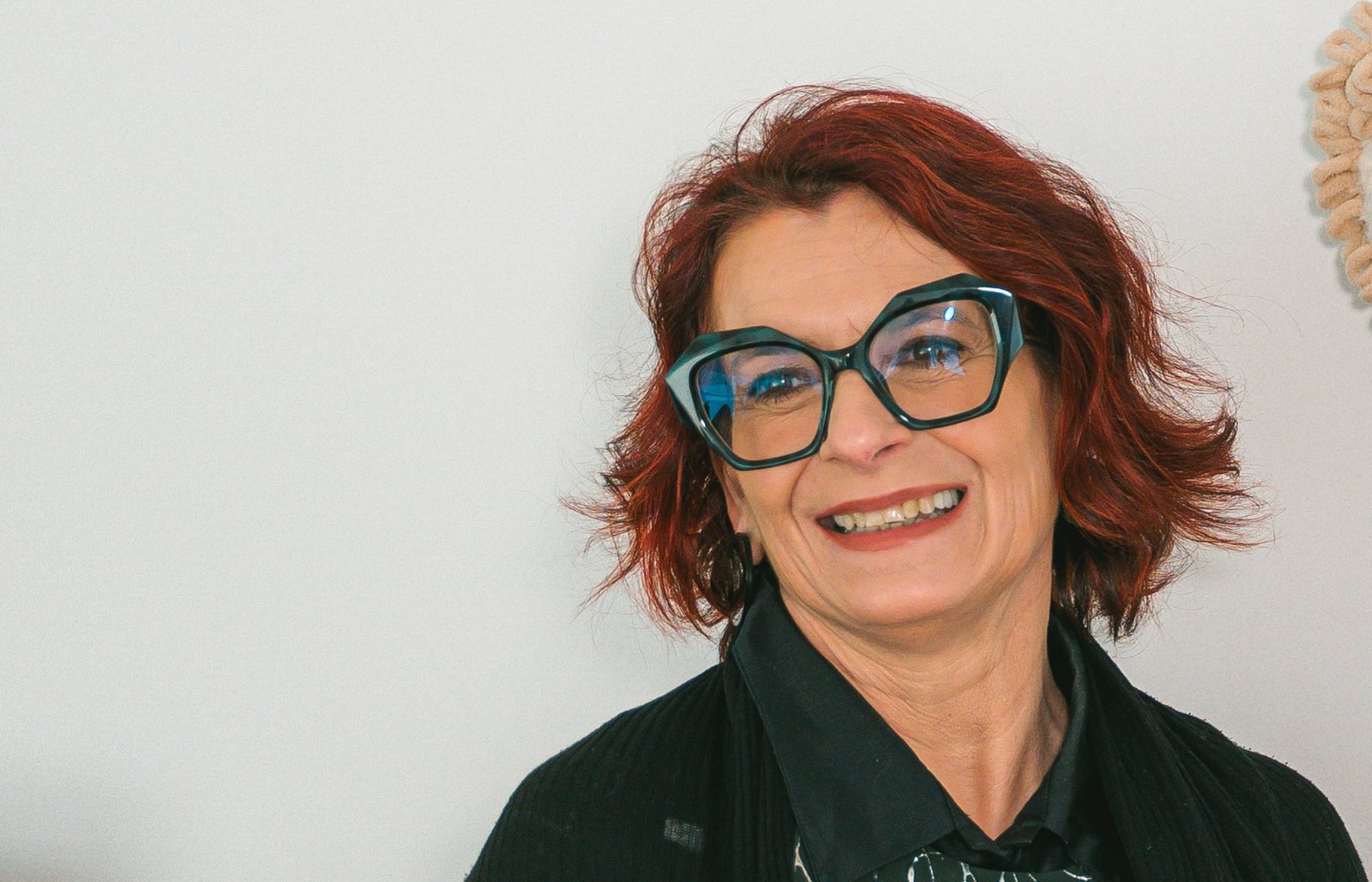
Across sculpture, fashion, fine craft, curatorial practice, and climate advocacy, Marita Setas Ferro has spent decades asking the same essential question: why are we making this, and who does it serve?
There are creative practitioners who work within disciplines, and there are those who move between them until the boundaries themselves become the work. Marita Setas Ferro belongs to the second category. Her career has unfolded across fashion, sculpture, fine craft, curation, education, brand direction, and climate advocacy in a way that might appear eclectic from the outside but carries a remarkably consistent internal logic. Every strand of her practice is ultimately asking the same question: what can a made object communicate that words cannot?
The journey began in fashion, but not fashion as most people understand it. While still studying, she began a parallel five-year degree in sculpture. She taught and coordinated fashion design courses as a working student for seven years. She designed and executed wardrobes for theatre, ballet, and opera. She completed postgraduate degrees in Fashion Design and Marketing and in Cultural Management, followed by a master’s degree in sculpture whose thesis addressed the garment as a three-dimensional artistic object. For Marita, clothing was never simply fabric used to cover the body. It was always about design, personal expression, and artistic statement through colours, shapes, and silhouettes. The question was how to build a creative practice rigorous enough to honour all of those dimensions simultaneously.
Today, as Artistic Director of Double J Collective and Creative Director of Marita Moreno, as an EU Climate Pact Ambassador and sustainability specialist, and as a practitioner with more than twenty-five years of work alongside artisans, she has her answer. It is found in the space where creative capacity meets execution, where the unpredictability and the inevitable small errors of making something by hand lead the artist to discover the precise difference they bring to the world.
The Twenty-Five-Year Conversation with Artisans
The thread that runs most consistently through Marita’s practice is her relationship with artisanal production. For a quarter of a century, she has worked alongside craftspeople, developing new visual and material languages while protecting the integrity of traditional techniques. The balance she has found is precise and hard-earned: innovation must be carried out in such a way that artisanal production is not altered at its core, but adapted in ways that preserve its origin without distorting the making.
Traditional techniques, in her approach, are executed exactly as they always have been. What changes is how they are used and what is developed with them. That is where design enters: bringing function into dialogue with form, and occasionally moving beyond function entirely into the realm of artistic production where the only purpose is fruition and contemplation. As she describes it with characteristic directness, that purpose is nourishment for the human soul.
This approach requires deep research into original sources: understanding the characteristics, aesthetics, origins, and material logics of a given artisanal tradition before introducing any contemporary intervention. The research comes first. The creation follows. And the artisan’s knowledge, which cannot be separated from the body that holds it, is treated as a resource of equal importance to any design innovation imposed from the outside.
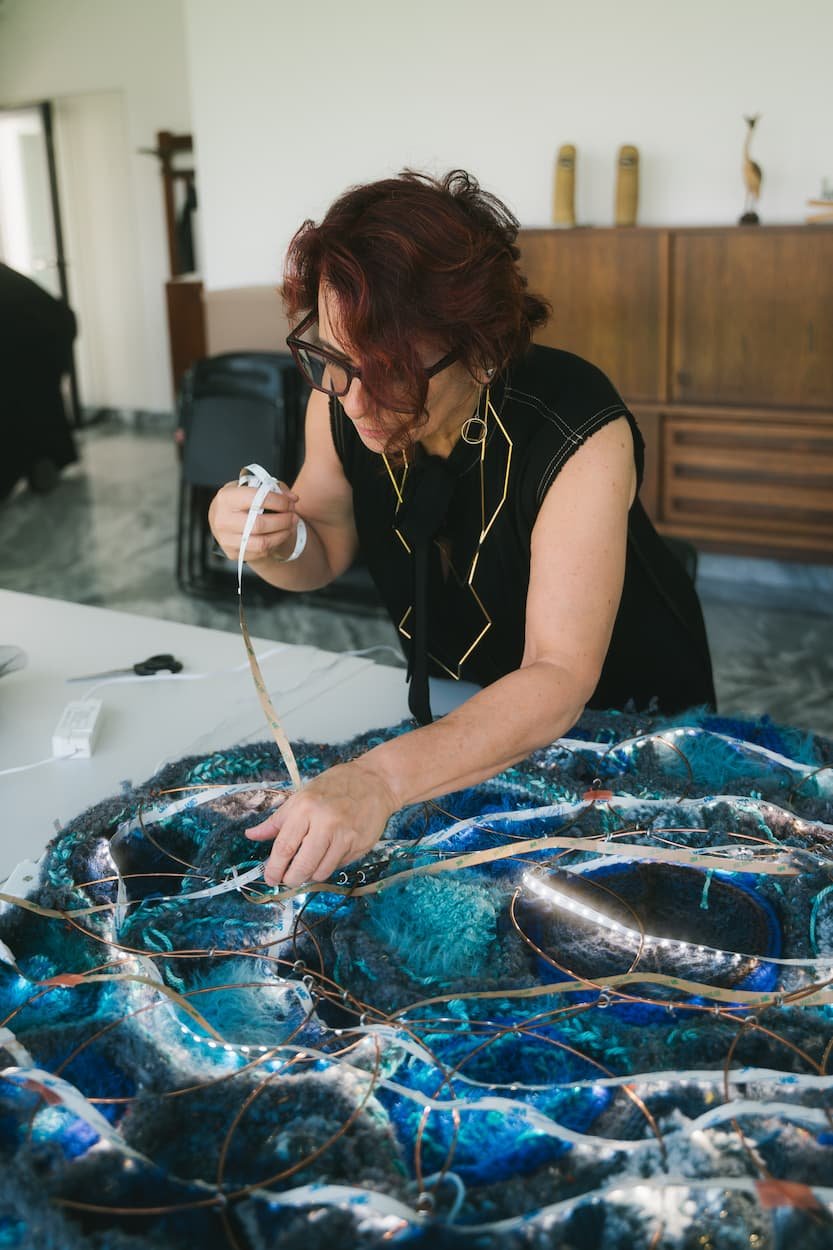
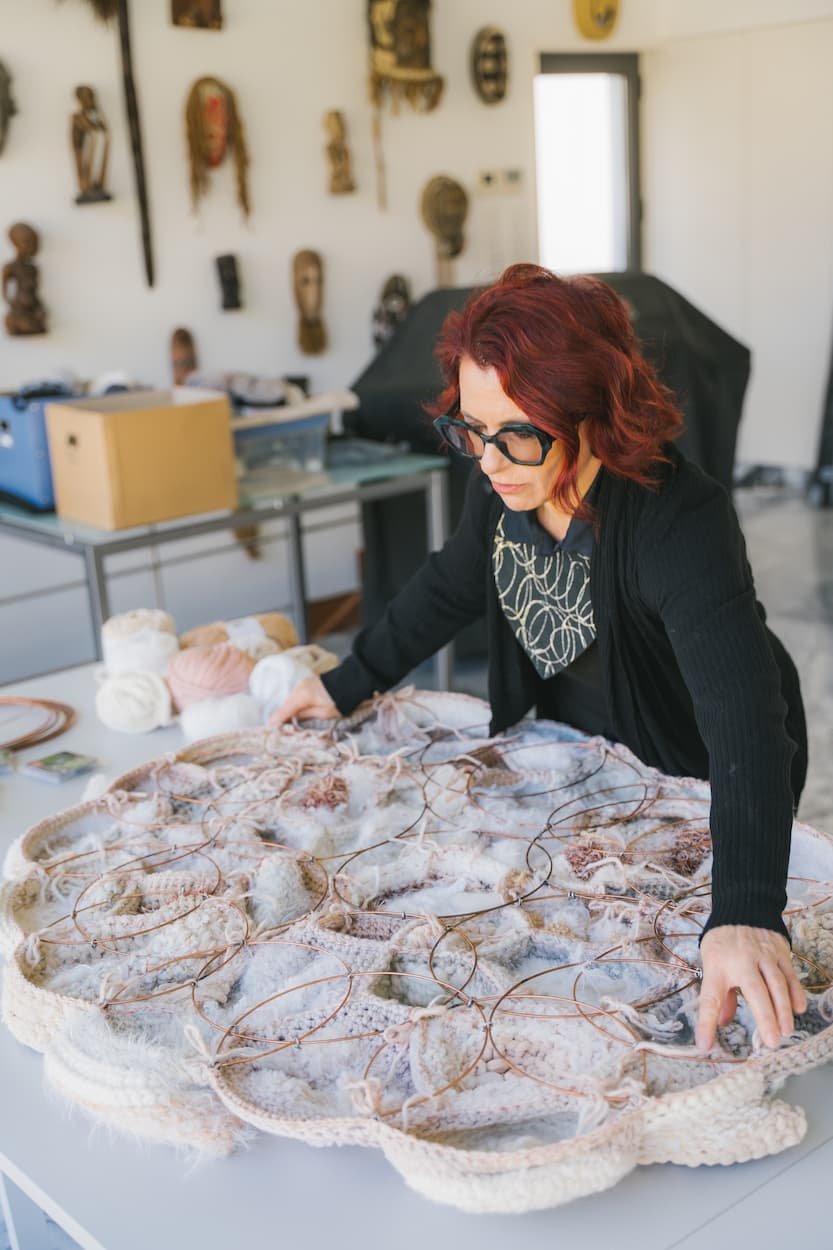
“It is essential that we have the ability to link our creative capacity to execution, because the unpredictability and the ‘error’ that arises in making often leads us to discover exactly the difference we bring as artists.”
The Garment as Artistic Object
Marita’s master’s research formalized something she had understood intuitively since the beginning of her career: the garment is not merely a functional object. It is a three-dimensional artistic statement. That conviction has shaped everything about how she approaches creative direction, from the themes she develops for collections to the way she oversees production to the commercial feedback she seeks and incorporates at the design’s core.
As Creative Director of Marita Moreno, she created the themes, designed the models, oversaw production, and when necessary engaged with the commercial side as well, understanding that feedback from the market is part of the creative conversation rather than external interference with it. The discipline required to hold artistic vision and commercial reality in the same frame is one she developed through years of working in fashion, where the distance between aspiration and execution is measured in very practical terms.
As Artistic Director of Double J Collective, the work shifts register but not orientation. Curation and programming at the gallery require the same capacity for sustained collaboration, the same attention to the conditions under which artists work, and the same commitment to understanding why an artist chooses their particular way of working rather than simply exhibiting the results. Working with artists, she notes, reveals something essential: the generosity and love they put into every artistic object they produce. That quality is not decorative. It is the substance of what makes the work worth experiencing.
Responsibility Before Sustainability
Marita is deliberate about the language she uses when discussing environmental practice. She prefers to add responsibility to the word sustainability, because responsibility implies agency and accountability in a way that the more widely circulated term has sometimes lost. Designers and creators must be responsible for their choices, both as producers and as participants in a consumer culture that has systematically underestimated its own environmental cost.
The fashion industry, she notes without flinching, is one of the most polluting in the world. That fact carries a specific obligation for everyone who works within it. Eco design must be fundamental to the thinking of all designers today, which means asking a series of uncomfortable questions at every stage of creation: why are we making this at all? What materials are we using, and why? If more than one material is involved, can that choice be properly justified? How will this product be recycled or decomposed at the end of its life? What are the working conditions of the people who make it? Does the use of artisanal products in production actually benefit the communities where those skills originate?
She is honest about the limits: it is rarely possible to answer every question satisfactorily. But the obligation to ask them remains absolute. Each creator makes a difference through the choices they make, and the cumulative effect of those choices across an entire industry determines what the industry becomes.
“Sustainability is a much-used word, to which I prefer to add responsibility. We must be responsible for our choices, both as consumers and as creators and designers.”
The Quiet Young Man and the Mosque from His Village
Among the many moments that have shaped Marita’s understanding of what creative work is actually for, one stands above the others in her memory. She was twenty-three or twenty-four years old, working as an art educator in Montpellier with a group of young people from Morocco, Tunisia, and France living in social housing neighbourhoods. Communication with the young people she was responsible for was difficult: her French was rusty, some of them did not speak it well either, and so drawing and gesture became the primary language of the workshop.
The young people, mostly boys, wanted to give up. She persisted, and eventually asked them to create objects representing what they loved most or missed most. One of her biggest surprises came from a very quiet young man who barely spoke French. He asked if he could build a model of the mosque from his village, because that was what he missed most. She helped him bring it to life, a project that required developing drawing and three-dimensional design skills he had not known he possessed. At the end of the project, his mother came to thank her. The boy had been happy throughout every day of the workshop, feeling integrated and valued in a way he had not before.
The story remains, for Marita, the clearest expression of what artisanal and artistic work is fundamentally about: allowing every person to communicate through what they make, through the feeling, love, and soul they put into their projects. The making is not the end. The belonging it creates is.
Climate, Migration, and the Designer’s Responsibility to Social Geography
As an EU Climate Pact Ambassador, Marita thinks about sustainability not as a design trend but as a structural requirement for any creative practice that wants to exist responsibly within the world that is actually forming around it. The legal framework around sustainability and the circular economy in Europe is evolving rapidly, and creative industries will only be able to move forward by embedding ecological thinking at their very core. Eco design is not optional. It is the foundation.
Her vision for the future of fine craft and sustainable design is shaped by the broader human crises of the current moment. Migration on an unprecedented scale and regional wars spreading across the world will shape creative entrepreneurship in ways the field is only beginning to understand. Fine craft will increasingly become the link between people and their cultural origins: a mirror of contemporary cultures displaced from their roots. Sustainable design will be essential in developing solutions that are dignified and humane for those displaced over the long term, whether by climate change, conflict, or both.
She identifies social geography as a critical discipline that designers and eco-designers must integrate into their thinking: understanding how populations will develop, where migration will move, and what conflicts will displace communities, in order to create in a positive way that genuinely contributes to the wellbeing of everyone. The designer’s role is not simply aesthetic. It is civic.
What She Would Tell Those Who Are Beginning
Marita’s advice to aspiring designers, artists, and craftspeople carries the authority of someone who has spent decades asking the hard questions of herself before asking them of others. There is no point, she says plainly, in being brilliant if you are not human and empathetic toward others. Brilliance without humanity is technique without purpose, and technique without purpose produces objects the world does not need more of.
Always question why you do what you do. Question whether you are adding value without harming the environment and other human beings. Think long-term about the consequences of what you create. As artists, she reminds us, we are the mirror of the era we live in. Every artistic object carries an obligation to carry a message, whether political, human, environmental, or psychological. Art must awaken emotion. It must provoke thought into action. It must create connections or disagreements. But it must provoke. An object that leaves the world entirely unchanged by its presence has not fully justified its own existence.
That conviction, held with equal intensity across sculpture, fashion, craft, curation, education, and climate work, is what makes Marita Setas Ferro one of the most consistently purposeful creative voices of her generation. She has never been interested in making things for their own sake. She has always been interested in what making things can do for the people who encounter them, and for the world those people share.
“Art always has the function of awakening emotions and provoking human thought into action. It must provoke!”