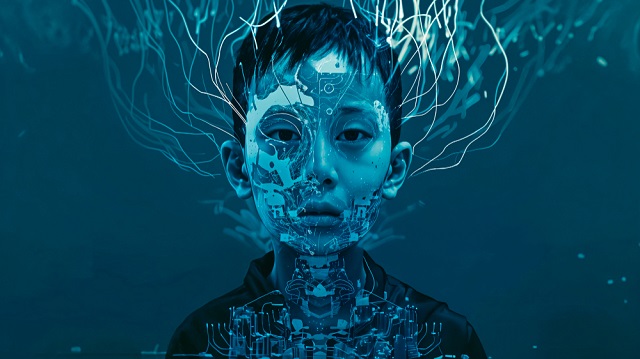
In an era where artificial intelligence and virtual reality dominate headlines with promises of disruption, one voice rises above the technological noise with a distinctly human message. Matteo Zaralli stands at the convergence of ancient wisdom and emerging innovation, wielding philosophy as a compass and immersive technology as a canvas for transforming how humanity learns, leads, and evolves.
Based in Rome, Italy, Zaralli has built an unlikely career that bridges business strategy, philosophical inquiry, and cutting-edge educational technology. As the founder of VRAINERS and the VR-AI Academy, he represents a new breed of innovator who asks not just what technology can do, but what it should do. His journey from the halls of philosophical contemplation to the immersive landscapes of virtual reality tells a story about the enduring power of human curiosity in an age of machine intelligence.
“My journey began with a deep curiosity about how technology can amplify human potential,” Zaralli reflects. “During my studies in business and philosophy, I became fascinated by the convergence of human experience and digital intelligence. Virtual Reality offered a new language of experience; Artificial Intelligence, a new language of cognition.”
This dual perspective, grounded equally in the theoretical frameworks of philosophy and the practical demands of business, has become Zaralli’s signature approach to innovation. Where others see technology as an end in itself, he envisions it as a medium for expanding human capacity, a tool that derives its value not from computational power but from its ability to deepen understanding, accelerate learning, and foster genuine connection.
FROM SILICON VALLEY TO ROME: LESSONS IN PERSISTENCE AND PURPOSE
The path to founding VRAINERS was anything but straightforward. Before becoming a recognized thought leader in immersive learning, Zaralli faced the universal entrepreneur’s crucible of rejection, delay, and doubt. His acceptance into the prestigious Fulbright BEST Fellowship at Stanford’s StartX accelerator came only after two previous rejections, a testament to the persistence that would later define his ventures.
“Before winning the Fulbright scholarship, I was rejected twice. I succeeded on the third attempt,” Zaralli recalls. “Then the pandemic hit, and our departure was postponed several times. That experience taught me the value of persistence, consistency, and obsession. Every ‘no’ can become a lesson, if you keep moving forward.”
The Fulbright experience at StartX, situated in the heart of Silicon Valley’s innovation ecosystem, proved transformative. Surrounded by entrepreneurs pushing the boundaries of what seemed possible, Zaralli absorbed a critical insight that would shape his entire approach to building VRAINERS.
“I learned that innovation is not about having the best idea,” he explains. “It’s about having the courage to test, fail, and adapt quickly. The entrepreneurial mindset there, open, collaborative, and experimental, deeply influenced how I later built VRAINERS: as a living laboratory of learning innovation.”
Yet perhaps the most profound lessons came not from the structured environment of the accelerator but from unexpected moments of vulnerability. During a winter trip, Zaralli and his companions found themselves stranded in snow at the top of a mountain. A family opened their home, hosting them for three days, an act of kindness that crystallized an essential truth about human nature.
“It reminded me that even when you’re stuck, kindness and collaboration can always light the way,” Zaralli says. This experience reinforced his conviction that technology, for all its power, remains secondary to the human connections and values that give it meaning.
A mentor’s words during this period became a guiding principle: “Whatever you choose in life, it’s like signing your name, so do your best. Don’t let others define your path. We have just one life: live it your way.”
This advice became more than inspiration. It became operational philosophy, a reminder to pursue purpose over approval and authenticity over conformity. When Zaralli returned from Silicon Valley to launch VRAINERS and later the VR-AI Academy in 2025, he carried these lessons as foundational principles.
BRIDGING THE GAP BETWEEN KNOWLEDGE AND EXPERIENCE
The creation of VRAINERS emerged from a fundamental observation about modern education. Traditional learning systems, Zaralli recognized, were struggling to keep pace with accelerating technological change. Students were drowning in content while starving for genuine experience. Theory proliferated while practical application lagged behind.
“VRAINERS was born from the realization that traditional education was struggling to keep pace with the speed of technological change,” Zaralli explains. “Learners needed more than content. They needed experience.”
The VR-AI Academy grew naturally from this insight, designed as a space where people could learn by doing, using immersive environments and intelligent systems to develop real-world skills. The goal was ambitious: bridge the gap between knowledge and action, bringing emotion, engagement, and adaptability back into learning.
Within the VRAINERS platform, learners can now train in public speaking, storytelling, and mindfulness, three domains where emotional awareness and experiential learning make measurable differences.
“VR and AI are revolutionizing learning by turning it into a fully interactive process,” Zaralli notes. “This fusion of immersion and intelligence creates emotional connection and dramatically improves retention. It represents a paradigm shift from education as information to education as experience.”
This approach challenges the passive consumption model that has dominated education for centuries. When a student practices public speaking in virtual reality, they experience the physiological responses of standing before an audience. Their heart rate increases. Their palms sweat. The AI system monitors their pace, tone, and body language, providing immediate feedback calibrated to their specific patterns and needs. The learning becomes visceral, memorable, anchored in emotion rather than abstraction.
TEACHING AI TO TEACH: THE EUROPEAN SCHOOL OF ECONOMICS EXPERIMENT
Zaralli’s theoretical framework found practical validation when he launched the first “AI in Business” course at the European School of Economics. This pioneering program addressed a critical gap in business education: preparing leaders not just to use AI tools but to integrate them ethically and strategically into organizational decision-making.
“AI is transforming leadership by expanding decision-making capacity and data-driven awareness,” Zaralli observes. “However, true leaders will not be those who simply use AI, but those who understand how to integrate it ethically and strategically.”
The course design reflected his interdisciplinary approach. During the first edition, Zaralli invited guest speakers from diverse backgrounds including software engineering, data science, and marketing. This deliberate variety helped students understand AI’s impact across major business functions, from tool development to practical application in customer engagement.
The underlying message was clear: the future of leadership lies in combining analytical precision with human empathy, using technology to enhance judgment rather than replace it. Leaders must develop what Zaralli calls “technological empathy,” the ability to understand machines without losing sight of humanity.
This concept extends beyond mere technical literacy. Technological empathy requires emotional intelligence, ethical awareness, and adaptability. Leadership in the AI age, Zaralli argues, will no longer center on control but on curation, guiding teams and technologies toward shared purpose.
“The role of the humanities will become crucial, not as an alternative to technology, but as its essential complement,” he emphasizes. “Philosophy, psychology, and the arts help us interpret complexity, cultivate empathy, and give meaning to innovation.”
WRITING THE ROADMAP: BOOKS THAT CHALLENGE AND GUIDE
Zaralli’s insights have found permanent form in two significant publications that serve as guideposts for organizations navigating technological transformation. His first book, “Virtual Reality and Artificial Intelligence: Risks and Opportunities for Your Business,” helps leaders navigate innovation responsibly by examining both the promises and perils of emerging technologies.
The second, “The Evolution of Professional Training,” explores how AI can accelerate learning and make education more inclusive and adaptive. Together, these works share a central message: technology is neutral. Its impact depends entirely on human intention.
“The goal is not to chase innovation but to channel it toward meaningful progress,” Zaralli explains. “This begins with a deeper understanding of how our mind works, the different types of intelligence, how we memorize, and what defines our human uniqueness.”
Both books dedicate substantial space to philosophical inquiry, reflecting Zaralli’s conviction that technological questions are fundamentally philosophical questions. In his first book, he examines the differences between human and artificial intelligence, exploring what AI can and cannot replicate. The analysis touches on value systems, moral decision-making, creativity, imagination, consciousness, and emotional intelligence.
The second book focuses on the concept of a “new humanism,” exploring ideas such as fragility and antifragility, determinism and indeterminism, identity crisis, and the role of trust in an age of technological acceleration.
“Philosophy, for me, is not abstract theory,” Zaralli says. “It is a practical compass. It guides me to design technologies and educational experiences where ethics, empathy, and purpose are not afterthoughts, but core principles shaping every decision.”
This philosophical foundation shapes his approach to the primary risks organizations face when integrating VR and AI. These risks, Zaralli argues, are fundamentally ethical and cultural rather than technical.
“Many companies implement AI or VR without understanding their human implications,” he warns. “The antidote is strategy and education. Leaders must cultivate technological literacy and ethical awareness. Responsible innovation begins with asking not just what technology can do, but what it should do.”
THE FUTURE TAKING SHAPE: CONTINUOUS, EXPERIENTIAL, HUMAN-CENTERED LEARNING
Zaralli’s vision for the evolution of workforce training over the next decade is both ambitious and grounded. Training will become continuous, data-driven, and experiential. AI will personalize learning paths in real time, while VR will simulate complex scenarios where learners can safely practice, make mistakes, and improve through immersion.
Yet beyond efficiency gains, these technologies offer something more profound: an unprecedented opportunity to study how the human mind learns, decides, and creates. By analyzing cognitive patterns and behavioral data, researchers are discovering new methods to enhance focus, memory, and adaptability.
“We are discovering new ways to redesign the very process of learning itself,” Zaralli notes. “Most importantly, studying is no longer something confined to the years between school and university. It is a lifelong process, a continuous and constant act of growth that accompanies us in every moment.”
This vision dissolves traditional boundaries between learning and working. Education becomes seamlessly integrated into everyday performance, turning each professional challenge into an opportunity to learn. The future workforce will not just learn faster. It will understand itself better, merging human intuition with machine intelligence to unlock new forms of creativity and collective evolution.
The democratization of these technologies accelerates this transformation. Hardware is becoming more accessible, and many advanced software platforms now offer free or open versions. Teachers, small startups, and individual learners can experiment, learn, and create meaningful projects without prohibitive barriers to entry.
“A student in a remote village can now explore a virtual science lab, while an AI tutor can personalize learning to their rhythm, language, and curiosity,” Zaralli observes. “When designed with purpose, VR and AI are not just technologies. They’re equalizers. They give more people the chance to participate, to learn, and to imagine a better future together.”
Beyond education, these technologies promise contributions to global challenges in sustainability, healthcare, and inclusion. They allow us to visualize complex systems, simulate solutions, and connect communities that were once isolated.
GLOBAL RECOGNITION, GROUNDED PURPOSE
Zaralli’s work has earned recognition on multiple continents. The Outstanding Leadership Award in Dubai and the Global Power Leader Award in the United Kingdom validate his vision’s global resonance and impact. Yet for Zaralli, these honors serve a purpose beyond personal achievement.
“Each recognition, from Dubai to London, is not just a personal milestone, but a validation of a shared vision,” he reflects. “There are years when you work tirelessly and no one seems to notice, or at least, that’s how it feels. Moments when you’re alone with a vision that few truly believe in.”
The recognition from international institutions acknowledges the effort and perseverance behind the journey. More importantly, these awards function as fuel to continue creating responsibly, proving that meaningful innovation always begins with purpose.
“These awards are not an arrival point, but an invitation to keep going, to study, innovate, and transform ideas into concrete projects that bring real value to people’s lives,” Zaralli says.
This perspective reflects a broader pattern in his thinking. Success is never an endpoint but a milestone in continuous evolution. The recognition validates direction while demanding continued growth, further refinement, deeper impact.
DESIGNING TECHNOLOGY AROUND HUMAN VALUES
With automation and immersive technologies advancing rapidly, the question of how to keep human creativity, empathy, and purpose central to technological evolution becomes increasingly urgent. Zaralli’s answer is deceptively simple: design with intention.
“We must build systems around human values, not merely human needs,” he argues. “Creativity, empathy, and purpose are the traits that make us uniquely human. Our technologies should amplify them.”
Achieving this requires dialogue between technology and the humanities, between data and meaning. Ethical design must become constant practice, ensuring that automation and immersive tools enhance our ability to connect, imagine, and grow rather than diminish it.
The question guiding Zaralli’s work is fundamental: Are we building tools that make us better humans, or just more efficient ones? The future of innovation depends on our ability to align intelligence with wisdom and progress with purpose.
This human-centered approach permeates every aspect of VRAINERS and the VR-AI Academy. Programs are designed not around technological capabilities but around human developmental needs. The technology serves the learning, not the reverse.
BRIDGING THREE WORLDS: ACADEMIA, ENTREPRENEURSHIP, CONSULTING
Zaralli operates simultaneously across three traditionally separate domains: academia, entrepreneurship, and consulting. Each brings unique strengths. Academia offers depth, entrepreneurship brings speed, and consulting ensures applicability.
“For me, these worlds are not separate,” Zaralli explains. “They are different expressions of the same process: research, experimentation, and creation. I don’t work to translate one into another, but to connect them as parts of a single ecosystem where knowledge flows freely and ideas evolve into tangible outcomes.”
Every project starts with study, grows through collaboration, and becomes meaningful only when it generates real value for people and organizations. Innovation is not a bridge to cross but a continuum to cultivate, a living dialogue between thinking and doing, between theory and transformation.
This integrated approach allows Zaralli to move fluidly between contexts. Insights from academic research inform entrepreneurial ventures. Consulting engagements reveal practical challenges that spark new research questions. Teaching forces clarity of thought that improves both writing and strategic advisory work.
The result is a practice that defies easy categorization. Zaralli is simultaneously educator, entrepreneur, consultant, and author. Rather than fragmenting his efforts, these roles reinforce each other, creating a comprehensive perspective that few single-domain specialists can match.
THE ROAD AHEAD: BUILDING WITH PURPOSE, NOT JUST SCALE
Looking forward, Zaralli’s vision for VRAINERS and the VR-AI Academy balances ambition with groundedness. The long-term goal is expanding programs globally, creating a network of immersive learning hubs powered by AI. He wants to help organizations transform their culture through experiential education and contribute to shaping global policy around ethical and responsible tech adoption.
Yet scale for its own sake holds no appeal. “VRAINERS and the VR-AI Academy are still young projects, and that’s what makes this stage so exciting,” Zaralli says. “My focus now is simple: to do things well, to keep improving, and to grow one step at a time.”
The priority is building a solid foundation, creating meaningful learning experiences, and exploring how immersive and intelligent technologies can truly enhance human potential. Over time, the goal is developing a personalized learning ecosystem where students and professionals can deepen their knowledge through innovative tools and experiential methods.
“In the next few years, we’ll certainly see new hardware, more advanced software, and evolving interfaces,” Zaralli notes. “Our challenge will be to adapt, stay curious, and translate those changes into projects with real educational and social impact.”
This measured approach reflects hard-won wisdom. After witnessing the hype cycles that dominate technology sectors, Zaralli has developed healthy skepticism toward breathless promises of disruption. What matters is not the latest technological capability but its thoughtful integration into systems that serve genuine human needs.
AN INVITATION TO CO-CREATE THE FUTURE
For trainers, companies, coaches, and curious minds seeking to explore how Virtual Reality and Artificial Intelligence can transform learning and training, Zaralli extends an invitation. The “Become a VR-Creator” program, a collaborative initiative by VR-AI Academy and VRAINERS, is designed to empower the next generation of immersive learning creators.
This program embodies Zaralli’s conviction that innovation thrives through collaboration rather than competition. By sharing knowledge, tools, and methodologies, the program aims to accelerate the development of immersive learning solutions across industries and geographies.
To young innovators exploring the intersection of technology, learning, and leadership, Zaralli offers guidance rooted in his own journey: “More than chasing scale, my priority is to build with purpose, ensuring that every step forward adds value, meaning, and authenticity to what we do.”
This message cuts against the grain of startup culture, which often prioritizes rapid growth over sustainable impact. Zaralli’s alternative model suggests that the most enduring innovations emerge not from racing toward arbitrary metrics but from patient cultivation of genuinely transformative solutions.
THE LEGACY BEING WRITTEN
Matteo Zaralli represents a crucial voice in contemporary discussions about technology’s role in human development. In an era when artificial intelligence and virtual reality often inspire either utopian enthusiasm or dystopian anxiety, he offers a third path: thoughtful, ethically grounded innovation that keeps human flourishing at the center.
His work demonstrates that technological sophistication and humanistic values need not conflict. Indeed, the most powerful innovations may emerge precisely at their intersection, where computational capability meets philosophical wisdom, where immersive experience serves emotional growth, where machine intelligence amplifies human creativity.
Through VRAINERS and the VR-AI Academy, Zaralli is not just building businesses. He is prototyping new models for how humanity can learn, adapt, and thrive amid accelerating change. His emphasis on experiential learning, ethical design, and continuous evolution provides a blueprint for educational transformation that respects both technological possibility and human dignity.
The journey from philosophy student to educational technology pioneer, from rejection to recognition, from Silicon Valley to Rome, illustrates the nonlinear path of meaningful innovation. It shows that the most important qualifications for shaping the future may not be technical credentials alone but rather the ability to think deeply, question assumptions, persist through setbacks, and maintain focus on what truly matters.
As organizations worldwide grapple with digital transformation, as educational institutions struggle to prepare students for rapidly changing futures, as individuals seek to remain relevant in an age of intelligent machines, leaders like Matteo Zaralli offer both inspiration and practical guidance.
His central insight, that technology is neutral and its impact depends on human intention, places agency squarely where it belongs: with the people who design, deploy, and use these powerful tools. The future will be shaped not by algorithms alone but by the values, priorities, and wisdom we embed within our technological systems.
“In the age of AI, leaders must learn to be resilient and self-reflective, constantly questioning themselves and adapting to change,” Zaralli reflects. “Every crisis in history has pushed humanity to its next evolutionary step, and this one will be no different. Those who can unite critical thinking with compassion, and data with purpose, will define the future of leadership.”
This vision, grounded in philosophical inquiry and embodied in immersive learning platforms, points toward a future where technology serves human potential rather than diminishing it. Where artificial intelligence expands our capacity for wisdom rather than replacing judgment. Where virtual reality deepens authentic connection rather than fostering escapism.
Matteo Zaralli’s story is still being written, chapter by chapter, student by student, innovation by innovation. But the trajectory is clear: toward a more human future, guided by ancient wisdom and enabled by emerging technology, where learning never stops and growth knows no limits.