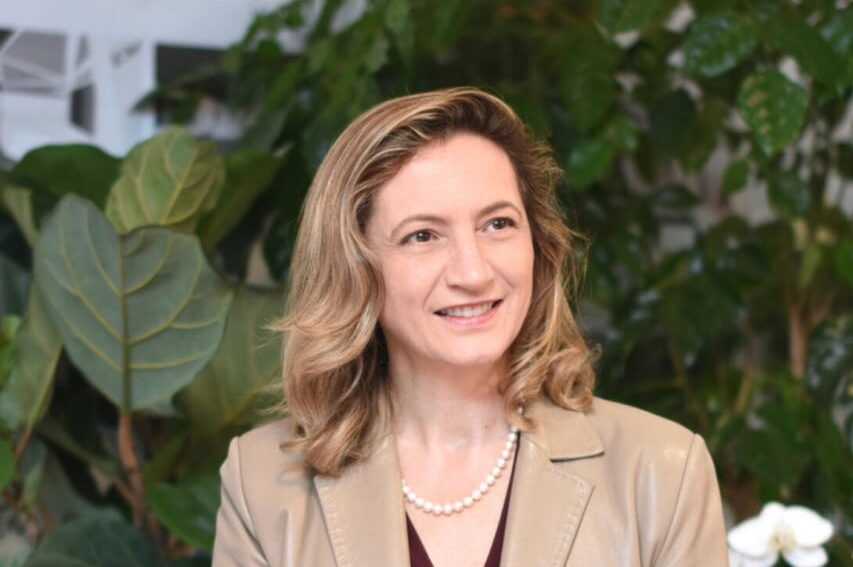
In an era where buildings account for nearly 40% of global carbon emissions and indoor air quality affects billions of lives daily, one architect stands at the intersection of urgent planetary need and profound human potential. Dr. Christine Bruckner represents a new paradigm in design thinking, one where sustainability and wellness are not competing priorities but synergistic forces capable of transforming how we inhabit the world.
Her work spans continents and scales, from individual retrofit projects breathing new life into historic structures to urban campuses serving 10,000 people daily. Yet beneath the impressive portfolio of Platinum certifications and industry benchmarks lies something more fundamental: a belief that the spaces we create can actively restore both human vitality and environmental health.
“My overarching vision for the future of our built environments is one of hope, hope grounded in health, restoration, and nature-based solutions,” Christine reflects. “A future that fosters biodiversity and elevates human wellbeing in every dimension.”
This vision did not emerge from theory alone. It was born from childhood experiences that would shape a lifetime of purposeful practice.
THE ARCHITECT’S DAUGHTER: FOUNDATIONS OF A LIFE’S WORK
Christine’s journey into architecture began not with a career choice but with a way of seeing. Raised by an architect father and urban designer mother, she inherited what she calls “an architect’s lens” through which the world revealed itself in layers of possibility and purpose.
“Places were explained by how they were built, how they serve people, and how they may be repaired or reimagined,” she recalls. This framework became more than academic. She witnessed her parents transform a derelict structure into a vibrant teen center offering safe spaces, sports facilities, and supervised care for youth. She saw neglected neighborhoods become welcoming homes for people of all ages and abilities. She watched schools adapt into special needs housing.
Even the family home became a living laboratory. Under constant renovation, young Christine learned how materials were selected and assembled, how unseen layers within walls and systems proved critical to comfort, acoustics, and safety. She remembers hand-carrying beautiful tiles from Mexico with her parents, tiles her father would later incorporate into a waste-free, culturally meaningful design.
“I came to value both historic architecture and continuous innovation,” Christine explains. “I became curious about how existing buildings can evolve to continue meeting growing needs with respect to lighting, comfort, and flexibility.”
A defining moment came through her father’s collaboration with a professor on one of the earliest solar houses. The design integrated a south-facing greenhouse that supported biophilia while providing passive heating, circulating naturally warmed air throughout the multi-level home. The result demonstrated what Christine would spend her career refining: architecture, engineering, and nature working in complete integration.
This foundation continues to guide her through travel, research, and global practice, informing a design approach rooted in context, aligned with solar orientation and natural light optimization, and committed to creating inclusive, empowering spaces that serve diverse human needs with grace.
BEYOND COMPLIANCE: EVOLVING THE STANDARDS THEMSELVES
As global sustainability frameworks emerged, Christine became not just an early adopter but an active contributor to their evolution. Her credentials span the alphabet of wellness certifications: WELL AP, Fitwel AP, RESET Fellow, among others. Yet her engagement goes far deeper than credential collection.
“My initial introduction to architecture was grounded in a holistic and sustainable perspective,” she notes. “The emergence of global sustainability standards served as a natural progression. These frameworks helped codify and quantify the best practices we were already working toward.”
What distinguishes Christine’s approach is her systematic analysis of how different frameworks relate to one another. LEED, WELL, BREEAM, RESET Air Excellence, IGBC, Hong Kong Green Building standards, each elevates different priorities. Some emphasize healthy materials, others focus on human experience, recycled content, embodied carbon, operational efficiency, indoor air quality, or smart technology integration.
“Interestingly, across many certifications, there is surprisingly little direct overlap,” Christine observes. This discovery led her to serve on advisory boards, contributing feedback to evolve these frameworks toward greater global and local relevance, adaptability across climates and cultural contexts, and focus on performance outcomes rather than prescriptive rules.
When she found existing standards incomplete, Christine created new guidelines. Her Keys to Inclusive and Neurodiverse Design (KIND) framework operates on the belief that all spaces should be kind to all people. Her Restorative Architectural Protocols in Design (RAPID) offers a 12-pillar framework focused on risk mitigation and regenerative design across land, water, energy, food, and biodiversity.
With RAPID, she aligns Restorative Impact Reporting (RIR) alongside traditional ROI, offering phased reporting that helps owners and operators track the growing positive impact of their decisions. This includes evaluating buildings by their effect on people today and future generations, resource stewardship, pollution reduction, and promotion of ecosystem diversity.
“Standards ideally are guideposts for continuous innovation, not checklists,” Christine emphasizes. This philosophy transforms compliance from burden into catalyst for continuous improvement.
THE PRACTICE OF CONTINUOUS REGENERATION
Christine’s philosophy manifests most clearly in her approach to balancing competing project priorities. When asked how she navigates the tension between sustainability, aesthetics, functionality, and cost, her response reframes the question entirely.
“Balancing these priorities is at the very heart of what it means to practice architecture,” she explains. “It’s our role as architects to synergize these priorities. Every solution must support the health, safety, and welfare of the people who inhabit our spaces, while also caring for the planet that carries us.”
This synergy thinking extends to her approach to project development itself. Christine advocates for early engagement, before key decisions collapse possibilities. “It’s much like quantum physics,” she observes. “Every possibility exists at the beginning of a project. Once a decision is made, options begin to collapse, and subsequent choices become more constrained.”
Her method involves life cycle thinking from project inception, ensuring interdisciplinary teams align on shared goals before design constraints narrow the opportunity space. This approach has enabled her teams to deliver exceptional outcomes even under tight timelines, often exceeding initial expectations.
The M Moser Living Labs exemplify this integration in practice. These spaces achieve Platinum-level certifications across multiple frameworks simultaneously, measuring both environmental performance through LEED, RESET, and local green building standards, and human wellness through frameworks like WELL and IGBC Health & Wellbeing standards.
“These environments serve as real-time testbeds where we continuously measure, learn, and evolve,” Christine notes. Recent projects including Dyson in Singapore, HSBC in New York, elements of Li Po Chun United World College in Hong Kong, and developments in India demonstrate this comprehensive approach at scale.
BIOPHILIA AS DESIGN IMPERATIVE
At the core of Christine’s design philosophy lives biophilia, literally a love of life. This principle extends far beyond adding plants to lobbies or views to conference rooms. For Christine, biophilia represents our innate human drive to stay connected to nature and to one another.
“At the core, I believe we are our environment,” she states. “As humans, we have an innate drive to stay connected. It is our responsibility and opportunity, through design, to create places where people can realize their full potential.”
Biophilic presence in her projects takes many forms: green plants, borrowed views of landscapes or skies, flowers, herbs and edible plants, natural materials like wood grains and stones, patterns inherently of the Earth. She ensures access to nature by making the sky visible, enabling connections to natural environments, and expanding spatial experiences beyond constructed boundaries.
The impacts prove measurable. Through lived experience, project-based research, and a growing body of global studies, Christine has documented improvements in physical and mental wellbeing, focus and creativity, acoustic and sensory comfort, and perhaps most importantly, a deeper sense of joy.
One project stands as testament to this approach. Working with a client holding deep wellness and sustainability values, Christine’s team went beyond delivering a beautiful, high-performing, well-certified space. They created an environment people genuinely loved being in.
“Team members began leading wellness initiatives, curating music, organizing hikes, teaching drawing and baking classes,” Christine recalls. “The most telling outcome? Attrition dropped to zero. People chose to come in, not out of obligation, but because the space supported their wellbeing and sense of connection.”
This outcome reveals the power of thoughtful, integrated design to transform not just buildings but organizational culture and human experience.
RETROFIT AS ACT OF STEWARDSHIP
Christine’s perspective on new construction versus retrofit challenges conventional development wisdom. Her position is unequivocal: “The most sustainable building is often the one we don’t build.”
The logic proves compelling. Materials, carbon, and energy required for new construction can far exceed what’s needed to retrofit and revitalize existing structures. Retrofitting preserves cultural memory, regional identity, and architectural heritage while introducing innovations meeting today’s performance and wellness standards.
“When existing buildings hold regional or architectural significance, adapting them can honor the past while creating space for future-focused solutions,” Christine explains. “Ultimately, retrofitting goes beyond making a sustainable choice. It is an act of leadership, stewardship, and education, showing how we can solve for the future without erasing the stories of the past.”
This philosophy extends to her vision of regenerative cities. While sustainable cities manage resources efficiently through clean energy, waste reduction, water protection, and tree planting, regenerative cities go further. They operate in ways that continually renew and revitalize, working with fundamental materials and systems in ways that evolve and give back more than they take.
“Creating regenerative cities requires a paradigm shift,” Christine notes. “Redefining success through long-term, life-affirming systems that restore ecosystems, strengthen communities, and ensure that everything we build has the capacity to evolve with time.”
GLOBAL PRACTICE, LOCAL WISDOM
Working across diverse global regions, Christine has developed sophisticated understanding of how context shapes sustainable design adoption. Risks and requirements vary dramatically by geography, from flood zones to drought-prone areas, regions with seismic activity or high winds, soil instability, or extreme humidity.
“Every location presents unique challenges but also holds indigenous solutions that offer valuable insight,” she observes. Her approach begins by studying local context and traditional best practices, then integrating them with global standards of health, sustainability, and performance.
Regardless of geography, Christine holds her teams to consistent standards for air and water quality, thermal comfort, and access to daylight and restorative spaces. This balanced approach respects regional differences while maintaining universal commitments to human and environmental health.
“Ultimately, regional adoption often depends on policy, incentives, and belief,” Christine reflects. “Belief from governments, stakeholders, and communities that change is possible. And that sustainability is essential and deeply integrated into everything we design.”
THE URGENCY OF AIR: A COMMISSIONER’S PERSPECTIVE
Christine’s recent appointment as commissioner developing the Global Framework for Indoor Air Quality Excellence has deepened her understanding of a critical yet often invisible design element. The inaugural meeting, held at the United Nations during Climate Week, brought together global leaders committed to the importance of clean air.
“We are what we breathe,” Christine states simply. This realization frames her vision of a healthier tomorrow as spaces crafted at every scale using resilient, non-toxic materials, where people of all abilities experience dignity, comfort, and capability, and where built environments work hand in hand with natural infrastructure.
“It is a world where all children are born into places filled with healthy air, regardless of where they are in the world, and environments which celebrate life, community, and connection to nature,” she envisions.
This vision manifests in her attention to molecular safety, using materials that as they naturally release molecules over time remain non-toxic and health-compatible. Every decision honors both the people who inhabit the space and the planet that supports it.
TEACHING THE PARADIGM SHIFT
As a faculty member and advisor across several green certifications, Christine views education as critical to profession-wide transformation. Her advice to emerging architects emphasizes staying familiar with evolving best practices while understanding that frameworks are living tools that grow alongside the profession.
“It’s important to understand that while speed and efficiency may be necessary in some decisions, it is critical to design with intention,” she counsels. “Compartmentalizing elements where needed, so that shorter-lifespan components are distinct from those meant to endure.”
She advocates consistently for measurement. “When we measure, we can learn, improve, and truly experience the impact of our designs on both people and the planet.” This commitment to quantifying outcomes, gathering feedback, and qualifying impact through performance metrics makes the case for wellness-centric design increasingly clear to clients, stakeholders, and communities.
Christine treats every project as a learning opportunity, enabling teams to demonstrate and share success. The more these results are documented and shared, the easier it becomes to establish both tangible and intangible value in future projects.
LOOKING FORWARD: TECHNOLOGIES OF RESTORATION
When considering emerging technologies that will revolutionize design in the coming decade, Christine’s excitement centers on nature-based solutions. She points to innovations harnessing the power of sun, wind, and water, particularly advances in solar technology offering new ways to seamlessly embed energy generation into the built environment.
“I’m also inspired by systems that convert kinetic energy into potential energy, creating closed-loop circuits where energy can be stored, shared, or returned to the grid if needed,” she explains. “These advancements support a future where buildings are active providers, rather than solely users of resources.”
This vision of buildings as contributors rather than consumers represents a fundamental shift in how architecture relates to infrastructure and environment. It moves beyond minimizing harm toward actively generating value for human and ecological systems.
A LEGACY BEYOND BUILDINGS
When asked about the legacy she hopes to leave, Christine’s response reveals her deepest values. “I believe the legacy lies beyond the buildings that stand. It is built upon the best principles of sustainability and wellness, and is rooted in the people who helped create them.”
Her focus settles on how teams internalize process, how they use sustainability frameworks to solve challenges, how new opportunities emerged when they approached briefs holistically, and how they redefined requirements to allow for more fluid, dynamic, and adaptable solutions.
“Ultimately, I hope to leave behind a legacy of mindsets and methods, a way of thinking that continues to shape more conscious, resilient, and life-affirming environments long after the project is complete,” Christine reflects.
This emphasis on professional transformation over individual achievement speaks to Christine’s understanding that systemic change requires shifts in how entire industries think and practice. Buildings will evolve or be replaced, but design philosophies embedded in practitioners’ approaches will shape environments for generations.
REDEFINING SUCCESS
If Christine could redesign one aspect of how we approach architecture globally, her answer cuts to the essence of her life’s work: redefine project success through the lens of human health, happiness, and community impact, all in alignment with planetary natural infrastructure.
“Let’s focus beyond financial metrics to measure how architecture improves the lives of those who use and surround it,” she proposes. “Does the space support wellbeing? Does it offer comfort, safety, and joy? Does it contribute positively to the neighborhood, perhaps by creating shaded walkways, tree-lined streets, or cooler, safer paths that encourage people to walk rather than wait for rides? Does it connect us to our natural world?”
Her vision extends across generations. “Does it reaffirm our place as temporary inhabitants enjoying and improving shared resources so that we can live our best lives in joy and in service to one another and leave a thriving legacy for many future generations to come?”
This comprehensive framework evaluates architecture for what it is and what it enables, for how it serves individuals, communities, and the planet simultaneously.
THE PRACTICE OF HOPE
Christine’s career demonstrates that hope is not passive optimism but active practice. Her “healthier tomorrow” is not some distant ideal but begins today, in how materials are specified, how buildings are constructed, how space is architected, and how each development step is sequenced.
“A healthier tomorrow is the goal of every today,” she states. “It begins with a mindset of continuous improvement, with design and construction choices that maximize positive impact, reuse existing materials in creative and healthy ways, and eliminate processes that produce toxic byproducts.”
This daily practice requires scrutinizing where toxins are released and how oceans, Earth, and ecosystems can be protected from these burdens. It starts with conscious decisions: choosing nature-based solutions, seeking synergy between human and planetary health, and embedding clear design principles in every project at every scale.
“A healthier tomorrow is not some distant ideal. It begins today, in the environments we design that are empowering, life-affirming, and inclusive, spaces that serve people of all needs and ages,” Christine emphasizes. “And when we do this, again and again, we begin to lead the way forward. We demonstrate that architecture both shapes a healthier tomorrow and embodies it today.”
As the built environment faces unprecedented challenges from climate change, population growth, and evolving human needs, leaders like Dr. Christine Bruckner provide essential guidance on creating spaces that heal rather than harm, that regenerate rather than merely sustain, and that honor the profound responsibility architects hold toward both present and future generations.
Her work proves that buildings can be beautiful, functional, economically viable, and simultaneously serve as active agents of restoration for human health and planetary wellbeing. This integration is not compromise but synergy, not idealism but practical methodology refined through decades of global practice.
The healthier tomorrow Christine envisions is being built today, one thoughtful material specification at a time, one biophilic connection at a time, one regenerative system at a time. Through her designs, her frameworks, her teaching, and her influence on industry standards, she demonstrates that architecture can be a force for profound healing and lasting positive impact.