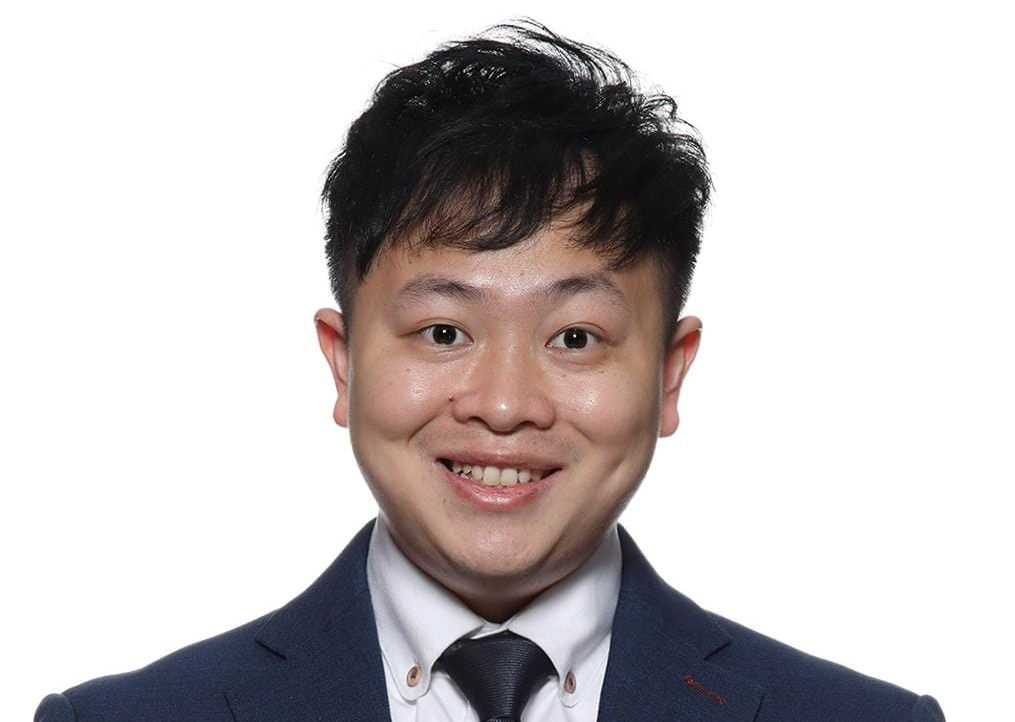
A CAREER BUILT AT THE CROSSROADS
Healthcare leadership rarely announces itself. It tends to emerge quietly, shaped by years of working at the pressure points of a system: the overcrowded clinic, the understaffed ward, the training programme that is not quite producing the doctors the system needs. For Dr. Benjamin Jeremiah Wee, it was precisely these pressure points that became the foundation of an extraordinary career.
Today, as Head of the Group Graduate Medical Education Office and Medical Residency at the National University Health System (NUHS), Singapore’s largest academic health system, Dr. Benjamin occupies a rare vantage point. He sees healthcare from the inside: as an operator who has redesigned clinical workflows, as an educator who shapes how future physicians think, and as a strategist who understands that the gap between good intentions and great systems is almost always a leadership problem.
His journey began not with a grand vision but with a practical curiosity about how systems shape care. Early exposure to hospital operations revealed something that would stay with him throughout his career: that even the most skilled clinicians struggle when the systems around them are poorly designed. That insight became a compass.
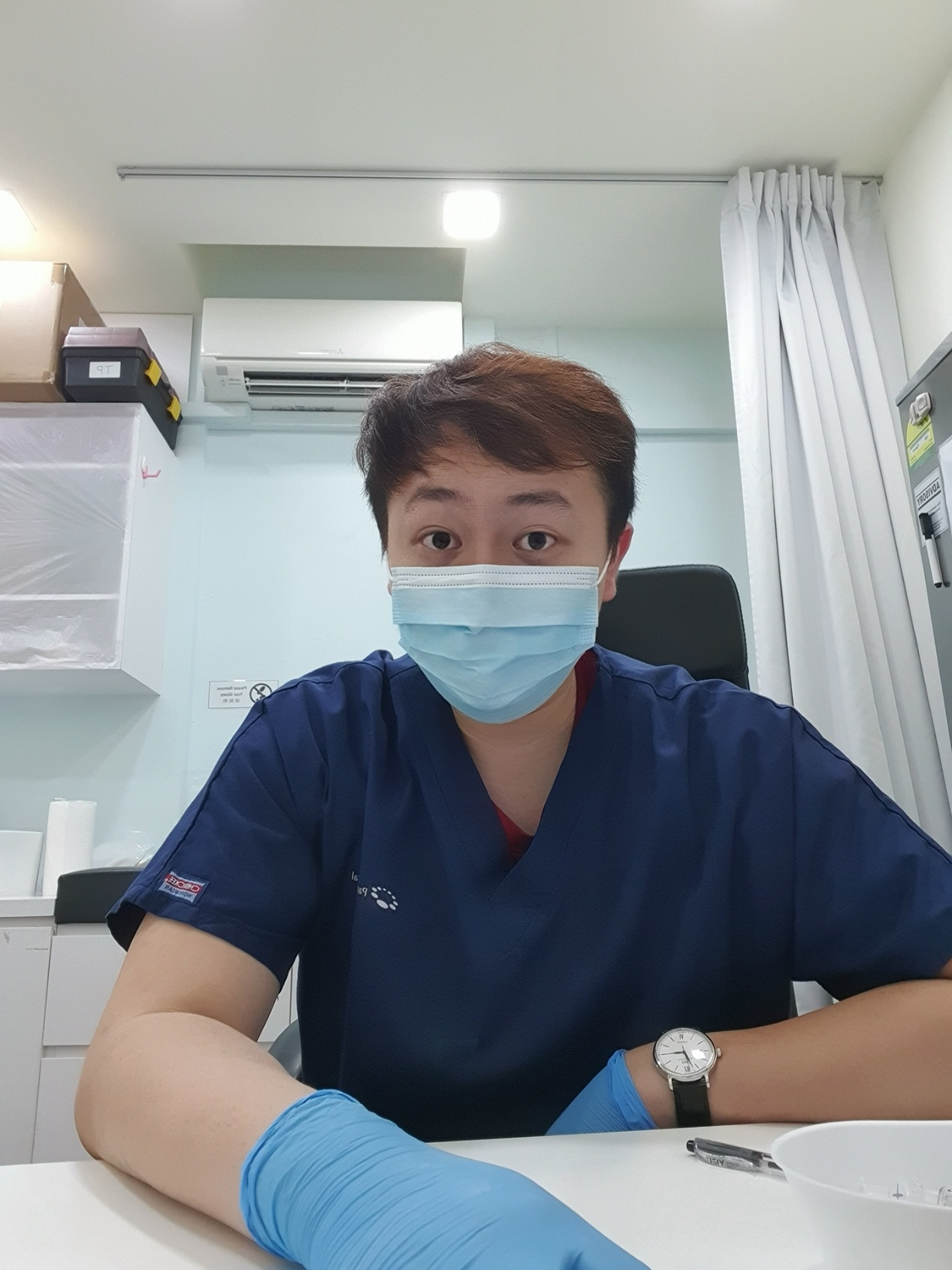
“Sustainable healthcare systems are built not only through operational efficiency but through the intentional development of people.”
THE VALUE OF WORKING ACROSS MULTIPLE WORLDS
Few healthcare leaders can claim experience as genuinely varied as Dr. Benjamin’s. His career spans hospital operations, specialist outpatient services, radiology service management, business development, digital health implementation, and academic leadership. Where others might see these as separate chapters, Dr. Benjamin sees them as a single continuous education.
Operational roles gave him a front-row view of what clinical teams actually face each day. Managing high-demand services taught him that small process inefficiencies compound quickly into delays, patient dissatisfaction, and staff burnout. These were not abstract problems. They had faces and consequences. Working through them required data, empathy, and a willingness to challenge how things had always been done.
Academic roles offered something different: the space to step back. Teaching healthcare management encouraged deeper reflection on the principles behind effective leadership and organisational culture. It also created something unexpected. Students, with their fresh eyes and unfiltered questions, consistently challenged Dr. Benjamin’s assumptions and pushed him to think harder about the direction healthcare systems should take.
Graduate Medical Education, his current focus, sits exactly at the intersection of these two worlds. Residency training programmes operate within the daily pressures of clinical service while simultaneously serving as the environment where future leaders are formed. It is a high-stakes balancing act, and one that Dr. Benjamin has come to see as among the most consequential work in healthcare.
BUILDING PHYSICIANS FOR A COMPLEX WORLD
Medical training has historically concentrated on clinical knowledge and technical skill. These remain essential. But the healthcare environment that today’s residents will spend their careers navigating demands much more: proficiency in multidisciplinary teamwork, familiarity with digital systems, an understanding of patient safety frameworks, and the capacity to lead through uncertainty.
At NUHS, Dr. Benjamin’s priorities in Graduate Medical Education reflect this broader vision. The goal is not simply to produce competent clinicians but to cultivate physicians who are professionally mature and systemically aware. That requires building training environments that support structured mentorship, honest reflection, and genuine psychological safety. Residents must feel free to ask difficult questions, challenge assumptions, and engage meaningfully in continuous improvement without fear of judgment.
The underlying belief is simple but powerful: healthcare systems are ultimately sustained by people. Investing in the development of capable, thoughtful physicians is therefore one of the most important long-term commitments any healthcare organisation can make.
“Every healthcare professional has the potential to shape organisational culture through their actions, decisions, and commitment to improvement.”
WHEN PROCESS IMPROVEMENT IS AN ACT OF CARE
Dr. Benjamin’s Six Sigma Black Belt training might sound like corporate vocabulary in a clinical context. In practice, it represents something deeply aligned with the values of healthcare: the refusal to accept preventable harm or avoidable inefficiency.
Quality improvement methodologies give healthcare teams the tools to move beyond intuition and anecdotal observations. Root cause analysis, process mapping, and statistical evaluation allow organisations to identify exactly where things break down and address them systematically rather than reactively. During service redesign work in specialist outpatient environments, Dr. Benjamin and his teams used these methods to streamline patient flows and reduce operational bottlenecks. The improvements looked technical from the outside. Their impact was entirely human: shorter waits, clearer care pathways, and better coordinated services for patients and less friction for the staff delivering them.
But Dr. Benjamin is clear that methodology alone is not enough. Sustainable improvement only occurs when quality is embedded in organisational culture rather than treated as a project with a start and end date. When frontline staff and senior leaders alike see themselves as stewards of quality and safety, the system improves continuously rather than episodically.
TECHNOLOGY AS A TOOL, NOT A TRANSFORMATION
Dr. Benjamin has led digital health initiatives including the implementation of electronic medical record systems, and the experience left him with a conviction that runs counter to much of the enthusiasm surrounding healthcare technology: technology alone does not transform healthcare.
Transformation occurs when technology is integrated thoughtfully into clinical workflows and organisational culture. Without proper training, change management, and continuous refinement, even well-designed digital systems become administrative burdens rather than enablers of better care. The human side of implementation is almost always underestimated.
When done well, however, digital systems dramatically improve communication between healthcare teams, enhance data visibility, and enable far more coordinated patient care. Looking ahead, artificial intelligence and predictive analytics will reshape both healthcare administration and clinical decision-making. The challenge for leaders will be ensuring that technology enhances human judgement rather than displacing it.
THE SWISS ARMY KNIFE THEORY OF LEADERSHIP
When asked what advice he offers to aspiring healthcare leaders, Dr. Benjamin shares a framework he calls the Swiss Army Knife Theory of leadership. The analogy is deliberately practical.
In healthcare, leaders rarely succeed by mastering only one domain. The most effective leaders develop a broad toolkit of complementary capabilities that allow them to navigate different situations with the right instrument. Clinical insight. Operational thinking. Quality improvement methods. Communication skills. Strategic perspective. Each serves a specific purpose, and no single tool solves every challenge.
Crucially, his Swiss Army Knife Theory is not an argument for generalism without depth. It is about developing a core strength while deliberately cultivating adjacent competencies. The most impactful improvements in healthcare often occur at these intersections: where clinical insight meets operational design, where education meets leadership development, or where technology meets patient care.
Equally important, Dr. Benjamin emphasises, is staying curious. Healthcare is a system in constant motion. Leaders who stop learning stop leading effectively. And above all, he returns to the purpose that anchors everything else: leadership in healthcare is ultimately an act of service, guided by a commitment to improving patient care and building a system worthy of the generations who will depend on it.
“Like a Swiss Army knife, each tool serves a specific purpose. The leader who carries multiple tools is far better equipped to respond to the evolving realities of healthcare.”
BUILDING FOR WHAT COMES NEXT
Singapore’s healthcare system is already navigating the pressures that will define healthcare globally over the next decade: an ageing population, growing workforce demands, rising patient expectations, and the accelerating pace of technological change. The response cannot be reactive. It requires the kind of proactive, systems-level thinking that Dr. Benjamin has spent his career developing.
His vision is straightforward but demanding. Healthcare must shift toward integrated, population-based models of care that emphasise prevention and continuity alongside treatment. Digital tools must be deployed with genuine clinical wisdom, not enthusiasm alone. And above all, institutions must invest heavily in the people who will lead these transformations.
Through his work at NUHS, his teaching across multiple universities, and his involvement in shaping the next generation of physicians, Dr. Benjamin Jeremiah Wee is doing exactly that. Not loudly. Not with a single dramatic initiative. But with the steady, deliberate work of someone who understands that the most durable transformations in healthcare are built one system, one leader, and one well-trained resident or administrator at a time.