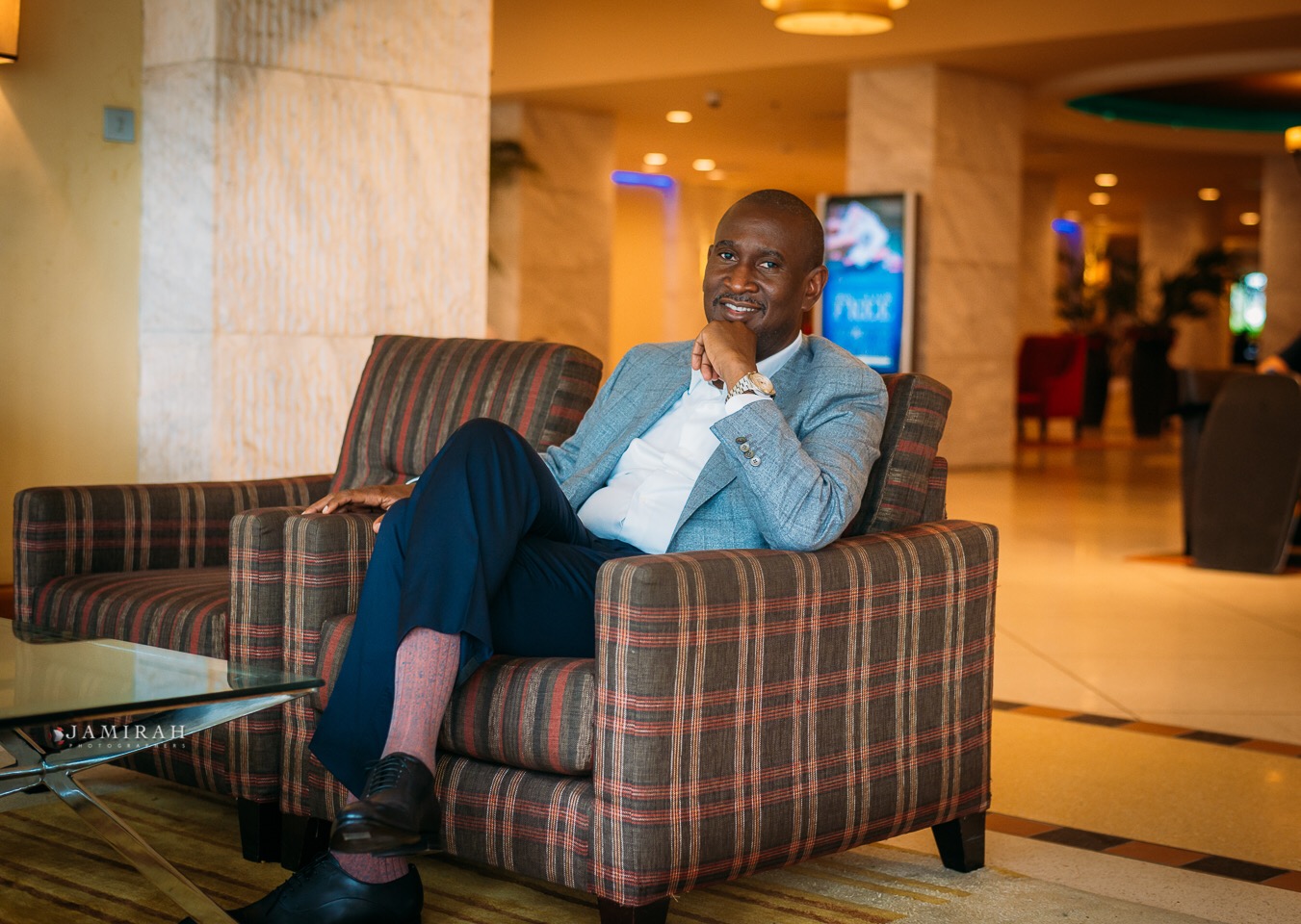
In the crowded landscape of global finance, where quarterly returns often eclipse long-term vision and profit margins overshadow human impact, one leader stands apart with a radically different approach to investment. Dr. Akintoye Akindele’s journey from the dining tables of his childhood home to the boardrooms of Africa’s most transformative enterprises reveals a leadership philosophy forged not in business schools alone, but in the daily demonstrations of service and sacrifice he witnessed growing up.
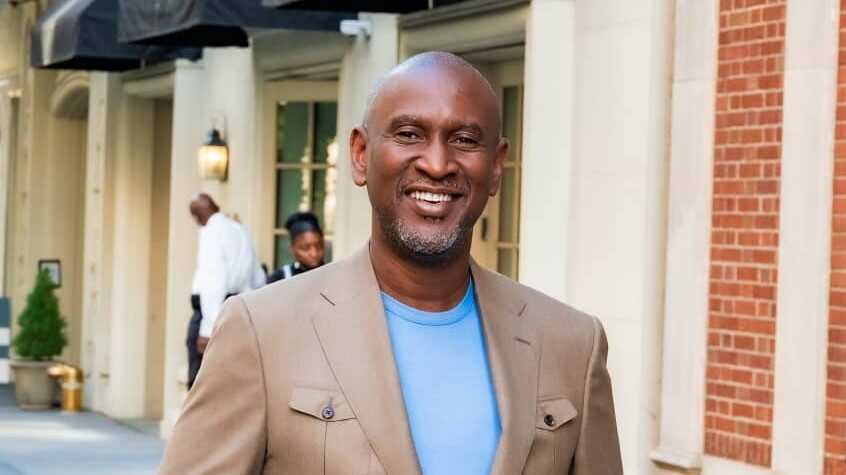
“My professional journey started not in offices, not in training rooms, not in boardrooms,” Dr. Akindele reflects. “It started from my home, where I was privy to watch my parents demonstrate leadership that was not only transformative, was legacy defining, and was also ensuring sustainability and knowledge driven.”
His father, who rose from humble beginnings to become a director at Nigeria’s Central Bank, embodied a principle that would shape his son’s entire career: a leader had to be a servant. Every day, Dr. Akindele watched his father balance being a professional, a father, a leader, and a servant to his community. Whether building water systems, sending children to schools, securing employment for community members, or constructing mosques, his father invested every resource in uplifting those around him.
The wisdom his father imparted remains the cornerstone of Dr. Akindele’s philosophy today. “I should be afraid of dying if I had not impacted many souls,” his father would say. “What is the testimony of your life to God, to your creator when you die? How many people will know you existed? Because you only exist in this life for a short period of time. But what you do in this life will last forever, if you do it well.”
His mother’s entrepreneurship provided equally powerful lessons. Their family home never had fewer than 50 children from the neighborhood eating at their table each day. Privilege was deliberately struck from their vocabulary. Young Akintoye learned that success created an obligation to carry others along, to ensure impact, to foster growth for all.
These foundational experiences instilled what Dr. Akindele calls the principles of capacity over mere competence. “Competence is important, but competence without capacity will not achieve a lot,” he explains. “So you must have competence, you must have energy, you must be knowledgeable, to have capacity. And that means that you must do a lot, because life is short, right? So you must maximize it.”
FROM ENGINEERING TO EQUITY: BUILDING A MULTIDIMENSIONAL EXPERTISE
Dr. Akindele’s professional evolution reads like a masterclass in strategic career development. While most of his siblings pursued banking and accounting, he chose chemical engineering in the 1980s and 90s, an era when structural adjustment programs and military rule meant everything was imported and nothing produced locally. His vision was clear: build infrastructure and processing plants that would add value to Africa’s abundant resources rather than merely exporting raw materials.
Upon joining Nigeria’s state oil company NNPC, he quickly identified the fundamental constraint: capital. Every promising project struggled with insufficient funding. Capital allocation became the bottleneck for progress. This insight catalyzed his pivot into banking, joining Guaranty Trust Bank, where he received six months of intensive training covering not just finance and economics, but also the spiritual aspects of self-development.
“The training program asks you, who are you? And why are you here? Define yourself, define your soul, define your purpose,” Dr. Akindele recalls. This rigorous foundation-building approach produced many of Nigeria’s current banking CEOs, all trained with purpose at the forefront. For Dr. Akindele, his purpose crystallized: solve problems through understanding capital.
His banking career placed him at the multinationals and conglomerates desk, where he witnessed firsthand how capital decisions were made at the highest levels. He saw finance directors and CEOs building cases for subsidiary investments across sectors, learning the art of business justification and risk management. This vantage point explained why, during his engineering days, capital remained so scarce.
Simultaneously, he pursued technical certifications in Microsoft, Cisco networking, and database management, recognizing technology’s pivotal future role. He completed his CFA examinations, earning the gold standard charterholder designation in investment banking when the qualification was notoriously challenging. His profile evolved into something unique: an engineer turned banker turned technologist with deep experience in global resource allocation.
The entrepreneurial experiments ran parallel to his professional ascent. He invested in businesses that failed, including a cyber café during their 1990s popularity. “I started learning about how to fail very quickly,” he notes. “I believe your youth, your 20s are for you to make as many mistakes as possible. Learn as much as you can, soak up every knowledge that you can, and make as many mistakes as possible. Because there are no mistakes in life, just manure. No experience is a mistake. It’s manure for future growth.”
When Nigeria transitioned to democracy, Lead Bank recruited him to establish their IT investment banking desk, combining all his accumulated expertise: engineering background, multinational banking experience, and technology knowledge. The desk grew tenfold within two years. He then co-founded Bond Bank, experiencing the complete lifecycle of building a financial institution from inception.
THE PRIVATE EQUITY APPRENTICESHIP: LEARNING TO CREATE VALUE
The missing piece in Dr. Akindele’s expertise was equity. He understood debt financing thoroughly, but equity management and value creation remained unexplored territory. Joining African Capital Alliance, West Africa’s premier private equity firm, completed his education. There, he participated in landmark deals including bringing MTN to Nigeria and investing in GS Telecom, eventually sold to Vodacom.
“I learned how to manage for value, how to raise equity capital, how to manage talent as talent, because talent is key to unlocking value,” Dr. Akindele explains. Unlike debt instruments, equity requires patience and sophisticated stakeholder management. He learned how to pivot struggling businesses, engage regulators effectively, and apply comprehensive stakeholder approaches to every challenge.
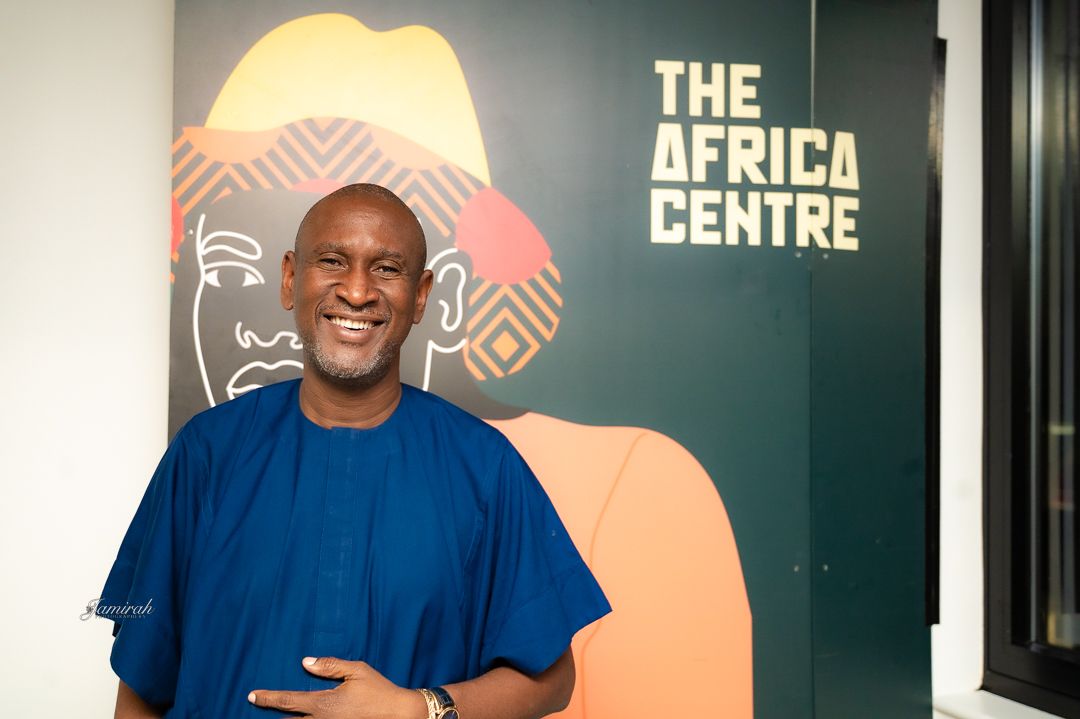
After five years mastering private equity, his career reached completeness: equity expertise, debt financing knowledge, technology proficiency, and engineering foundations all integrated. In 2006, he co-founded Synergy Capital, a boutique investment house offering comprehensive services from taking companies public through IPOs to providing fiduciary services for international companies and families. The firm advised governments on city planning and industrial parks while deploying its own capital into principal investments.
The breakthrough came when they decided to raise their own fund. As first-time fund managers in Nigeria, conventional wisdom suggested they could raise perhaps $50 million. They exceeded $100 million with their inaugural fund, oversubscribed despite skepticism. The achievement proved transformative. Within three years, they raised a second fund totaling $350 million, backed by prestigious institutions including the World Bank’s IFC, Britain’s CDC, the European Investment Bank, and major US endowments from Pittsburgh to Iowa.
The investments spanned power infrastructure, technology ventures, manufacturing operations, oil and gas projects, and healthcare facilities across West Africa. They were building companies, transforming narratives, making electricity accessible to industries, and reducing food costs. Yet something gnawed at Dr. Akindele’s conscience.
THE AWAKENING: WHEN SUCCESS DEMANDS MORE THAN FINANCIAL RETURNS
While pursuing his PhD in finance, Dr. Akindele conducted deep analysis of everything he had learned across decades. The conclusion became inescapable: they were doing good work and generating strong returns, but capitalism without soul ultimately fails. The Elkington business model, focusing on people, profit, and planet, resonated powerfully with him. When these three elements fall out of sync, capitalism cannot succeed.
Evidence surrounded him. Global conflicts, climate crises, and social unrest all stemmed from prioritizing profits while neglecting people and planetary health. The Gini coefficient was rising worldwide; the rich grew richer while the poor grew poorer and the middle class stagnated. Over the past 20 years, this pattern had become universal.
“How do we live in a world where 99% of people are poor, 1% are rich, and the middle class is stuck in the middle because they can’t do anything?” Dr. Akindele questioned. He had achieved his career goals: PhD holder, finance professor, successful fund manager, financial security. But his father’s question echoed: how many souls will testify to your existence?
Private equity’s structural constraints became clear. Money invested for five to seven years must return within that timeframe. Markets like Nigeria and India require more patient, longer-term capital. Companies forced to return capital mid-growth struggle to fulfill their potential. Unlike the US and Europe with their deep capital markets, hedge funds, and diverse investor bases, Africa lacked these liquidity options.
Dr. Akindele’s PhD research provided crucial insights. He modeled successful global companies from Tesla to Amazon, Microsoft to Apple. The pattern was unmistakable: stable market leadership required at least 15 years from ideation to maturity. Some achieved it faster, others took longer, but the average timeline was 15 years minimum.
PLATFORM CAPITAL: INVESTING IN AFRICA’S SUSTAINABLE FUTURE
These realizations crystallized into Platform Capital’s founding vision. Dr. Akindele designed an investment model unlike conventional private equity, deliberately stage agnostic, sector agnostic, region agnostic, and size agnostic. The firm would deploy long-term patient capital exclusively to businesses solving problems sustainably while focusing on people, planet, and profit in equal measure.
The commitments were revolutionary. Portfolio companies must build sustainable enterprises. They must target becoming number one or two in their markets within 15 years. They must commit to measurable impact at the bottom of the pyramid through dedicated CSR budgets. Most importantly, Platform Capital would provide patient capital locked in for at least 15 years, removing the pressure that cripples so many emerging market companies.
“I founded Platform Capital to deploy long-term patient capital to businesses who are focused on solving problems in a sustainable way, who are focused on not just profits, but on people and on planets, and who are changing the narrative about Africa and emerging markets,” Dr. Akindele states.
The results validate this approach. Since launching six to seven years ago, Platform Capital’s balance sheet has grown over 50 times. More importantly, they have touched approximately 1.2 million lives directly, with verifiable names, addresses, and impact certifications. Next year’s target is 2 million lives impacted.
“For me, capital and impact should be twin brothers,” Dr. Akindele emphasizes. “One should not be left behind the other.”
BALANCING RETURNS WITH IMPACT: THE PLATFORM CAPITAL MODEL
Critics often conflate social impact with philanthropy, missing the fundamental economics. By bringing people from society’s fringes into the economic mainstream, market size expands. Larger markets enable business growth. Social impact becomes the engine of commercial success rather than its constraint.
Platform Capital’s structure enables this balance. They invest across all business types: social enterprises expanding market participation and conventional businesses generating profits that fund social enterprise investments. The Platform Capital Impact Foundation ensures bottom-of-the-pyramid populations receive dedicated support.
The critical differentiator is ownership. Platform Capital owns companies directly, generating profits that fund long-term investments. This structure provides patient capital from their own balance sheet rather than third-party funds demanding quick exits. Currently, over 90% of their capital comes from management with less than 10% from external investors.
“We are playing long anyway, because we believe in long,” Dr. Akindele explains. “We know that over time, we will make our money. I believe that good managers will weather business cycles and succeed.”
This ownership model creates pressures. All their cash flows into portfolio companies while some external investors seek near-term exits. Platform Capital serves as a buffer, protecting portfolio company managers from premature pressure while providing guarantees and demonstrating impact to patient investors. The goal is proving that capital with soul generates superior long-term returns while transforming communities.
AFRICA’S MOMENT: ALL SECTORS POISED FOR EXPLOSIVE GROWTH
When asked which sectors will drive Africa’s economic transformation over the next decade, Dr. Akindele’s answer is emphatic: all of them. “Africa needs everything,” he declares. Healthcare requires massive expansion, but technology will make it affordable and universally accessible. Climate tech and energy innovations from solar to batteries, charging stations to hydroelectric dams will solve energy challenges. Agri-tech will increase food availability while storage technologies reduce waste. Transport technology, including drones and eventually flying vehicles, will revolutionize logistics.
Fintech evolution will continue transforming financial access. The comprehensive picture reveals Africa as the only continent where every sector simultaneously prepares for massive growth. Technology and AI are democratizing information access. McKinsey and KPMG reports that once cost fortunes are now available through AI assistants at no cost. Knowledge barriers are falling.
Infrastructure developments accelerate this transformation. The Pan-African Payment and Settlement System now links all African payment systems, enabling Nigerian companies to transact across the continent without converting to dollars. The African Continental Free Trade Area (AfCFTA) creates a unified market of 1.5 billion people, one payment system, technology at its core, and a population with a median age between 15 and 18.
“Africa’s growth will be explosive in the next 10 years,” Dr. Akindele predicts confidently. “Africa will be the world.”
OVERCOMING BARRIERS: NARRATIVE, DEMOCRACY, AND KNOWLEDGE
Despite this optimism, Dr. Akindele acknowledges significant challenges limiting investment flows into Africa. The narrative problem ranks highest. For decades, Africa has been portrayed as poor, unstable, and insecure by voices serving their own interests. Changing this narrative requires Africans telling their own stories through big media houses and, increasingly, through technology-enabled online media where every African becomes a content creator.
Political maturity presents another hurdle. Just 30 years ago, most African governments operated under military rule. The continent is learning democracy while Western nations have practiced it for centuries or longer. Institutions remain under development, policies lack full consistency, but progress accelerates. Greater global economic integration provides both opportunities and challenges, though Africa’s large informal sector provides some insulation from international headwinds.
The knowledge gap that once severely limited African businesses has narrowed dramatically. Online content proliferation, COVID-driven digital adoption, and AI accessibility have democratized expertise. “Challenges are there, but by conspiracy of nature, technology and time, we will solve them and it’s been solved,” Dr. Akindele asserts.
A GENERATIONAL MISSION: RESTORING AFRICA’S RIGHTFUL PLACE
For Dr. Akindele, contributing to Africa’s economic growth carries profound personal meaning. “It means I’ve lived in a generation that my forefathers lived in when Africa was the king of the world,” he explains. “If Africa becomes the king of the world again in my lifetime, what a life.”
Within a single generation, the narrative could transform completely: from Africa as a poor continent people avoided to Africa as the destination of choice and global leader. By 2050, three in five people in the global workforce will be African. Africa will become the world’s food basket with its abundant land and agricultural potential. It will emerge as the fintech capital because African innovations are already leading globally. Health tech solutions developed for African challenges will solve global problems. The continent’s resources, from minerals to lithium, will fuel domestic production of electric vehicles and advanced technologies rather than mere export.
“It means that the dreams of my ancestors, my forefathers, have realized in my generation,” Dr. Akindele reflects. “I’m happy.”
ADVICE FOR THE NEXT GENERATION: FALL SEVEN TIMES, RISE EIGHT
When asked what guidance he would offer young investors and leaders building impact-driven platforms in Africa, Dr. Akindele’s response channels the resilience his father modeled decades ago. “Don’t stop. Keep going. Fall down seven times, get up eight times. Don’t be ashamed when you fall down. It doesn’t matter. You have not failed. You have learned.”
He emphasizes that failure is impossible unless one quits. Each setback provides learning that money cannot buy. Each victory should propel forward momentum rather than complacent celebration, because the next obstacle always waits ahead. The path forward requires selective listening: hear advice and criticism, process it thoughtfully, but don’t let others’ opinions override personal vision.
“The vision was given to you for a reason. It’s your vision. Find people of like-minded people, make them missionaries, and keep going,” Dr. Akindele counsels. Success timelines vary dramatically from five to fifty years. Comparison with others’ trajectories wastes mental energy.
The final guidance centers on problem obsession rather than solution obsession. Solutions, once implemented, become static. Problems remain dynamic, enabling continuous ideation and innovation. “Be obsessed with the problem, not the solution,” Dr. Akindele emphasizes. “The solution, once done, is dead. But the problem always stays there so you can ideate.”
The message to Africa’s emerging leaders radiates optimism grounded in earned wisdom. “You have a great chance. The future is yours. The future is your friend. Time is your friend. Use it very well. Don’t be in a hurry. But yet, don’t waste it.”
THE LEGACY BEING BUILT: CAPITAL WITH SOUL
Dr. Akintoye Akindele represents a new paradigm in African leadership and global investment. His journey from the community-focused dinner tables of his childhood through engineering, banking, technology, and private equity has culminated in an investment philosophy that refuses to separate financial returns from human impact.
Platform Capital’s model demonstrates that patient capital, sustainable business practices, and measurable social impact can coexist with impressive balance sheet growth. The firm’s 50-fold expansion while directly touching 1.2 million lives proves that capitalism with soul is not only possible but potentially superior to purely profit-driven approaches.
As Africa stands at the threshold of explosive economic growth, with all sectors primed for transformation and demographics favoring continental dominance in the coming decades, leaders like Dr. Akindele provide both capital and vision for realizing this potential. His emphasis on 15-year investment horizons, stakeholder capitalism, and problem-focused innovation offers a blueprint for sustainable development that other emerging markets might well emulate.
The questions his father posed decades ago about how many souls would testify to one’s existence find their answer in Platform Capital’s expanding impact footprint. Dr. Akindele is building a legacy measured not just in returns to investors but in lives transformed, communities empowered, and narratives changed.
In an investment world often criticized for short-term thinking and extractive practices, Dr. Akindele stands as proof that another path exists. One where capacity exceeds competence, where falling down creates learning rather than failure, where capital serves as a tool for collective advancement rather than concentrated wealth accumulation.
As Africa moves toward its economic renaissance, it will need more leaders who understand that true transformation requires both financial expertise and moral foundation, both technical competence and human empathy, both bold vision and patient execution. Dr. Akintoye Akindele provides a compelling model for this balanced approach, demonstrating that the most sustainable success serves all stakeholders across generations.
His father’s wisdom echoes through every investment decision, every portfolio company selection, every impact metric tracked: what is the testimony of your life? For Dr. Akindele, that testimony is being written in the transformed lives of millions, the sustainable enterprises being built, and the changed narrative about what Africa can become when capital finally finds its soul.