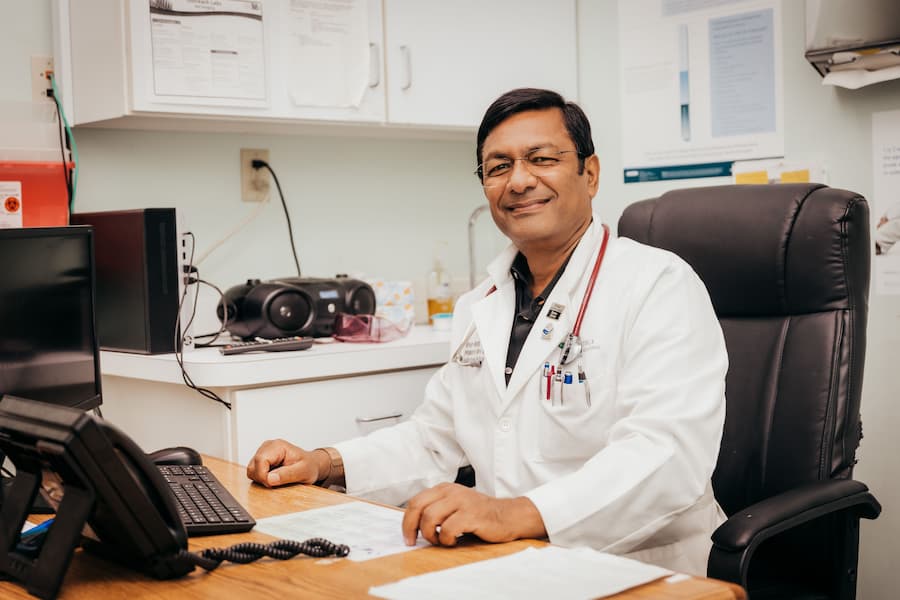
Meet Dr. Arun Gupta – the physician who’s spent nearly two decades proving that addiction recovery isn’t just possible, it’s achievable at rates that would shock most people in healthcare.
While most of America sees addiction as an unsolvable problem, Dr. Gupta’s patients in Monroe, Michigan tell a different story. They’re going back to work, rebuilding relationships with their families, and transforming their lives in ways that seem almost impossible given the statistics we constantly hear.
Here’s what makes his story remarkable: Dr. Gupta maintains an active practice in Monroe, Michigan, where he specializes in addiction medicine and continues to accept new patients. But his 85% success rate isn’t just a number it represents real people who were written off by a system that often treats addiction like a moral failing rather than a medical condition.
From Witness to Warrior
Dr. Gupta didn’t start out planning to become an addiction specialist. His path began in some of the hardest places in healthcare, as a deputy medical examiner for eight years, a jail physician for eleven years, and an emergency room doctor for nearly a decade.
“I had experienced human suffering in a wider perspective that most physicians do not experience in their work lifetime,” he says, and you can hear the weight of those years in his voice.
Think about it: he saw addiction from every possible angle the emergency room overdoses, the deaths he had to examine, and the desperate people cycling through jail again and again. He also spent two years (1987–1989) managing an addiction unit, giving him firsthand experience of treatment and recovery challenges. Most doctors see addiction from just one perspective, if at all. Dr. Gupta saw the full, devastating picture.
The turning point came in 2006 when he was relieved from his responsibilities as a jail physician. Instead of moving on to easier work, he made a choice that would define the rest of his career: “I wanted to understand why many younger Americans are getting addicted to and dying prematurely.”
That curiosity led him to join the American Society of Addiction Medicine, launching him into a field where success stories are rare and doctors even rarer. Today, fewer than 7,000 providers out of 1.8 million in America actually treat substance use disorders. That leaves 46.4 million Americans—think about that number—without access to proper treatment.
How We Got Here (And Why It’s So Hard to Fix)
Dr. Gupta has a front-row seat to how American healthcare transformed from something relatively simple into the regulatory nightmare we have today. He remembers when “doctors would hand write 2-3 lines in the chart and get paid for taking care of patients.”
Then came Purdue Pharma and the push to treat all pain with powerful opioids. Suddenly, doctors were being sued for “under-treating pain” and forced to prescribe highly addictive medications for conditions they’d never dealt with before.
“Doctors had no training in treating patients with chronic pain with very strong narcotics on a longitudinal basis,” Dr. Gupta explains. Add patient satisfaction surveys to the mix, and you had doctors terrified of bad reviews if they didn’t give patients the pills they wanted.
When overdose deaths skyrocketed from 4,000 in 1999 to 32,000 in 2011, the pendulum swung hard in the opposite direction. More than 500 new regulations appeared over the next decade. Over 1,000 doctors were apprehended for alleged overprescribing. The message was clear: stay away from difficult patients with chronic pain and addiction treatment.
The unintended consequence? “No one wanted to take care of these addictive and difficult patients. Patients were forced to go on the street.”
Tragically, death rates escalated to 114,000 annually for three years during COVID, with a slight dip in 2024. Over the past five years, virtually all overdose deaths have been from street drugs, not prescription medications.
The Stigma That Kills
If you ask Dr. Gupta what the biggest barrier to treatment is, he won’t talk about regulations or training first. He’ll talk about stigma.
“Stigma is the bigger elephant in the room that no one is making efforts to improve,” he says bluntly. “It started with Harrison Narcotic Tax Act of 1914. It said addiction is a moral failing and is not treatable.”
Here’s the thing that should make everyone angry: the U.S. Supreme Court ruled in 1962 that addiction is treatable like any other chronic condition. That was over 60 years ago. Yet policymakers and insurance companies have done essentially nothing to change how we think about and treat addiction.
The stigma doesn’t just hurt patients—it follows them everywhere. Dr. Gupta describes the “humiliation and rejection when they have to deal with other professionals like pharmacists, emergency rooms, other specialists getting admitted into a hospital with serious illness.”
Even worse, the stigma affects doctors and successful recovery stories. People who could be advocates and examples stay hidden because of shame that shouldn’t exist.
The Educational Crisis Nobody Talks About
Here’s where Dr. Gupta gets really passionate, and for good reason. Despite being in the middle of the worst addiction crisis in American history, medical schools still don’t teach addiction medicine.
“ACGME (Accreditation Council of Graduate Medical Education) has not changed the medical school curriculum even till today. As a result, addiction medicine is not a part of regular training in medical schools or residency programs in America or in any other countries.”
The math is infuriating: America produces roughly 20,000 doctors every year. If addiction training had been implemented in 2000, “we would have 500,000 new doctors fully trained. We only need 200,000 active providers to contain this crisis.”
Dr. Gupta draws a comparison that should embarrass the entire medical establishment: “Two conditions that have poor outcomes are the ones not taught in medical schools: ‘Addiction and Nutrition.’”
What Success Actually Looks Like
While bureaucrats debate policy and medical schools ignore the crisis, Dr. Gupta’s patients are living proof that recovery works. Over the past 18-19 years, he’s watched people transform from “state-funded Medicaid recipients” into “productive citizens like you and me.”
They get jobs. They reunite with families. They get off government assistance and “excel in life.” They become some of the nicest human beings I have encountered in my practice. These aren’t feel-good stories they’re documented outcomes that other doctors could replicate if they had the training and support.
His book, “The Preventable Epidemic,” captures these transformations. Danny Schneider, who created “The Pharmacist” series, called it “the Bible of addiction.” Stephanie Sheldon from “Conversations about Health” says “all students and adults, policy makers must read this book.”
But here’s the frustrating part: “The mind does not know what the eyes don’t read,” Dr. Gupta observes. “They will not read the book or engage with me in implementing to bring in the necessary changes.”
The Uncomfortable Truth About Organ Transplants
Dr. Gupta raises a point that should make everyone uncomfortable. He talks about the growth of organ transplant programs, which began in America in 1954 and now run “double shifts” thanks to young, healthy addicted patients dying prematurely.
“Each person has seven harvestable organs, and each transplant surgery costs roughly half a million dollars,” he explains. “That is fine—sicker older people need help; science and technology has advanced. My question is why are we not trying to save these younger addicted patients? The institutions eagerly wait to convince the bereaved family for organ donation.”
It’s a harsh way to look at it, but it highlights a twisted priority: we’re more invested in harvesting organs from overdose victims than preventing the overdoses in the first place.
The Federal Government’s Report Card
Dr. Gupta’s assessment of federal efforts is brutally honest: “The federal government is oblivious to solving this problem. There is no will, no desire, no mechanism to fix the opioid crisis. The public must push and demand the Federal government to take the right steps.”
Even recent efforts like the MATE Act, effective June 2023, which allows any doctor to prescribe Suboxone without training, miss the point. “There is no statistically significant improvement in access to care,” he notes. “Now any doctor without any training can prescribe Suboxone to these patients. But beware—all the existing state and federal regulations are still in place.”
What Families Need to Know
Recovery starts with the patient, Dr. Gupta emphasizes. “First, the patient must be willing to get help. Until then, families have no control, as these patients have already burned all bridges.”
But once treatment begins, everything changes. “In my practice the entire family and extended families are very appreciative and thankful that their loved ones are alive and in most cases have united back with their families, back to work and become productive citizens.”
He encourages families to demand better from their representatives, especially regarding the billions in opioid settlement money that’s currently being “directed toward old ineffective policies and organizations that support ‘war on drugs.’”
Models That Work
Dr. Gupta isn’t just complaining—he points to places that have figured this out. Vermont’s comprehensive model showed real promise. Internationally, Portugal’s health-focused approach achieved “astounding success” by treating addiction as a health issue rather than a criminal one.
These examples prove solutions exist. What’s missing is the political will to implement them on a larger scale.
The Mission Continues
Through his SOS Foundation (Sensible Opioid Solutions Foundation) and relentless speaking schedule—over 1,000 presentations in recent years—Dr. Gupta continues fighting for systemic change.
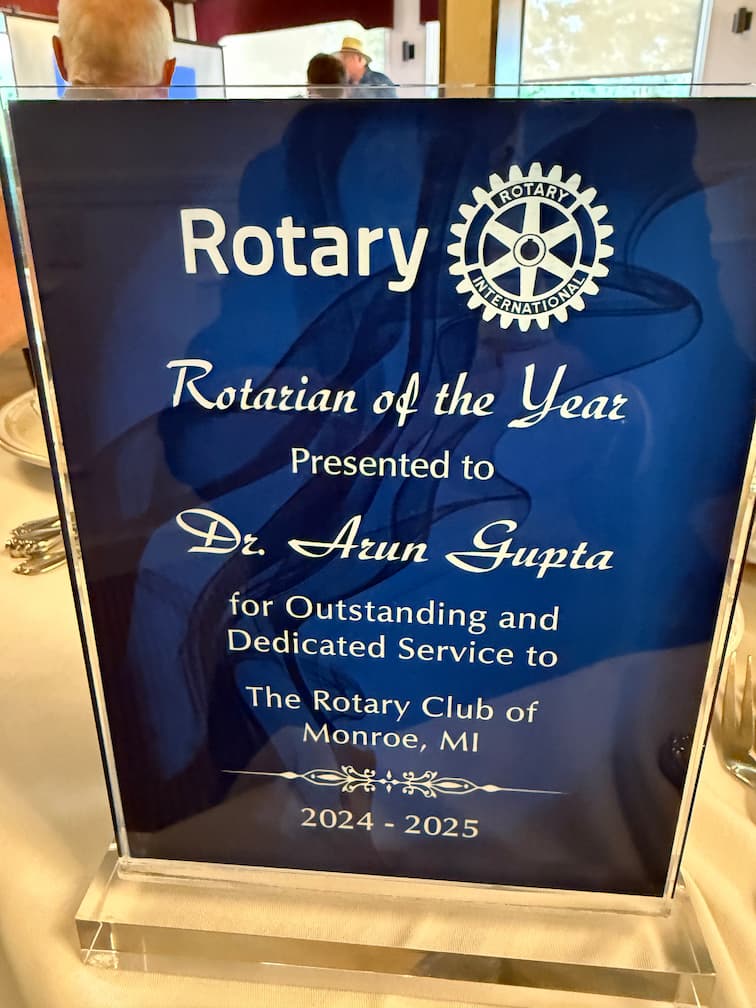
He works with the Rotary Action Group for Addiction Prevention, bringing international attention to solutions that work. His message is getting through: Past President of Rotary International Kalyan Banerjee spoke about the “crisis of addiction that is engulfing our communities” at a major convention.
The Bottom Line
Dr. Gupta’s story isn’t just about one doctor doing good work. It’s proof that the tools to solve America’s addiction crisis already exist. His 85% success rate isn’t magic—it’s medicine applied correctly with compassion and without judgment.
“The natural history of opioid use disorder is: People die,” he says. “So why would we restrict our most effective medication from those who have the most life to lose?”
Every day Dr. Gupta doesn’t give up, more families stay together. More people get second chances. More lives are saved that everyone else had written off.
The question isn’t whether we can solve this crisis. Dr. Gupta has already proven we can. The question is whether we have the courage to follow his example.
Dr. Arun Gupta continues to practice addiction medicine in Monroe, Michigan, accepting new patients and providing hope where others see only statistics. His book, The Preventable Epidemic, is available for those ready to understand why this crisis is solvable and what it will take to actually solve it. It is available on Amazon, Audible, iTunes, or can be ordered through any bookstore.
Key Takeaways That Should Inspire Action:
- Recovery is possible: 85% success rates prove effective treatment works
- The barrier isn’t medical—it’s educational: We need addiction medicine in medical school curricula
- Stigma kills: Treating addiction like a moral failing prevents people from seeking help
- Federal action is needed: Current policies create more barriers than solutions
- Families have power: Demanding better from representatives and agencies can drive change
- International models work: Other countries have solved this—we can too