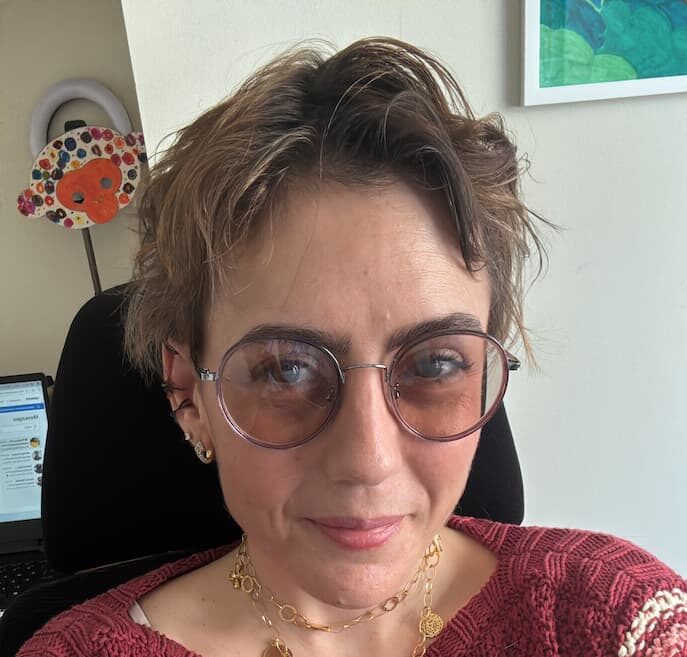
In a world where rare diseases often remain invisible, Lea Jabre has become an unmistakable voice for those fighting battles most people cannot see. Her journey from a multicultural young woman navigating life across continents to becoming a leading advocate for Stiff Person Syndrome and rare diseases represents more than personal triumph. It embodies the transformation of pain into purpose, isolation into community, and silence into a movement that resonates across borders.
October 2022 marked a turning point not just for Lea, but for countless individuals living with rare diseases who desperately needed someone to articulate their struggles. A short film titled “If you’re not dancing something is wrong,” created by a foundation in the United States, went viral and captured Lea’s story in just twelve minutes. The response was overwhelming.
“It went viral, and I realized I had a voice and a story to share and that it could help make a difference,” Lea recalls. That moment of recognition sparked something profound. What began as one woman’s attempt to make sense of her diagnosis evolved into a platform that would give hope to thousands.
But advocacy, Lea discovered, is not merely about speaking out. It is about building something sustainable, something that outlasts individual moments of attention. “When I realized, slowly Bent Not Broken was becoming a community rather than just an advocacy page,” she explains, “I understood that advocacy could be my greatest strength, rather than a burden you carry alone.”
SHAPED BY THE WORLD: HOW INTERNATIONAL ROOTS BUILT A GLOBAL VISION
Lea’s story truly does span continents and causes. Born into a Franco-Lebanese family and having lived in France, Spain, the UK, Lebanon, and The Gambia, her perspective on healthcare, community, and human connection has been shaped by diverse cultural landscapes. This international tapestry has not just colored her worldview; it has fundamentally informed her approach to advocacy.
“I think it made me more open and open minded,” Lea reflects on her multicultural upbringing. “And it made me want to get to as many people in the world. I believe that advocacy to have an impact should try to reach as many people as possible.”
This philosophy of radical inclusion stems from her experiences across vastly different societies. Two places, in particular, left indelible marks on who she would become. The UK, where she spent eight transformative years completing both her undergraduate and postgraduate degrees at University College London, shaped her as an adult. It was there she completed her first internship, secured her first job, and published her first article. London’s cosmopolitan energy, its cultural richness, and its diverse population expanded her mind and curiosity about life.
But it was The Gambia that taught her perhaps the most profound lessons. “It was everything I wasn’t used to,” Lea remembers. “It taught me that simplicity and happiness come from within, it made me appreciate everything in life so much more.” Living in a country with dirt roads and minimal development, she witnessed people living with very little yet carrying smiles on their faces and peace in their hearts. The Gambia’s welcoming spirit and its people’s contentment despite material scarcity gave her a framework for understanding what truly matters.
“I appreciate it much more now, that I can’t really go anymore due to my health,” she admits, revealing the bittersweet reality of her condition. The very experiences that prepared her for advocacy have become memories she can no longer actively pursue, making them all the more precious.
BOUKRA NOUR: PLANTING SEEDS OF HOPE IN LEBANESE SOIL
The Arabic phrase “Boukra Nour” translates to “tomorrow’s light” or “hope for tomorrow,” a fitting name for the NGO Lea founded in Lebanon. The organization represents the convergence of her multicultural experience, her passion for systemic change, and her deep connection to her Lebanese heritage.
The genesis of Boukra Nour came through collaboration with one of her closest friends from her London university days, someone she met at nineteen who shares her Lebanese roots. Together, they envisioned something transformative: an organization dedicated to empowering futures through healing, building an ecosystem of knowledge, training, and awareness for anyone who comes into contact with a child.
“We brainstormed together and we came up with Boukra Nour and its mission: Empowering Futures, Rooted in Healing,” Lea explains. The organization operates on two fronts. First, it provides education and awareness to caregivers, educators, and community members. Second, it develops technological solutions, specifically a case management web platform that gives local actors better tools to support the children they serve.
For Lea, the meaning of “hope for tomorrow” has become multidimensional. “It touches both on the success of my projects and the hope that SPS research advances so my health can benefit and I can live a more normal and less painful life,” she shares. This dual meaning captures the essence of her advocacy: personal struggle interwoven with collective progress, individual hope connected to community healing.
UNDERSTANDING THE INVISIBLE: STIFF PERSON SYNDROME SPECTRUM DISORDERS
One of the greatest challenges facing rare disease advocates is cutting through misconceptions and misinformation. For Stiff Person Syndrome, these misunderstandings can be particularly damaging, affecting diagnosis, treatment, and public perception.
“For SPS, it is actually Stiff Person Syndrome Disorders, so a spectrum set of disorders with a wide spectrum of severity,” Lea clarifies. This distinction matters immensely. Understanding that SPS exists on a spectrum helps medical professionals recognize varied presentations, helps patients understand their experiences aren’t invalid if they differ from textbook descriptions, and helps the public grasp the complexity of rare conditions.
The broader issue extends across all rare diseases. “Often the unknown is not spoken about unless you are experiencing it with precise knowledge because there is little information available,” Lea observes. This knowledge gap creates a vicious cycle: limited information means limited awareness, which means limited research funding, which perpetuates limited information.
Breaking this cycle requires voices willing to speak openly about their experiences, willing to educate not just patients but healthcare providers, policymakers, and the general public. It requires making the invisible visible through every available channel.
THE POWER OF STORYTELLING: MEDIA AS A VEHICLE FOR CHANGE
Lea understands intuitively what research has confirmed: storytelling is one of the most powerful tools for creating social change. Personal narratives cut through statistics and medical jargon, creating emotional connections that abstract information cannot achieve.
“They propel the subject matter at the forefront of society and that is why it is important to give as many interviews and spread as much awareness as possible,” Lea explains about the role of media and communication in rare disease advocacy.
Her Instagram account, Bent_not_broken_autoimmune, has become a gathering place for thousands seeking understanding, community, and hope. The page name itself conveys a powerful message: despite being bent by the weight of illness, the community remains unbroken. When asked what message she hopes people feel when visiting her page, Lea’s response is simple but profound: “Hope and they find a community, they also find comfort.”
This commitment to community building extends to her YouTube collaboration with Dr. Ilea Khan, her close friend whom she affectionately calls “My Bestie.” Together, they have created a unique space for raw, unfiltered conversations about living with chronic illness, navigating healthcare systems, and maintaining hope despite overwhelming challenges.
“Our rawness, real talks, and that nothing we say is pre-prepared and it resonates with many,” Lea says about what makes their partnership impactful. “Also the fact we are such close friends makes our conversations so natural and our messages heard.”
Through these podcasts and their patient resource page, Lea and Dr. Khan are working toward something larger than individual support. “I hope that somehow that can have an impact on people understanding and having access to more knowledge and therefore impact global health equity to the maximum it can,” Lea explains. She acknowledges the limitations, adding honestly, “I know it is not enough but can play an important role.”
This combination of ambition and humility, of dreaming big while remaining grounded in reality, characterizes Lea’s entire approach to advocacy. She does not claim to have all the answers, but she commits fully to being part of the solution.
THE DAILY CHOICE: WHAT RESILIENCE REALLY LOOKS LIKE
To those who follow her work, Lea Jabre appears as a symbol of resilience, someone who has transformed adversity into action and pain into purpose. But what does resilience actually mean behind the carefully curated social media posts and polished interview responses?
“Showing up to life every day, even when days are harder than others,” Lea reveals. “It’s a discipline and a choice I have made.” This definition strips away the romanticism often attached to resilience. It is not about feeling strong or being naturally optimistic. It is about the daily, deliberate decision to engage with life despite overwhelming reasons not to.
Lea balances an extraordinary load: fundraising and communications work at Reddo Care, leadership of Boukra Nour NGO, ongoing advocacy through multiple platforms, and the constant management of a debilitating chronic condition. When asked what drives her resilience on days when it all feels overwhelming, her answer reveals the engine behind her work.
“You said it, my drive. My drive to achieve projects that speak to me is what keeps me going even in the dark and painful days, which are more often than I speak about,” she admits. “But this drive helps me navigate through the pain.”
That parenthetical admission carries weight. The painful days occur more frequently than her public presence might suggest, a reminder that advocacy does not cure disease and visibility does not eliminate suffering. Yet her drive, her connection to meaningful projects and to the community she serves, provides purpose strong enough to sustain her through darkness.
UNEXPECTED LESSONS: WHAT CHRONIC ILLNESS TEACHES ABOUT HUMANITY
Stiff Person Syndrome forced Lea to confront truths about herself, about society, and about human nature that she never anticipated learning. When asked about the most unexpected lesson SPS has taught her, her response reveals profound insights about identity, capability, and social connection.
“You will surprise yourself when faced with the most difficult and unexpected things in life, you will also surprise yourself at how you can adapt to change,” Lea reflects. This discovery of inner resources she did not know she possessed represents a common experience among those facing serious illness, yet it never loses its power to astonish.
But adaptation comes with losses that society does not always acknowledge. “You don’t have as many people around you as once thought,” she continues, addressing the painful reality that chronic illness often reveals who will stay and who will leave. “Society puts a high bar on the importance of a social life and what it means. This gets challenged when you get severely ill but you also end up finding your new reality and truth.”
This recalibration of social expectations and personal truth represents one of the hidden challenges of chronic illness. The world continues to operate according to norms designed for healthy bodies: spontaneous plans, consistent availability, predictable energy levels. When illness makes meeting these norms impossible, individuals must either internalize failure or redefine success. Lea has chosen the latter, finding her truth in a reality that looks different from what society prescribes but is no less valid or valuable.
A VISION FOR 2026 AND BEYOND: THE FUTURE OF RARE DISEASE ADVOCACY
As we move deeper into 2026, Lea’s vision for the rare disease community remains focused on the most critical need: research leading to treatment. When asked what changes she would like to see for rare disease patients globally, her answer is direct: “More impact on research so more treatments can be developed or clinical trials.”
This focus on research represents the ultimate goal of awareness campaigns, community building, and advocacy work. Visibility matters not for its own sake but because it drives funding, which drives research, which ultimately drives the development of treatments that can transform lives.
For someone like Lea, living with SPS means navigating each day without effective treatment options. Every conversation about her condition, every interview given, every post shared serves a dual purpose: supporting others who share her struggle and building momentum toward the research breakthroughs that could change everything.
Her work with Dr. Khan on their YouTube channel, her leadership of Boukra Nour, her fundraising and communications work at Reddo Care, and her Bent Not Broken community all contribute to this larger objective. Each platform reaches different audiences, educates different stakeholders, and applies different kinds of pressure on systems that have historically overlooked rare diseases.
A MESSAGE OF HOPE: TO THOSE NEWLY DIAGNOSED
For individuals receiving a rare disease diagnosis, the initial period often brings overwhelming fear, isolation, and uncertainty. The medical system may provide limited information, support networks may be hard to find, and the future may seem impossibly dark. Lea has been there. She understands the terror of that moment and the long, difficult adjustment that follows.
When asked what message she would share with someone newly diagnosed and feeling lost or afraid, Lea’s response carries the weight of lived experience and the warmth of genuine compassion: “You can do it, and you are not alone!”
These simple words encapsulate everything Lea has built through her advocacy. The first part, “you can do it,” affirms capability and resilience even when both seem impossible. It does not promise easy days or quick solutions. It acknowledges the difficulty while insisting on the possibility of moving forward.
The second part, “you are not alone,” directly addresses the isolation that defines so many rare disease experiences. Through her work, Lea has created spaces where that isolation dissolves, where newly diagnosed individuals can find others who understand, where questions find answers and fear finds community.
THE LEGACY OF BENT NOT BROKEN
Lea Jabre’s journey from patient to advocate represents more than personal transformation. It demonstrates the power of turning individual struggle into collective strength, of using privilege and platform to amplify marginalized voices, and of building community as an act of resistance against isolation and invisibility.
Her multicultural background gave her global perspective. Her education at UCL provided professional skills and credibility. Her experience in The Gambia taught her about finding peace and purpose beyond material circumstances. Her time in London connected her to diverse communities and ways of thinking. Her Lebanese heritage grounds her in tradition and family while inspiring her to serve vulnerable populations through Boukra Nour.
All of these threads weave together in her current work, creating a tapestry of advocacy that honors where she has been while pushing toward where she wants to go. Her Franco-Lebanese identity, her UK base, and her global vision combine to create advocacy without borders, reaching across languages, cultures, and healthcare systems to connect individuals united by the experience of living with rare diseases.
As we move through 2026, the rare disease community faces persistent challenges: limited research funding, inadequate treatment options, social misconceptions, and healthcare systems not designed for complex chronic conditions. Leaders like Lea provide not just hope but practical action, not just inspiration but tangible community, not just stories but systemic change.
Her work reminds us that advocacy is not about perfection or having all the answers. It is about showing up, speaking out, building connections, and making space for others to do the same. It is about being bent by circumstances beyond our control but refusing to be broken by them.
“If you’re not dancing something is wrong,” the title of that viral film proclaimed. For those living with Stiff Person Syndrome, dancing may be literally impossible. But moving forward, creating change, building community, and refusing to disappear—these remain possible, even necessary. Lea Jabre dances in her own way, and in doing so, she creates space for others to find their rhythm too.