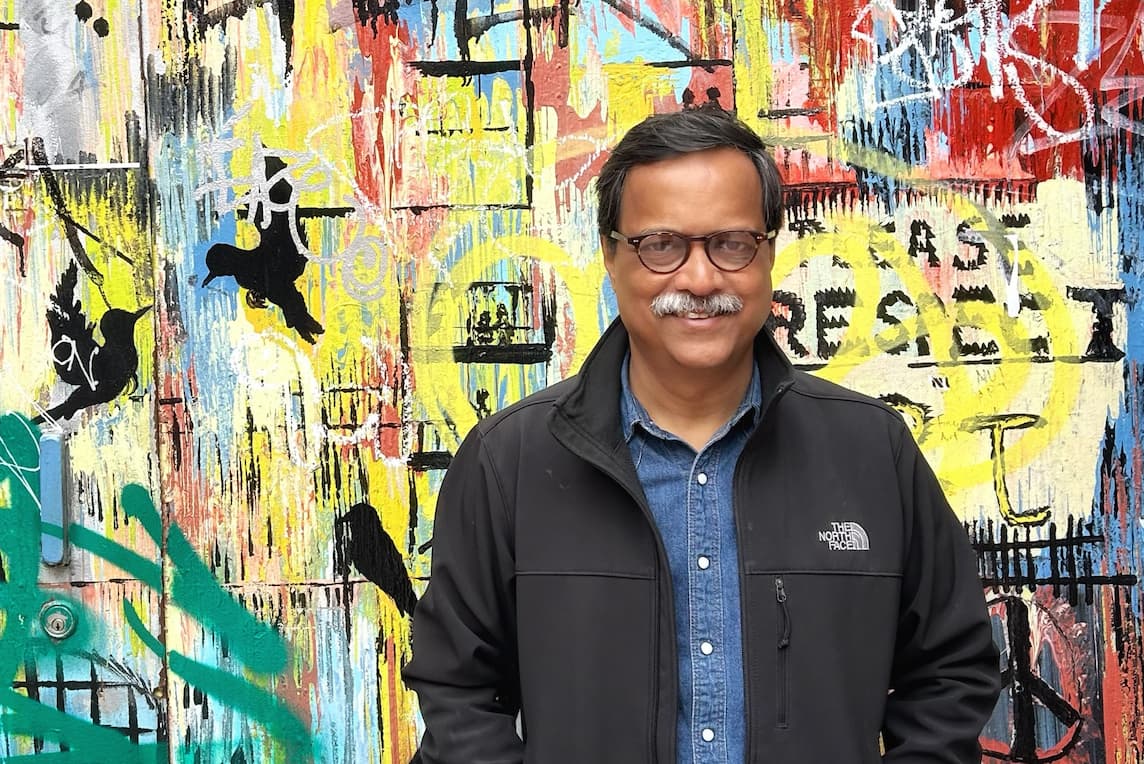
In an era where businesses race to decode consumer behavior and predict market shifts, few leaders possess the rare combination of cultural intuition and strategic foresight that defines transformative thinking. Kunal Sinha stands as a testament to what emerges when deep cultural understanding converges with predictive intelligence and a relentless curiosity about human nature.
His journey reads like an anthropologist’s dream: from the ancient lanes of Varanasi to the hyper-modern megacities of China, from Indonesia’s cultural mosaic to Malaysia’s evolving marketplace. Across four countries and over three decades, Kunal has built a unique perspective that bridges the gap between data-driven insights and the subtle cultural signals that shape how societies evolve.
“Life often unfolds as a series of unplanned adventures, each one shaping us in ways we rarely foresee,” Kunal reflects on his global odyssey. “From crowded Indian bazaars to hyper-modern Chinese megacities, from the cultural mosaic of Indonesia to the evolving marketplace of Malaysia, I have been lucky to navigate worlds that are vastly different yet surprisingly similar at their core.”
This multicontinental experience has enabled him to build a career whose lessons transcend traditional marketing and strategy, touching on adaptability, empathy, and what he calls “relentless curiosity” about the human condition.
THE MAKING OF A CULTURAL DECODER
Kunal’s foundational understanding of diversity began in Varanasi, the world’s oldest living city, where life and death play out in concurrent theater on the banks of the holy Ganga. Growing up in a multicultural university environment provided an early lesson that would prove invaluable throughout his career: India is not one market but a thousand markets stitched together by threads of language, tradition, and aspiration.
Early career experiences reinforced this insight. Traveling to rural South India to study consumer behavior, Kunal encountered video vans that served as cultural connectors, bringing the latest films to remote villages and transforming social evenings. Deep in Madhya Pradesh’s forests, he discovered Gond communities whose village walls were resplendent with tribal art celebrating nature and traditional festivals. These experiences crystallized a principle that would guide his entire career: creativity flourishes even in resource-constrained environments.
When Kunal moved to China in 2006, he witnessed a society in the midst of unprecedented transformation. The pace of change was dizzying as the country raced toward modernization. In villages, farmers used mobile phones to bypass intermediaries and sell produce directly. In cities, young people embraced digital platforms not just as convenience tools but as expressions of identity. Mega events like the Beijing Olympics and Shanghai Expo became coming-out parties about China’s place in the world, its cultural history repackaged proudly through modernism.
“Here was a society leapfrogging traditional stages of development, and the biggest lesson was this: adaptability is survival,” Kunal observes. “In a market where yesterday’s truths could become obsolete overnight, the only constant was change.”
BUILDING A METHODOLOGY FOR FORESIGHT
Kunal’s professional journey through JWT, Ogilvy, McCann, The Futures Company, M&C Saatchi Indonesia, and now Ampersand Advisory has been defined by roles demanding strategic foresight and cultural intelligence. Each position reinforced his belief that leadership in strategy is not about dictating vision but co-creating it with diverse minds.
At Ogilvy Asia, his team wasn’t just decoding data but interpreting cultural signals that shape behavior. A pivotal project on sustainability led to creating Ogilvy Earth, their sustainability practice, which was ahead of its time. The key takeaway: brands cannot simply sell; they must contribute meaningfully to society.
His predictions about technology’s future in the early 2000s earned recognition with the WPP Atticus Grand Prix. He had forecast how technology would enable diverse cultures to collaborate more efficiently across every sphere, bringing people and organizations closer together. His prediction centered on society’s shift from thriving on competition to needing collaboration, with communication and conversation as keys to learning.
In Indonesia, Kunal entered a market both familiar and alien. Familiar because the collectivist ethos resonated with his Indian roots; alien because the consumer psyche was influenced by a unique blend of tradition and modernity. Studying behavior across the island nation during Ramadan for three consecutive years taught him about balancing religious beliefs with pragmatism.
“Navigating this duality taught me another crucial lesson: humility,” Kunal explains. “No matter how seasoned you think you are, every new market is a new classroom and a new laboratory.”
REDEFINING STRATEGIC PLANNING IN VOLATILE TIMES
In today’s environment, where supply shocks, tech disruption, and geopolitical surprises define the business landscape, Kunal argues that static business plans are not just outdated but dangerous. He believes strategic growth now hinges on two imperatives: resilience and relevance.
As AI rewrites business rules, leaders who can accurately forecast market shifts, customer behavior, and operational outcomes will be the ones calling the shots. Deep understanding of risks and predicting likely outcomes becomes the inevitable response to volatility.
“To adopt a future growth mindset in an age defined by uncertainty, companies must rewire how they think, plan, and act,” Kunal states. “Traditional growth models based on predictability, scale, and efficiency no longer suffice. Instead, organizations need to evolve into adaptive, curious, and resilient organisms.”
His approach requires companies to continuously iterate, even cannibalize their own products when necessary. They must strive for continuous value addition, make bold bets, foster adaptive innovation, and fulfill the need for balance. Planning must be dynamic, not rigid, with modular strategies that evolve with real-time inputs.
THE DISTINCTION BETWEEN TRENDS AND FORESIGHT
Kunal draws a crucial distinction between trend-spotting and true foresight that shapes his entire methodology. Trends have short shelf lives, as evidenced by TikTok’s principle: if you don’t leverage a trend within 72 hours, move on. For companies thriving on short attention spans and impatience, such as e-commerce and food delivery, it’s vital to not only ride trends but set them for regular engagement spikes.
True foresight operates on a different dimension entirely. It’s about vision and the big picture. Do you want to change the world or disrupt an industry? What large impact will you make? Are you willing to bet big on what currently seems like a small movement? Examples include digital payments, lab-grown diamonds, and health monitoring.
His process combines multiple data sources with real-world observation. In turbulent times, historical data alone isn’t sufficient. Business leaders must tap into real-time and predictive data to detect early signs of consumer behavior shifts, identify emerging cultural trends, and build “what if” scenarios to anticipate future volatility.
“If you want to learn about the tiger, don’t go to the zoo. Go to the jungle,” Kunal quotes, emphasizing his philosophy about real-world engagement. Despite access to dashboards, social listening tools, and AI that analyzes data and phenomena across markets, there’s a danger of locking ourselves out of ground reality.
CULTURAL UNDERSTANDING AS COMPETITIVE ADVANTAGE
Working across diverse markets has given Kunal unique insights into how cultural understanding shapes successful brand strategies. Culture, he argues, is the invisible thread holding everything together, shaping how people see the world, connect, and make choices. While technology has brought societies closer, it has also amplified differences, making cultural understanding more important than ever.
“The interesting thing is, while technology has brought us closer, it has also amplified our differences,” Kunal observes. “If a brand doesn’t make the effort to understand local nuances, it risks sounding tone-deaf or out of touch.”
His concept of “pervasive creativity” reflects this understanding. For Kunal, pervasive creativity is about everyday ingenuity rather than rare flashes of brilliance. It’s how people use creativity to solve real-life problems, often with limited resources. Throughout Asia, he sees this everywhere: people’s incredible ability to absorb outside influences and remix them into something that feels fresh and local.
BRIDGING DATA WITH HUMAN INSIGHT
Kunal’s methodology centers on triangulation, balancing data with intuitive, human-centered strategy. Data reveals what’s happening, but human insight explains why. He begins by understanding people’s needs, aspirations, and fears, then uses data to validate and fine-tune those observations.
A recent experience illustrates this approach perfectly. Reading a study claiming two-thirds of Malaysian shoppers use AI while shopping in stores, Kunal went to a mall and asked twenty people directly. Not one said yes. This experience reinforced his belief that data without context can lead organizations astray.
“Data is powerful, but without context, it can lead you astray,” he reflects. “We must get out in the real world as a matter of practice, not to pay lip service to ‘meeting the consumer.’”
His approach involves meeting, following, and speaking with trendsetters, identifying outliers, and observing their behaviors. Observation becomes a fantastic way of discovery, and new observations can always be triangulated with hard data.
THE LEADERSHIP IMPERATIVE IN TRANSFORMATION
Leading strategy across major agencies and consultancies during rapid change has taught Kunal that effective leadership starts with empathy. People need to feel heard and supported when everything around them is changing. He believes emotional storytelling isn’t just for consumers but works inside organizations too.
“When you can inspire your team with a clear, human story about where you’re headed, they’ll find the courage to adapt,” Kunal explains. “The other thing is being part of the culture you’re trying to influence. Leaders can’t stay in ivory towers while expecting their teams to embrace digital-first behavior.”
The biggest challenges in driving digital transformation within legacy organizations often involve mindset shifts. Convincing senior leaders about transformation’s financial value is one challenge, but bringing the entire organization along is harder. People fear what they don’t understand, especially automation or AI.
Kunal’s approach involves reassuring teams that technology isn’t replacing their experience but making them better at what they do. Legacy organizations require careful navigation between modernizing systems and preserving institutional wisdom. The solution often lies in bridging gaps through step-by-step modernization while showing quick wins to maintain motivation.
REGIONAL DYNAMICS AND GLOBAL OPPORTUNITIES
Kunal’s multicontinental experience provides unique insights into how business challenges and opportunities differ between APAC, MEA, and Western markets. The biggest difference lies in growth pace: APAC and MEA markets buzz with energy and optimism, driven by huge young populations that make these markets exciting but unpredictable. Western markets, conversely, are mature, slower-growing, and in some cases, shrinking.
These dynamics create interesting opportunities. Asian brands leverage cost advantages and innovation to go global, exemplified by Chinese mobile and appliance brands making inroads into Europe and North America. Simultaneously, as Asian consumers become more affluent, they fuel demand for luxury and high-end Western brands.
When examining what India and China can learn from each other regarding digital innovation and consumer insight, Kunal identifies complementary strengths. India has excelled in inclusion through Aadhaar and UPI, creating strong digital identity and payment infrastructure. China has built powerful super apps integrating payments, social interaction, and e-commerce into seamless experiences.
UNDERESTIMATED TRENDS AND FUTURE OPPORTUNITIES
One trend Kunal feels strongly about is the senior consumer market. Asia will have the world’s largest senior population by 2050, yet this segment is often ignored because marketers obsess over youth. He sees this as a massive missed opportunity worth USD 1.9 trillion.
The needs are substantial: money management, assisted shopping, healthcare, travel. Technology can make these services more accessible. Quick commerce and e-commerce players could adapt models to serve seniors. Travel companies could design experiences specifically for older customers.
Regarding sustainability and social consciousness in future-ready brand strategies, Kunal observes that while every brand talks about sustainability, few close the gap between what consumers say and actually do. People claim they’ll pay more for eco-friendly products, but price and convenience typically win when making purchases.
“The brands that will succeed are the ones that make sustainability simple and practical,” Kunal predicts. “If you make it easy, affordable, and visible, people will choose it.”
THE EVOLUTION OF RESEARCH IN A TECH-DRIVEN WORLD
Technology is transforming ethnographic research in ways Kunal finds exciting. Participatory design and crowdsourced ethnography let people become active partners rather than passive subjects, making insights richer and more authentic. Digital platforms now allow gathering data from diverse populations in real time, providing more complete pictures of evolving situations.
However, the human element remains essential. Ethnography isn’t just about data points but understanding lived experiences. When technology combines with collaboration and empathy, research becomes both scalable and deeply meaningful.
A LEGACY OF CURIOSITY AND IMPACT
After decades of award-winning work spanning continents and cultures, Kunal’s passion for foresight and cultural strategy stems from three fundamental drives: curiosity about people and places, the magic of finding stories and sharing them meaningfully, and the impact of helping organizations make better decisions that improve lives.
His journey from Varanasi’s ancient lanes to global consultancy leadership demonstrates how deep cultural understanding, combined with strategic foresight and technological fluency, creates unique value in an interconnected world. As businesses continue navigating digital transformation, cultural evolution, and shifting consumer expectations, leaders like Kunal provide essential guidance on maintaining cultural sensitivity while achieving strategic objectives.
The future belongs to those who understand that successful transformation requires both analytical rigor and cultural wisdom, both data-driven insights and human empathy. Kunal Sinha’s career provides a roadmap for achieving this balance, demonstrating that the most profound business insights often emerge from the intersection of cultures, technologies, and human aspirations.
His story reminds us that in a world of algorithms and automation, the leaders who will shape tomorrow are those who never lose sight of the human stories that give meaning to the numbers.