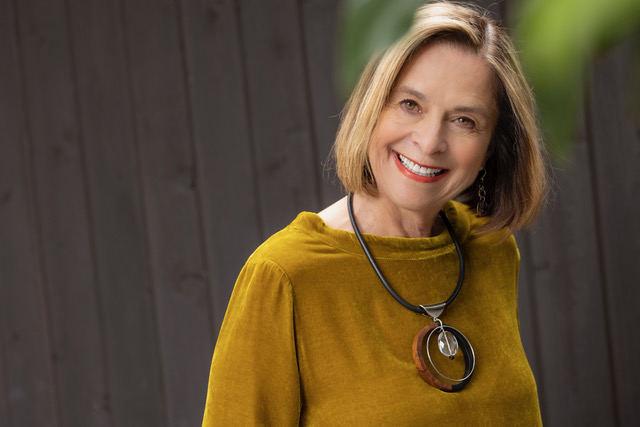
At age four, Pamela Thompson knew something most children couldn’t articulate. She felt it “in her bones” that she would travel extensively and be of service to others. This profound early knowing, this deep intuitive pull toward different people, countries, and cultures, would become the foundation of a remarkable leadership journey spanning more than three decades across five continents.
From conflict zones in Afghanistan to primary health care projects in Nigeria, from consulting with the World Health Organization to founding Female Wave of Change Canada, Pamela has lived a life dedicated to understanding our shared humanity and empowering others to lead with authenticity and purpose. Her work bridges international development, organizational transformation, and feminine leadership, creating pathways for women to navigate change without losing themselves in the process.
“Based on my experiences living and working on five continents, I’ve learned that people are more the same than they are different,” Pamela reflects. “They want to be valued, respected, belong and most of them care about family.”
This simple yet profound truth has shaped her approach to leadership, coaching, and community building. It has informed her belief that when we are curious and seek to understand others, they can sense it, consciously or subconsciously. Conversely, when we are judgmental, an invisible wall goes up between us, inhibiting connection and learning from one another.
THE HANDSHAKE THAT CHANGED EVERYTHING
The early 1990s marked a pivotal turning point in Pamela’s professional life. While taking a course on “Project Management in a Government Environment,” the facilitator noticed her natural facilitation skills during small group work and approached her with a life-changing question: “Where did you learn to facilitate?”
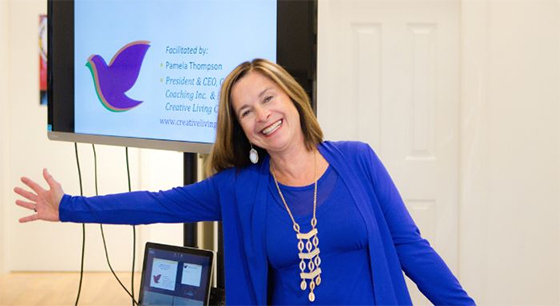
“Based on my experiences living and working on five continents, I’ve learned that people are more the same than they are different. They want to be valued, respected, belong and most of them care about family “
Her honest response was revealing: “I just do it; I am trained in group and family therapy but haven’t been trained in facilitation.” His reply was immediate: “We need to talk.”
Six months later, on nothing more than a handshake, a verbal guarantee of a certain per diem, and a promise of monthly work days, Pamela joined the management consulting group. No contract. No safety net. Just trust and possibility.
Within six months, the partner who brought her in had a philosophical split with the other partners and left to form his own company. He asked Pamela to join him, but she didn’t want to take sides. Instead, she made the courageous decision to start her own business. “I haven’t looked back since,” she says with quiet confidence.
This leap into entrepreneurship wasn’t just about building a business. It was about claiming her voice, trusting her instincts, and creating the freedom to serve in the way she knew was possible.
LESSONS FROM THE FIELD: WHERE CRISIS MEETS COURAGE
Working across diverse cultural and professional contexts, including conflict zones, has given Pamela an extraordinary perspective on what effective leadership truly requires. She has witnessed firsthand the value of collaboration and experienced the excitement of co-creating programs, projects, and strategies with groups working toward common goals.
“I’ve found that the more diverse a group, the more creative and innovative are the potential creations and solutions,” Pamela observes. This belief in diversity as a catalyst for innovation has become central to her work with organizations and leaders worldwide.
Living and working in uncertain environments, including conflict zones, taught Pamela to deal with the unexpected and stay flexible and open to possibilities. Adaptability in leadership, particularly in uncertain times, became not just a skill but a survival mechanism.
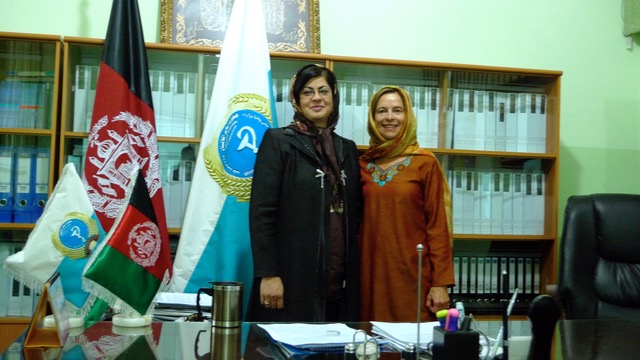
One moment in Afghanistan crystallizes the power of calm leadership during crisis. While facilitating a workshop, fear rippled through the conference room following news of an attack on the Ministry. In that moment of collective anxiety, Pamela’s response was both simple and profound. By acknowledging the fear while reassuring the group of their safety, she helped them stay focused and complete the workshop.
In moments of crisis, a leader’s calm presence is vital. Pamela understood that denying fear would have been dismissive, but dwelling on it would have been paralyzing. Instead, she created space for the emotion while holding steady the container for their work together.
THE POWER OF CO-CREATING A SHARED VISION
As Project Director of a Primary Health Care Project in Nigeria, Pamela led the design team for a five-year initiative that would teach her one of the most powerful lessons of her career: the transformative power of co-creating and communicating a shared vision.
Leading with Courage and Heart: Three Decades of Transformational Leadership Across Five Continents
While facilitating a national workshop where participants from two states shared findings from their respective workshops, something extraordinary happened. The Head of Policy and Planning in the Muslim state from the North stood up and addressed the group from the Christian South with words that would echo in Pamela’s memory for years to come:
“Brothers and Sisters, I thought we were so different from you, less educated, more backward and I thought your challenges and vision would be so different from ours. Now I realize we are both the same. I am sOoo looking forward to working together with you to turn our visions into reality.”
It was a memorable moment that demonstrated how a shared vision unites teams and fuels momentum, even in divided contexts. Co-creating visions across cultural and religious divides revealed common ground and fostered trust and collaboration in ways that top-down directives never could.
INSTITUTIONS ARE MADE OF PEOPLE
Through her consulting work with high-level institutions such as WHO, PAHO, and the Government of Afghanistan, Pamela has learned a fundamental truth that many consultants miss: institutions are composed of people. The key to working effectively with these organizations isn’t about impressive credentials or expert positioning. It’s about connecting with people, showing them respect, and being genuinely curious.
Her approach challenges the traditional consultant-client dynamic. When people ask her for recommendations, she typically asks them what they see is working, what is not, and what they would recommend, recognizing that they know their local context better than any outside expert could. Only then does she offer her own suggestions and recommendations.
This collaborative approach respects local knowledge while bringing external perspective, creating solutions that are both innovative and contextually appropriate.
WHAT DISTINGUISHES EFFECTIVE LEADERS IN UNCERTAIN TIMES
Having navigated countless transitions across cultures, organizations, and contexts, Pamela has developed a clear framework for what distinguishes effective leaders during uncertainty and change.
Authentic leaders understand themselves, their strengths and weaknesses. They are able to be vulnerable and acknowledge their mistakes. They “walk their talk,” clear on their own values and beliefs, and lead in alignment with these. As a leader, it is important to consistently demonstrate this congruence so people feel safe, trust you, and are aware of what is expected of them.
Emotionally intelligent leaders are capable of recognizing their own emotions and those of others, and managing those emotions effectively. This capacity becomes especially critical during periods of transition when emotional undercurrents can derail even the best strategies.
Collaborative leaders believe in and model collaboration, recognizing its importance when dealing with complex situations and issues. They understand that the most intractable challenges require diverse perspectives and collective wisdom.
Inclusive leaders recognize the importance of different races, religions, and ethnic groups being represented “at the table” so their voices are heard, understood, and included in the process and outcome. True inclusion goes beyond token representation to genuine power-sharing and decision-making.
Creative leaders use both their right and left brains. The right brain is associated with creative, unstructured, emotional and “big picture” thinking, while the left brain is associated with logic, structure, language, words, and rational thought. To encourage creativity and innovation, it is important to foster a culture that encourages experimentation and learns from its mistakes.
Intuitive leaders use their body as well as their minds to make decisions, trusting the wisdom of their heart and gut. This embodied approach to leadership represents a significant departure from purely analytical decision-making models.
Compassionate leaders show and feel concern and sympathy for others. Yet Pamela emphasizes a crucial prerequisite: “In order to be compassionate to others we first need to be kind and show compassion towards ourselves.”
BUILDING A WAVE OF CHANGE
In March 2020, Pamela was offered the position of Ambassador for Canada by Female Wave of Change Global, a role that would grow into something far more significant. Her task was to grow this global social movement across Canada.
After spending eight months working with the global strategy team and researching appropriate governance models, Pamela incorporated Female Wave of Change Canada as a national member-based non-profit on December 7, 2020. The official launch came on International Women’s Day, March 8, 2021.
What makes Female Wave of Change Canada unique is its embodiment of the principles it teaches. The organization raises awareness about the unique qualities and value of feminine leadership while modeling collaboration at each virtual gathering and board meeting. Different board members share various tasks, demonstrating distributed leadership in action.
Each monthly gathering is co-created with the featured guest, including the title, objectives, and questions. This collaborative approach ensures authenticity and relevance while offering opportunities for women to showcase their gifts and expertise.
The organization has members from Canada and beyond, creating a warm, welcoming, and inclusive community. One particularly innovative initiative is the Mother Earth Ambassador Project, an experiential outdoor education program for girls age 9 to 12. Co-created by five members and Pamela, the program teaches girls about Mother Earth, the Mother Tree, and how to become Mother Earth Ambassadors in their homes, schools, and communities. The pilot received rave reviews, and the vision is to have partners implement it across North America and beyond.
WHY FEMININE LEADERSHIP HOLDS THE KEY
Pamela’s conviction about the importance of feminine leadership is grounded in both research and lived experience. Feminine leadership differs from traditional leadership models because it includes qualities typically associated with the feminine: being collaborative, emotionally intelligent, creative, intuitive, and inclusive. Importantly, she notes that men as well as women can have and learn these qualities.
Three compelling reasons support her belief that feminine leadership holds the key to creating a better world.
First, lessons from history demonstrate that when women are involved in decision-making and politics, outcomes are more inclusive and positive. This isn’t speculation; it’s documented across multiple contexts and time periods.
Second, lessons from COVID-19 showed women political leaders’ rapid and effective responses using their feminine energy and feminine values. Examples include New Zealand’s Prime Minister and British Columbia’s provincial Medical Officer of Health, whose empathetic yet decisive leadership stood in stark contrast to more authoritarian approaches.
Third, recent demonstrations against police violence and anti-Black racism around the world, along with the acknowledgement of systemic racism in our societies and institutions by leaders worldwide, have created an opening for new paradigms.
“The world is ripe for change,” Pamela asserts. “We are at a point to examine lessons from the past, let go of old beliefs and structures that are no longer working, explore new paradigms and focus on creating a better world: a more equitable, humane, just, sustainable and peaceful world.”
SHINING LIGHT ON AFGHAN COURAGE AND RESILIENCE
Pamela’s latest book, Truths & Contradictions: Life-Changing Experiences in Afghanistan, represents a deeply personal exploration of a country and people often misunderstood by the West. The most rewarding part of writing this book was interviewing Afghan colleagues and their friends about what it was like to grow up in Afghanistan and be there during key historic events such as the Russian invasion and the two Taliban takeovers.
By sharing their stories in the second half of her book, Pamela not only learned from the experience but was able to shine the light on the incredible courage and resilience of the Afghan people. This approach exemplifies her broader philosophy: those closest to the experience have the most important stories to tell.
THE ART OF CHANGE: DANCING WITH LIFE’S TRANSITIONS
Based on more than 25 years of consulting and coaching with individuals and organizations across five continents, Pamela created the Art of Change Framework, a proven model for embracing change whether it involves getting unstuck and moving forward when change is imposed on us, or whether we initiate an organizational or life change.
Grounded in the metaphor “life is a dance,” the Framework is built on the belief that “embracing change is a creative process that opens us to new possibilities.” This shifts the typical fear-based response to change into one of curiosity, courage, and opportunity.
For teams, the Framework helps leaders understand how each member typically responds to change and what support they might need along the way. This proactive approach reduces resistance, minimizes emotional withdrawal, and prevents conflict that often arises during transitions.
For women leaders, the Art of Change Framework offers a powerful personal journey. It guides them to identify what they need to let go of, integrate lessons learned, envision their next role or ideal organization, and craft an aligned, actionable path forward. The Framework includes embodied tools that help them move out of overthinking and reconnect with inner wisdom, fostering clarity, confidence, and resilience.
The five steps in the Framework create a comprehensive pathway through transition:
Shine the Light invites leaders to explore how they respond to change and why, building self-awareness about their default patterns and reactions.
Choose Your Dance helps identify the transition you want to work on and where you are on your transition journey, creating clarity about the starting point.
Feel the Rhythm and Learn the Steps involves committing to embracing change in our body rather than resisting it, and beginning the work associated with the phase of the transition journey you are in.
Practice, Practice, Practice encompasses doing the work that includes letting go, identifying lessons learned, envisioning the work or relationship of your dreams, taking action, and viewing change as a creative process that opens you to new possibilities.
Consciously Share Your Dance with the World encourages leaders to observe the positive changes in themselves, how others respond to them, and the positive impact they have on their family, friends, communities, and workplaces.
Unlike traditional change frameworks that are linear and rooted in productivity and control, The Art of Change invites flow, embodiment, curiosity, and celebration. It recognizes that change is emotional and energetic, not just strategic. Feminine leadership honours rhythm, intuition, community, and celebration. Growth happens through integration, not force.
CREATIVE LIVING FOR HIGH-ACHIEVING WOMEN
In her book Learning to Dance with Life: A Guide for High Achieving Women, Pamela introduces the concept of “Creative Living”: the conscious cultivation of improved health, happiness, fulfilment, and inner peace in your life. The book emerged from her own experience of burning out and then taking the time to learn how to heal and develop strategies to prevent burnout in the future.
Pamela identifies 19 attributes of high-achieving women, some positive and some potentially limiting. These include giving more than receiving, doing more than being, being driven, love of learning, and focus on achievement. The shadow side manifests as never feeling it’s enough, rarely taking time to bask in the joy of achievement, and an insatiable drive to make a difference.
The book shares seven keys to Creative Living along with proven practices and powerful strategies to integrate them into daily life. By incorporating these keys, high-achieving women can learn to stay healthy, happy, and grounded while living their passion. The guidance is supported by evidence from neuroscience, eastern psychology, and the health-promoting and healing benefits of the arts.
This work represents Pamela’s commitment to helping women leaders avoid the burnout trap that catches so many mission-driven achievers who give endlessly without replenishing their own reserves.
WHAT RESONATES MOST WITH AUDIENCES
As a seasoned podcast guest and speaker, Pamela has discovered which topics create the deepest connection with audiences. She particularly enjoys being a podcast guest and speaker to small audiences she can connect and interact with directly.
The topics that resonate most include How to Lead Through Change Without Burning Out, Leadership Lessons from Living and Working on Five Continents, The Art of Navigating Crossroads in Life and Work, and Feminine Leadership: What it is and Why it’s Important in Uncertain Times.
When she speaks and is interviewed, Pamela blends practical wisdom with unique stories and lessons learned from more than three decades of living and working in diverse cultures and countries. This combination of real-world experience, vulnerability, and actionable insight creates powerful moments of recognition and transformation for listeners.
WISDOM FOR THE NEXT GENERATION
When asked what advice she would give to young women entering leadership roles today, Pamela’s guidance is both practical and profound: “Find a mentor or mentors whose values are aligned with yours and learn to listen to and trust in your body’s wisdom, as your body always knows the truth.”
This advice encapsulates her broader philosophy. Mentorship provides external guidance and support, while embodied wisdom offers internal navigation. Together, they create a powerful combination for authentic leadership.
The emphasis on values alignment in mentorship reflects Pamela’s understanding that not all guidance is appropriate for every leader. The mentor-mentee relationship works best when there is fundamental resonance in what matters most.
The invitation to trust body wisdom challenges the Western tendency toward purely cognitive decision-making. Pamela has learned through decades of experience that the body holds intelligence that the mind cannot always access. Learning to listen to physical sensations, gut feelings, and heart wisdom creates more integrated and authentic leadership.
A LEGACY OF PEACE AND UNDERSTANDING
When asked about the legacy she hopes to leave through her work, books, and community-building efforts, Pamela returns to the vision that has animated her life since childhood.
“My larger mission is to help build peace and understanding in the world,” she explains. “Peace and understanding begins with each one of us finding inner peace and understanding ourselves, including getting clear on our values and our beliefs.”
This inside-out approach to peace-building recognizes that systemic change begins with individual transformation. Through her work, books, and community-building efforts, Pamela hopes to promote an understanding of how similar we are, how important it is to embrace our shared humanity, and how we can work together to create a better world: a more conscious, equitable, just, sustainable, and peaceful world.
It is a vision worthy of the four-year-old girl who knew “in her bones” that she would travel extensively and be of service. That early knowing has matured into a sophisticated framework for leadership, change, and transformation. Yet at its core remains the same essential truth: we are more alike than different, and when we lead with curiosity, courage, and heart, we create possibilities for connection and co-creation that transcend our divisions.
Pamela Thompson’s journey from childhood dreams to global impact demonstrates that transformational leadership isn’t about titles or positions. It’s about showing up authentically, staying curious about others, trusting embodied wisdom, and remaining committed to service even when the path is uncertain.
As we navigate the complex challenges of our time, leaders like Pamela provide both inspiration and practical guidance. They show us that it is possible to lead with both strength and softness, to be strategic and intuitive, to honour both achievement and well-being. They remind us that the feminine qualities we’ve long undervalued in leadership are precisely what we need to create organizations, communities, and societies that serve all of us.
The feminine wave of change that Pamela champions isn’t about replacing one form of leadership with another. It’s about integration, about bringing qualities that have been marginalized into rightful prominence alongside those that have been overemphasized. It’s about creating wholeness where there has been fragmentation, connection where there has been isolation, and possibilities where there has been limitation.
This is the legacy Pamela Thompson is building: one workshop, one coaching conversation, one book, one gathering at a time. It is a legacy measured not in accolades but in transformations, not in individual achievements but in collective awakening, not in what she has accomplished alone but in what she has made possible for others.
And perhaps that is the ultimate measure of transformational leadership: not what you achieve yourself, but what you enable others to become.
-

Drugmakers Defy Trump with Price Hikes on 350 Meds: 4 Strategic Lessons for Business Leaders
In a move that highlights the tension between market forces and political will, major pharmaceutical companies initiated 2026 by raising prices on over 350 medications in the United States. This decision comes…
-

Why does DVT happen?
Deep vein thrombosis (DVT) is a serious condition that occurs when a blood clot forms in a deep vein, usually in the leg. While it can be life-threatening, it is treatable and…