The role of purpose-driven marketing is the difference between survival and extinction. Companies that haven’t grasped this are doomed to disappear sooner rather than later.
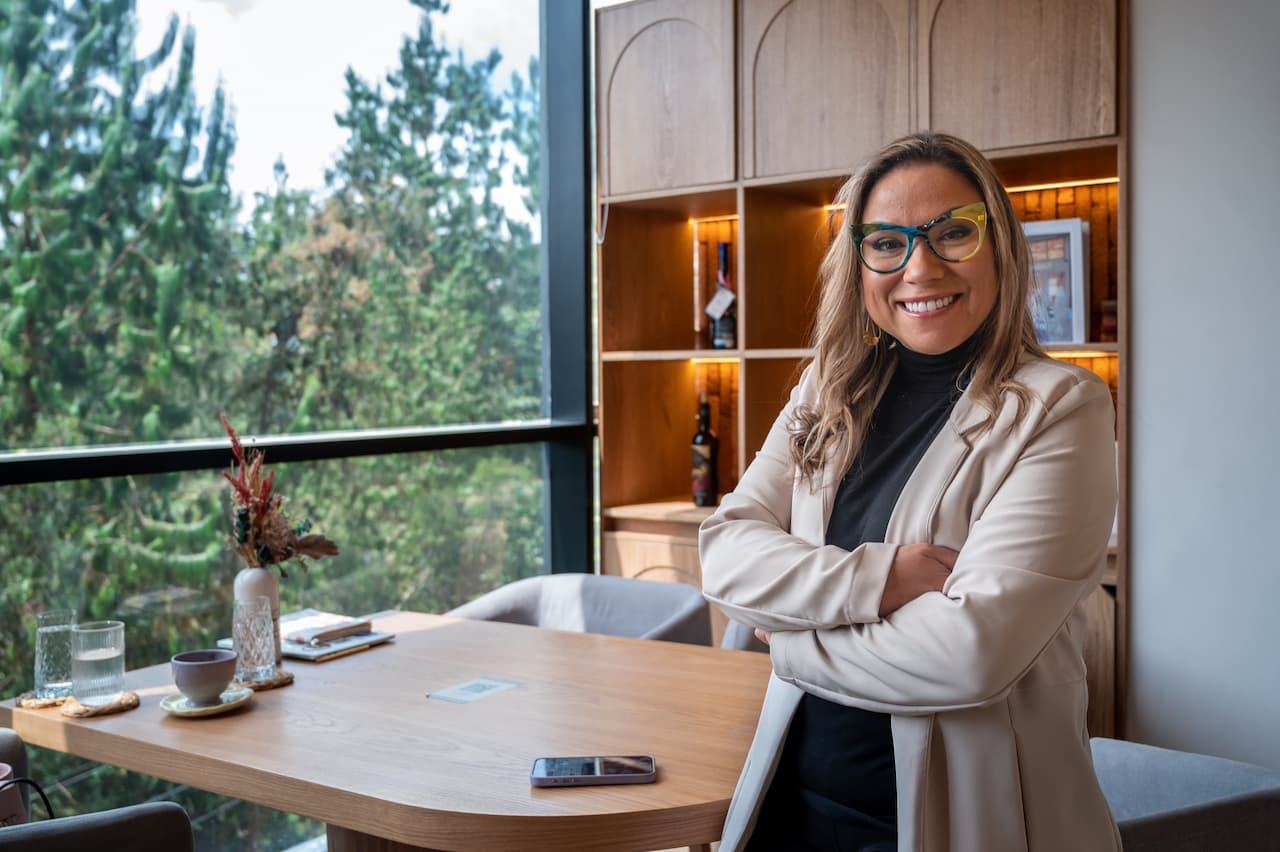
Sixteen years ago, Paula Gaviria found herself at a crossroads that would define the trajectory of her entire career. Working on autopilot, she experienced what many professionals face but few acknowledge openly: a profound crisis of purpose. This wasn’t just burnout or professional fatigue. It was a deeper realization that success without direction feels hollow, that expertise without meaning creates emptiness.
“The pivotal moment in my career was a major crisis, when I realized I was working on autopilot and discovered I needed a purpose to give me direction,” Paula reflects. What emerged from that crisis wasn’t just a career shift but a complete transformation in how she approached her work and her life. “Discovering how doing what I love not only provides me with money but also contributes to the world has made me even more passionate about marketing and technology.”
That moment of awakening became the foundation for everything that followed. Today, as the CEO and Founder of Paula Gaviria Marketing e Innovación SAS in Bogotá, Colombia, Paula has built a career that bridges the gap between cutting-edge technology and human-centered marketing, between digital transformation and organizational identity, between what businesses want to achieve and what consumers truly need.
A CURIOUS GIRL FROM MEDELLÍN: WHERE INNOVATION BEGINS
Paula’s journey started long before her professional crisis, rooted in the streets of Medellín, Colombia, where a curious and creative young girl developed an insatiable appetite for understanding how things work. This wasn’t casual interest but a deep-seated drive to explore, experiment, and discover.
“Ever since I was a little girl at Medellín Colombia, I’ve always been very curious and creative,” Paula recalls. “I’m drawn to new things, to understanding how they work, how I can leverage them for the benefit of me and the community.” This childhood curiosity would become the engine of her professional evolution, propelling her through wave after wave of technological innovation.
Her trajectory reads like a timeline of digital marketing’s evolution itself: computers, cellphones, digital marketing and communications, then digital advertising, platforms like Google, Facebook, Instagram, LinkedIn, and TikTok, programmatic advertising, creative and dynamic advertising, precision marketing, growth marketing, and now artificial intelligence. Each technological shift didn’t just represent a new skill to learn but a new frontier to explore.
“What I love most about this industry is that everything changes so quickly; it’s never enough, there’s always something more to explore. It keeps me challenged,” Paula explains. This embrace of constant change, this joy in perpetual learning, distinguishes her approach to marketing and technology. Where others see disruption, Paula sees opportunity. Where others feel overwhelmed, she feels energized.
MAKING THE DIFFICULT EASY: A MISSION BORN FROM INSIGHT
The founding of Paula Gaviria Marketing e Innovación SAS in 2024 represented the crystallization of years of experience and insight into a clear, actionable mission. But this wasn’t about building another marketing agency. Paula had seen firsthand how small and medium-sized businesses struggled to access the same sophisticated tools and strategies available to large corporations.
“I am inspired by the purpose of making the difficult easy for everyone,” Paula explains. Her vision extends beyond traditional marketing services to encompass digital transformation consulting, market and consumer research, staff training, culture change, and plan execution. This comprehensive approach recognizes a fundamental truth: strategy without execution is just planning, and execution without cultural alignment is just activity.
Paula’s agency doesn’t just develop strategies and hand them off. They work alongside teams, ensuring not only that the right plans are in place but that organizations have the capabilities, mindsets, and cultural foundations to succeed. “To give small and medium-sized businesses access to digital transformation consulting, market and consumer research, and to support them not only in strategy but also in staff training, culture change, and plan execution to ensure the success of their objectives,” she emphasizes.

“We need to rediscover our childlike wonder, observe, be amazed, generate hypotheses, arrive at insights, and explore new paths that lead us to build valuable relationships with our customers.”
This holistic approach reflects Paula’s understanding that true transformation happens at the intersection of technology, strategy, and human capability. It’s not enough to have the latest AI tools if your team doesn’t understand how to use them. It’s not enough to have brilliant strategy if your organizational culture resists change.
NAVIGATING THE SEISMIC SHIFTS IN MODERN MARKETING
With her finger constantly on the pulse of industry evolution, Paula has identified the fundamental shifts reshaping marketing today. These aren’t superficial trends but deep structural changes in how brands and consumers interact.
“Undoubtedly, the quick changes in consumer habits mean that brands and various industries must listen much more closely throughout the entire customer journey, from initial awareness of products and services to final purchase,” Paula observes. The old funnel models no longer capture the complexity of modern consumer behavior.
Generational shifts compound these challenges. Baby Boomers, Generation X, Millennials, and Generation Z don’t just have different preferences; they inhabit fundamentally different media ecosystems. The fragmentation of communication channels means brands can no longer rely on a few mass media outlets to reach their audiences. The proliferation of media creates both opportunities and challenges, requiring sophisticated orchestration across multiple touchpoints.
Perhaps most significantly, shrinking attention spans demand that marketers deliver impactful messages instantly. “We must deliver impactful messages and are challenged to connect with our customers on a deeper level if we want to engage and retain them,” Paula notes. This isn’t about flashy campaigns or viral moments but about creating genuine connections in an environment of constant distraction.
BLENDING DATA, AI, AND CREATIVITY: THE NEW MARKETING ALCHEMY
For Paula, the integration of data, artificial intelligence, and creativity isn’t a theoretical exercise but a practical methodology refined through countless projects. This combination creates what she calls “exceptional projects,” but it requires specific mindsets and approaches.
“There are countless ways to combine data, AI, and creativity to create exceptional projects. It requires passion, a growth mindset, and working on experiments and short timeframes to achieve goals,” Paula explains. Her approach emphasizes agility over perfection, learning over knowing, experimentation over certainty.
“Plan quarterly, take action, and pivot,” she advises. This rhythm acknowledges both the need for strategic direction and the reality of rapid change. Quarterly planning provides enough structure to coordinate efforts while remaining flexible enough to adapt to new insights and changing conditions.
The tools available today offer unprecedented capabilities, but they also demand unprecedented commitment. “You have to be like a sponge and willing to push yourself to the limit to achieve what you want,” Paula says. She’s honest about the challenges: “It will certainly be uncomfortable, but inspiring. It will involve changes and budget, but the results will be evident.”
This transparency about the difficulties involved in transformation sets Paula apart. She doesn’t promise easy solutions or quick fixes. Instead, she offers a realistic path forward that acknowledges discomfort while emphasizing the inspiration and results that make the journey worthwhile.
PURPOSE-DRIVEN MARKETING: THE DIFFERENCE BETWEEN SURVIVAL AND EXTINCTION
Paula’s views on purpose-driven marketing are uncompromising and urgent. This isn’t a nice-to-have or a marketing trend. It’s existential.
“The role of purpose-driven marketing is the difference between survival and extinction,” Paula states plainly. “In today’s world, it’s crucial for companies to move beyond a purely consumer-centric perspective and focus on understanding their customers’ needs and the power of connecting with them to become an integral part of their lives, their routines, and their hearts.”
This distinction between consumer-centric and customer-needs-focused approaches might seem subtle, but it’s profound. Consumer-centric marketing often treats people as targets, as demographics to be segmented and messages to be optimized. Customer-needs-focused marketing treats people as humans with complex lives, emotions, and aspirations.
“That’s the key difference,” Paula emphasizes. “Companies that haven’t grasped this are doomed to disappear sooner rather than later.” The warning isn’t hyperbolic. In an age where consumers have infinite choices and zero patience for brands that don’t resonate, superficial marketing simply doesn’t work anymore.
GUIDING DIGITAL TRANSFORMATION WITHOUT LOSING IDENTITY
One of Paula’s most distinctive capabilities is helping organizations embrace digital transformation while maintaining their essential identity. This balancing act requires deep understanding of both technology and organizational culture.
Her methodology centers on collaborative workshops designed to ensure purpose becomes deeply ingrained throughout the organization. “I do this in sync with their teams, through workshops we develop at my agency to ensure this purpose is deeply ingrained in the organization and that all members feel they are key players in the process,” Paula explains.
The tools she employs read like a masterclass in innovation methodology: Design Thinking for human-centered problem solving, Inceptions for project kickoffs and alignment, LEGO Serious Play for unlocking creativity and building shared understanding, workshops for in-depth consumer understanding, and team building activities that forge cohesive cultures.
These aren’t just facilitation techniques but powerful frameworks for helping organizations discover and articulate their unique value. “I guide them using methodologies such as Design Thinking, Inceptions, LEGO Serious Play, workshops for in-depth consumer understanding, and team building to arrive at powerful strategies related to the organization’s identity, the solutions it provides to its customers, and how it can positively impact the world,” Paula describes.
The emphasis on positive world impact isn’t window dressing. It reflects Paula’s belief that businesses exist within broader societal contexts and that sustainable success requires contributing value beyond shareholder returns.
AI AS ACCELERATOR: RESHAPING CUSTOMER EXPERIENCE AND GROWTH
Paula’s perspective on artificial intelligence is neither utopian nor dystopian but pragmatic and specific. She sees AI not as a replacement for human capability but as an amplifier of human potential.
“It gives us speed, allows us to experiment and test multiple versions, and enables us to act with precision in marketing,” Paula explains. This speed isn’t just about doing things faster but about learning faster, iterating faster, and improving faster.
The efficiency gains are remarkable. “It makes us efficient by reducing operational times by 75%,” Paula notes. But the real value isn’t in the time saved; it’s in how that time gets redeployed. “Allowing us to refocus human talent on thinking, strategy, and the testing of complex concepts and findings that require perception and intuition that machines lack when dealing with consumers.”
This reframing is crucial. AI doesn’t eliminate the need for human insight; it creates more space for it. By handling repetitive, data-intensive tasks, AI frees marketers to focus on what humans do best: understanding context, recognizing patterns, developing empathy, and making nuanced judgments.
DISPELLING AI MISCONCEPTIONS: WHAT LEADERS GET WRONG
Through her work with executives and organizations across Latin America, Paula has encountered persistent misconceptions about AI implementation. These misunderstandings often prevent companies from realizing AI’s potential or lead to failed implementations.
“They think everything will be replaced, that everything will be ready-made, without considering the necessary training on the tools needed to achieve the desired results,” Paula observes. This assumption of instant, effortless automation ignores the reality that AI tools require skill to use effectively.
Many leaders overlook critical requirements: prompt engineering expertise, trained human talent capable of directing AI systems, and organizational learning processes. “They don’t take into account the required prompt engineering, the trained human talent needed to make it happen, or the necessary training inside,” Paula notes.
The resulting mistakes take two forms. Some companies believe they can simply reduce staff, treating AI as a cost-cutting measure rather than a capability enhancement. Others become paralyzed by analysis. “They believe they can reduce staff, or they are so afraid of trying and having to make internal decisions that they suffer from analysis paralysis and ultimately don’t dare to take action,” Paula explains.
Both approaches miss the opportunity. AI’s value lies not in replacing humans but in augmenting human capabilities, allowing organizations to achieve things previously impossible.
THE CORE MESSAGE: REDISCOVERING WONDER IN THE AGE OF AI
As a consultant and speaker, Paula has refined her message to audiences across industries and geographies. Her core insight challenges professionals to reconnect with something many lost in the transition to adulthood: childlike wonder.
“It’s never too late to start learning about AI. We need to rediscover our childlike wonder, observe, be amazed, generate hypotheses, arrive at insights, and explore new paths that lead us to build valuable relationships with our customers,” Paula advocates.
This isn’t nostalgia or metaphor but a practical approach to innovation. Children learn through curiosity, experimentation, and play. They ask why constantly. They’re comfortable not knowing. They embrace new experiences without the fear of looking foolish.
“The difference lies in having that mindset, that hunger for knowledge,” Paula emphasizes. Knowledge hunger drives exploration. It makes learning feel like adventure rather than obligation.
The urgency in her message is palpable. “We must venture out to see all the benefits that technology offers us and to build bridges and connections with our clients and employees. The biggest expense is standing still and watching innovation pass us by. The time is now.”
That final phrase, “The time is now,” recurs throughout Paula’s work. It’s not pressure but permission, an invitation to stop waiting for perfect conditions and start experimenting with imperfect ones.
THE MASTER KEY: BRIDGE BUILDING IN ACTION
Paula’s description of herself as a “bridge builder” comes alive in projects like her 2025 campaign for the Colombian Book Chamber. This initiative demonstrates how strategic thinking, consumer understanding, and multi-channel execution combine to create meaningful impact.
The challenge was significant: introducing caregivers of children, teenagers, and young adults to school supply packages consisting of textbooks and digital platforms designed to ensure understanding of primary and secondary education concepts. “There was a significant lack of awareness regarding the usefulness of these tools when used together and the channels for distributing this message,” Paula explains.
The campaign, named “The Master Key,” ran for three months with nationwide reach. Paula’s team flooded social media, created a YouTube channel called Booktube to explain package functionality in detail, and used programmatic advertising to reach information media across Colombia.
“We conducted a three-month campaign to promote the school supply packages and disseminate this information nationwide, with great success,” Paula recounts. The success stemmed from deep consumer understanding and psychology-based messaging for parents and caregivers.
“With a deep understanding of consumers, and with messages based on consumer psychology for parents and caregivers, we established the messages and built the bridge and connections so that the messages would provide knowledge and enhance awareness of the importance of acquiring these school packages,” Paula explains.
The project exemplifies her bridge-building philosophy: connecting educational resources with caregivers, connecting awareness with action, connecting products with purposes. The bridge metaphor captures her role perfectly. She doesn’t just deliver messages or create campaigns; she builds pathways for understanding and connection.
NEQUI: CONTRIBUTING TO CULTURAL TRANSFORMATION
When asked about her most rewarding achievement in leading innovation projects across Latin America, Paula points to something that has become woven into Colombia’s economic fabric: Nequi, the first bank for millennials in Colombia.
“Participating from the inception of the first bank for millennials in Colombia called NEQUI with Bancolombia’s innovation center, and seeing how it has been adopted culturally in the country, from street transactions to large businesses, makes me feel that I was present, I contributed to this technological change,” Paula reflects.
Her involvement came through her role as Vice President of Pragma, a digital agency she led from 2014 to 2016. Bancolombia sought to reach an unbanked public with clear financial needs, requiring not just a new product but a fundamental shift in financial habits and cultural norms.
The satisfaction in Paula’s voice is evident when she describes Nequi’s current reach. “Now Nequi is not only in Colombia but is also in Central America with a view to continuing to grow.” Being part of something that started as an innovation project and evolved into a cultural phenomenon represents the kind of impact Paula seeks in all her work.
This wasn’t about marketing a product. It was about facilitating a transformation in how people think about and interact with financial services. That’s bridge building at scale.
EDUCATOR OF TOMORROW’S LEADERS: PURPOSE IN MOTION
For Paula, her role as educator transcends professional responsibility. It represents something deeper and more personal.
“It means purpose in motion, a legacy for me from my life and my passage through this world, and it gives meaning to my life,” Paula explains. This isn’t hyperbole but a genuine expression of how teaching connects to her sense of purpose and contribution.
Her approach to preparing students and executives for a tech-driven, constantly evolving business world focuses not on specific tools or techniques but on fundamental mindsets. “The greatest preparation I can give them in my role as a leader and teacher is to teach them to have a thirst for knowledge, to understand the constant change in the industry, and to enjoy this constant whirlwind of change in order to embrace uncertainty and constant growth in technological skills and their business application.”
Teaching people to have a thirst for knowledge creates self-sustaining learners who don’t need to be taught every new development but can teach themselves. Teaching people to enjoy constant change transforms what could feel like chaos into adventure. Teaching people to embrace uncertainty builds resilience for inevitable surprises.
ESSENTIAL FUTURE-READY SKILLS: BEYOND THE OBVIOUS
Paula’s list of essential future-ready skills reflects her integrated understanding of marketing, technology, and human capability. These aren’t just technical competencies but a blend of human insight and technological fluency.
Consumer psychology knowledge tops her list, recognizing that understanding human behavior remains foundational regardless of technological advancement. Communication skills ensure ideas can be shared and understood. Strategic prospective thinking allows professionals to anticipate and prepare for multiple futures. Lateral thinking and creativity methodologies generate innovative solutions to complex problems.
Emotional self-regulation methodologies acknowledge the psychological demands of working in fast-changing environments. Agile thinking methodologies and team management recognize that speed and collaboration drive modern work. Knowledge of prompt engineering and custom agent programming represents the new technical literacy required to work effectively with AI systems.
This combination of human and technical skills captures Paula’s holistic view of professional development. The future doesn’t belong exclusively to technologists or exclusively to humanists but to those who can bridge both domains.
THE NEXT FIVE YEARS: FAST, DIZZYING, AMAZING
When asked how she foresees the relationship between marketing and technology evolving over the next five years, Paula’s response is characteristically concise and evocative: “Fast, dizzying, amazing.”
These three words capture her perspective perfectly. Fast acknowledges the accelerating pace of change. Dizzying recognizes the disorienting effect of such rapid transformation. Amazing expresses the excitement and possibility that change creates.
The brevity of her response also suggests something important: prediction is difficult and perhaps less important than preparation. Rather than offering detailed forecasts that may prove wrong, Paula emphasizes developing the capabilities to thrive regardless of specific developments.
PRACTICAL WISDOM: NAVIGATING THE AI REVOLUTION
Paula’s advice to entrepreneurs and marketing professionals navigating the AI revolution is specific and actionable. She doesn’t offer platitudes but a concrete daily practice.
“Dedicate one hour each day to learning a new AI-related skill, a new platform, or reading an article or book,” Paula recommends. One hour daily compounds over time into substantial expertise. It’s sustainable, specific, and measurable.
She emphasizes learning from others’ experiences: “Learn from the experience of others, consult scientifically rigorous research and documentation to avoid repeating mistakes and wasting valuable time.” This accelerates learning by leveraging collective knowledge rather than discovering every lesson individually.
Setting small, achievable goals ensures progress remains tangible. “Set small, achievable goals for using tools, not just for the sake of testing, but to truly understand their usefulness and make your work more efficient,” Paula advises. This prevents learning from becoming theoretical or disconnected from practical application.
Finally, she emphasizes community: “Sharing experiences is essential for growth, and joining networks or communities passionate about learning and sharing will ensure you stay current and active in the field.” Learning becomes both more effective and more enjoyable when done collaboratively.
SYNTHETIC CONSUMERS: THE INNOVATION THAT EXCITES
Among all the innovations and trends in marketing and AI, one particularly excites Paula: AI-trained agents that create synthetic consumers using real consumer data.
“The speed that AI-trained agents, using real consumer data, can add to market and consumer research by creating synthetic consumers excites me greatly,” Paula explains. The transformation is dramatic: “Fields that used to take weeks and months are now reduced to seconds with the help of technology.”
This speed enables something previously impossible: generating precise communications and offers for many different consumer types. “Allowing us to generate precise communications and offers for many types of consumers. Thanks to digital advancements, we can now contact, engage, attract, and retain these consumers.”
The excitement isn’t just about speed but about what speed enables: more experimentation, more personalization, more learning, and ultimately more effective marketing that serves both businesses and consumers better.
BRIDGING ACADEMIA AND REALITY: A PASSIONATE MISSION
Paula’s critique of academia is pointed but constructive. She sees a disconnect that limits both students and industries.
“I believe academia has become too focused on academics, and there’s a significant lack of engagement with the real world,” Paula observes. “Students need firsthand experience from their professors and colleagues, which serves as examples and inspiration.”
The gaps she identifies are specific: between laboratory research and market realities, between theoretical frameworks and shopper marketing, between academic studies and direct consumer observation in sales channels. These gaps create graduates who understand concepts but struggle with application.
“That’s why one of my greatest passions is bridging academia and practical experience, demonstrating how exciting, dynamic, and beneficial this direct connection can be,” Paula explains. Her goal isn’t just transferring information but transforming how students experience learning.
“I want to make the theoretical and academic aspects fun and hands-on, so they resonate with my students and future professionals,” she emphasizes. When theory connects to practice, when concepts link to real-world problems, learning transforms from obligation to inspiration.
A PHILOSOPHY CAPTURED: CURIOSITY AND ENTHUSIASM AS GUIDES
When asked to sum up her philosophy on innovation and growth in one sentence, Paula offers something that perfectly captures her approach: “Never stop looking with curiosity and enthusiasm at everything that can make your life easier.”
This simple statement contains profound wisdom. Curiosity drives exploration and discovery. Enthusiasm provides the energy to pursue what curiosity reveals. Looking for what makes life easier grounds innovation in practical value rather than novelty for its own sake.
The phrase “never stop” acknowledges that this isn’t a destination but a practice, a way of moving through the world that generates continuous learning and improvement. It’s the philosophy that guided a curious girl in Medellín, that sustained her through a career crisis, and that now shapes how she helps organizations and individuals navigate transformation.
THE LEGACY OF A BRIDGE BUILDER
Paula Gaviria represents a new generation of marketing leaders who refuse to choose between technology and humanity, between innovation and identity, between business success and societal contribution. Her career demonstrates that these apparent tensions can be resolved through purposeful integration.
From her crisis moment sixteen years ago to founding her agency in 2024, from working with Colombia’s first millennial bank to educating tomorrow’s leaders, Paula has consistently built bridges. Bridges between where organizations are and where they need to be. Bridges between academic theory and market reality. Bridges between technological capability and human need.
Her influence extends across multiple domains simultaneously. Through her agency, she transforms how businesses approach digital marketing and AI implementation. Through her teaching, she shapes how future professionals think about technology and consumer connection. Through her speaking and thought leadership, she challenges industries to embrace change with curiosity rather than fear.
“Discovering how doing what I love not only provides me with money but also contributes to the world has made me even more passionate about marketing and technology,” Paula reflected on her pivotal crisis. That discovery didn’t just change her career; it created a model for how marketing leadership can operate in the 21st century.
As marketing and technology continue their fast, dizzying, amazing evolution, leaders like Paula provide essential guidance. They demonstrate that staying current doesn’t require abandoning core values, that technological sophistication can coexist with human empathy, and that the most powerful marketing connects businesses to customers in ways that genuinely improve lives.
The future Paula is building, one bridge at a time, is one where small and medium-sized businesses have access to enterprise-level capabilities, where students learn from real-world experience as much as textbooks, where AI enhances rather than replaces human creativity, and where marketing serves not just business objectives but human needs and societal progress. For professionals navigating the AI revolution, for businesses seeking meaningful transformation, for students preparing for careers in industries that don’t yet exist, Paula’s message resonates clearly: The time is now. The tools are available. The only question is whether we’ll approach them with the curiosity and enthusiasm of that little girl in Medellín who wanted to understand how everything works and use that knowledge for the benefit of everyone.