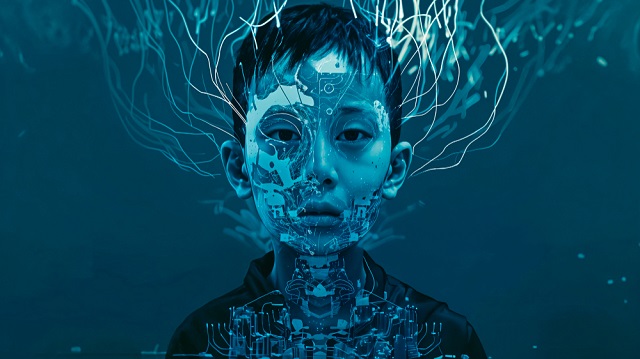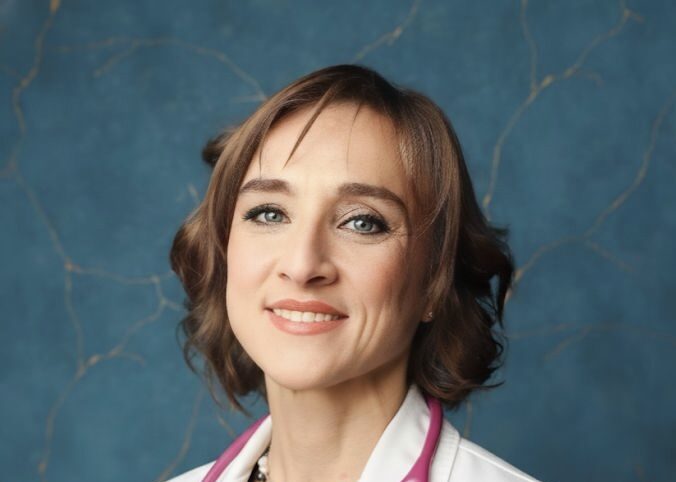
In the evolving world of modern cardiology where artificial intelligence enhances diagnostics, clinical intuition guides decision-making, and digital innovation harmonizes with human touch Dr. Teresa Castiello represents a rare and powerful balance. She stands as a bridge between the legacy of traditional medicine and the promise of its future.
Yet her story does not begin in a university lecture hall, research facility, or hospital ward. It begins in the quiet certainty of a seven-year-old child who, with remarkable clarity, already knew she wanted to become a doctor.
“I decided to become a physician very early,” Teresa reflects. What began as a childhood conviction was rooted in something deeper an innate desire to care, to understand, and to make a meaningful difference in people’s lives. Medicine was never just a career choice; it was a natural extension of who she was.
While the calling to heal emerged early, her profound connection to cardiology was shaped through life’s most personal moments. At nine years old, she experienced the reality of cardiovascular disease firsthand when her grandfather passed away from a sudden myocardial infarction. Years later, in her early twenties, just as she was stepping into her medical journey, her grandmother died due to complications from aortic stenosis.
These losses did not simply bring grief; they brought direction. They transformed a general passion for medicine into a defined mission towards Cardiology. They became the emotional and intellectual anchors that would guide her lifelong commitment to understanding the heart not only as an organ, but as the very center of human existence.
But Dr. Castiello’s path was never confined to clinical science alone. Her journey reflects a broader constellation of purpose. “My vocation pulled me in multiple directions,” she shares. “A deep desire to create social impact and care for others, my natural empathy in connecting with people, and my love for knowledge, learning, and travel. Medicine, in a way, brings all of this together.”
Over time, the heart itself became both her subject and her teacher. “The heart represents both life and its cessation; it is the silent engine that accompanies us from our first breath to our last,” she explains. Yet her understanding moves beyond physiology, reaching into philosophy, symbolism, and neuroscience. To her, the heart is not merely a mechanical pump it is a profound representation of identity, emotion, and human essence.
Today, even neuroscience is beginning to validate what literature, philosophy, and human experience have long suggested that the heart possesses a complex communicative and regulatory role far beyond its traditional mechanical definition.
This deeply human, multidimensional perspective would become foundational to Dr. Castiello’s career. As her professional journey carried her across continents and into diverse healthcare environments, she discovered a universal truth: treating the heart requires understanding not only cardiovascular physiology, but also the emotional, social, and human realities that shape health and disease.
LESSONS FROM THE MARGINS: SUDAN AND THE WISDOM OF ACCEPTANCE
The pivotal moment that reshaped Teresa’s approach to patient care came not in a state-of-the-art European hospital, but in the dust and heat of Sudan. There, during humanitarian missions that combined her love of travel with her commitment to service, she encountered a humanity that Western medicine had forgotten.
“Contemporary man, living in a relatively affluent society, has often lost contact with his essence,” Teresa observes. “He often reacts with anger and resentment toward illness and, at times, with mistrust toward those who treat him. We often claim that a life without disease is our right.”
In Sudan, she found a different truth. Populations living closer to nature, more attuned to the rhythms of life and death, carried an awareness that Western medicine had lost. “Life and disease are both part of human nature,” she explains. “Some populations, especially in rural areas or those in closer contact with nature, are more aware of this than others. This awareness generates acceptance and gratitude. It does not erase the pain of suffering and disease, but it soothes it, liberating it from resentment.”
This revelation fundamentally altered how Teresa interacts with patients, disease, and death itself. Among the stories she collected, one stands out with particular poignancy. Fadwa, a 23-year-old woman with rheumatic valve disease, faced an impossible choice between a mechanical valve that would last longer but prevent pregnancy, or a biological valve that would require another surgery but allow her to have children.
When the doctors pressed Fadwa to decide about her own life, her response revealed the cultural chasm Teresa had crossed. “I’m not married. My father is responsible for me and I’m thankful for that. I feel protected and secure. I’m in God’s hands and under my father’s protection; I’m blessed.”
Teresa remembers the moment with crystalline clarity. “My life is a gift. God gave me my life and my family. My father knows what’s best for me and the doctors will do their best. It is scary, but I am blessed and thankful. Inshallah.”
The experience taught Teresa that imposing Western values of autonomy, however well-intentioned, can miss the deeper truth of what patients need: to feel welcomed, helped, and accompanied through illness and pain. This understanding would become the foundation of her holistic approach to cardiology.
HOLISTIC CARDIOLOGY: SEEING THE PERSON BEHIND THE PATHOLOGY
Modern medicine’s march toward hyperspecialization has brought extraordinary precision. Cardiologists now focus not just on the heart, but on specific chambers, specific diseases, specific molecular pathways. Teresa celebrates this evolution while simultaneously warning against its dangers.
“We tend to focus not just on a single organ, but often on minute parts of it, or on specific disease subgroups. This is not a negative evolution; on the contrary, it allows us to refine our expertise and achieve extraordinary precision,” she acknowledges. “However, we must never lose sight of the whole: the person standing before us, with their history, emotions, social fabric, lifestyle, and psycho-physical complexity.”
Her concept of holistic cardiology shifts the clinical lens from disease back to person. It does not ignore pathology but rather treats the individual as the most effective pathway to treating the illness itself. This approach demands something difficult for physicians: humility.
“This approach also confronts doctors with the limits of their own knowledge, requiring the humility to recognize when care must be shared across a multi-specialist team to create truly personalized pathways,” Teresa explains. This realization gave birth to her most ambitious project, M.I.A.L Healthcare, designed specifically to answer this need for multidisciplinary, personalized care in an increasingly fragmented medical landscape.
The philosophy extends into every aspect of her practice, from cardiac rehabilitation to preventive care. “Healthy nutrition, exercise, and mental well-being must be an integral part of our lives, both in health and in sickness,” she insists. Rehabilitation programs must include not just physiotherapists but nutritionists, psychologists, cardiologists, and every professional capable of educating patients toward better lifestyles. “This approach cannot be merely temporary, aimed solely at physical recovery following surgery or clinical decline. Instead, it must mark the adoption of a new, permanent lifestyle.”
RECOGNITION AND RESPONSIBILITY: AWARDS AS AMPLIFIERS
When Teresa received the Cardiologist of the Year 2024 award, followed by multiple awards as Healthcare Leader, she experienced more than professional gratification. She saw an opportunity for broader impact.
“Obviously, it is pleasing to receive compliments and awards, but beyond the gratification, they reassure me that I am on the right path and favor my objective of having a broader impact on healthcare,” she reflects. “An idea or project corroborated by social recognition has more impact and resonance, and ergo, can reach more people. This is fundamental.”
The Cardiologist of the Year award represented her starting point: one-to-one patient care and the importance each individual carries. “It gives a voice to the patients who felt cared for and understood,” she notes. Yet the Healthcare Leader recognitions held even deeper significance. “In my own way, I want to set an example of how medicine should be reimagined today: a model of personalized precision medicine that harnesses digital technologies, indispensable for efficiency, while equally rediscovering the profound power of empathy in the doctor-patient relationship.”
This dual recognition perfectly encapsulates Teresa’s unique position in modern medicine. She stands with one foot planted firmly in the technological future and the other grounded in timeless human connection.
CARDIAC MRI AND THE ART OF TISSUE CHARACTERIZATION
Among the technological tools reshaping cardiology, cardiac MRI holds special significance for Teresa. Its exclusive feature, tissue characterization, represents a diagnostic leap that other imaging modalities cannot match.
“It is the only non-invasive imaging modality capable of distinguishing scar tissue from inflamed tissue or healthy tissue, which helps us incredibly in understanding the cause of the problem,” Teresa explains. This capability proves decisive in distinguishing between conditions that present similarly in acute settings: myocardial infarction, myocarditis, or Broken Heart Syndrome (Takotsubo). Correct diagnosis leads to appropriate therapy, and cardiac MRI often provides the clarity needed for both.
Yet Teresa acknowledges the limitations. The technology remains costly, more widespread in some countries than others, and demands highly specialized staff for proper delivery and interpretation. Still, its inclusion in international guidelines for innumerable heart conditions reflects its undisputed diagnostic value.
This balance between technological capability and practical limitation characterizes Teresa’s entire approach: embrace innovation while remaining conscious of real-world constraints, always prioritizing patient benefit over technological novelty.
ARTIFICIAL INTELLIGENCE: THE INDISPENSABLE ALLY
Teresa’s advocacy for AI in healthcare stems not from technological enthusiasm but from mathematical necessity. “Current medicine must manage an ever-growing number of patients with a progressively more limited number of human and financial resources,” she notes. “Average life expectancy has doubled in a few decades, with a dizzying increase in years lived not only in health but also in sickness. The use of digital technologies has become essential.”
Her current project in partnership with The Sport Circle exemplifies AI’s potential impact. Targeting sudden cardiac death in athletes, the initiative utilizes Cardio-HART by Cardio-Phoenix, a technology that transcends standard AI-enabled ECG. “By analyzing the heart’s mechanical and acoustic bio-signals, it delivers diagnostic insights comparable to an ECG and echocardiogram combined, offering a level of depth that was previously impossible in a single, non-invasive test.”
The collaboration with Cardio-Phoenix extends beyond immediate clinical applications. Together, they have submitted a proposal to the Horizon programme focused on preventing sudden cardiac death. While confidentiality limits what Teresa can share, her excitement is palpable. “It is a pioneering initiative I am deeply eager to advance.”
Similarly, her recent encounter with Hilo, an innovative blood pressure band, speaks to her commitment to making cardiovascular monitoring accessible and continuous. “Hypertension remains a paramount risk factor for cardiovascular disease; therefore, facilitating reliable and continuous measurement is a crucial step toward effective control and active cardiovascular prevention.”
Yet Teresa’s embrace of AI never loses sight of its proper role. Technology must support, not replace, the human elements of care. Her vision for M.I.A.L Healthcare embodies this balance, with AI serving a dual function: minimizing administrative burden for healthcare professionals while providing clinical support through data analysis, risk stratification, and ensuring timely care.
PREVENTION: THE ONLY PATH TO SUSTAINABLE HEALTHCARE
For Teresa, preventive cardiology represents the only realistic path to sustainable healthcare systems. “The only way to relieve the burden on our healthcare systems and ensure that the additional years of life we have gained compared to past generations are healthy years, rather than years defined by worsening chronic disease, is by focusing on prevention.”
She distinguishes between two dimensions of prevention. The first involves lifestyle modifications that prevent disease onset: nutrition, physical activity, smoking cessation, restorative sleep, and stress management. These daily choices, she emphasizes, exert drastic influence even over genetic pathologies.
The second dimension involves screening to detect cardiac conditions before symptoms manifest. “In essence, it is a proactive investigation,” Teresa explains. This approach becomes particularly crucial for cardiomyopathies, where the main misconception concerns their rarity. “Being a niche pathology that is often genetic, it tends not to be recognized, leading to delays or diagnostic errors. While some forms are very rare, others are much less so, and many untreated cardiomyopathies evolve into heart failure.”
Teresa addresses head-on the misconceptions surrounding heart failure. “Many people are frightened by the word ‘failure,’ it sounds inevitable. Yet, heart diseases in an absolute sense do not worry and scare people the way cancer does. In reality, deaths from heart disease are more than double those from cancer.”
Her message is clear: “Screening and prevention are the keys to overcoming fear, while education is pivotal in dispelling misconceptions.”
M.I.A.L HEALTHCARE: BRIDGING GAPS THROUGH DIGITAL INNOVATION
The creation of M.I.A.L (Medici Italiani A Londra) Healthcare emerged from Teresa’s recognition that contemporary medicine can no longer meet demand through traditional delivery models. “Most healthcare systems are overwhelmed, and most doctors are burned out. However, there is a growing demand for quality and quantity, so we need to rethink how best we can offer empathic, personalized, yet more efficient and cost-effective care.”
M.I.A.L’s design addresses this challenge through strategic AI integration. The platform serves dual purposes: supporting healthcare professionals by streamlining care and minimizing administrative burden, while providing clinical support through data analysis, risk stratification, and ensuring timely interventions.
The model particularly targets areas with limited specialist access. “Where specialist structures are not present or cannot be built, or where the specialist is not physically present, digital technology can bridge the gap,” Teresa explains. The platform plans to deliver remote multidisciplinary specialist care supported by artificial intelligence, serving precisely those decentralized areas with fewer resources.
Yet Teresa’s vision extends beyond operational efficiency. Her deep desire involves reinvesting profits into educational and prevention projects in low-income countries. While M.I.A.L remains in early stages, currently completing its digital platform and focusing on London, Teresa projects at least three years before humanitarian reinvestment becomes possible. “That is definitely my objective,” she states with characteristic determination.
RESEARCH AND THE COLLECTIVE ENDEAVOR
As a Principal Investigator, Teresa navigates the perpetual tension between clinical practice and research. Her perspective on research reveals both its promise and its challenges.
“Research, perhaps even more than clinical practice, acts as a collective endeavor. It often springs from individual, unremunerated initiative, a spark of intuition, but it imperatively requires ‘fertile ground’ to thrive,” she explains. The primary challenge lies not in balancing time between patient and data, but in finding environments where individual sparks are not extinguished by structural limits but supported by teams capable of turning them into progress.
This understanding shapes her eight-year collaboration with the European Society of Cardiology (ESC) on a pro bono basis. Over time, she has contributed to various committees within the Heart Failure Association, ranging from Patient Care and Digital Health to the Advanced Heart Failure & Palliative Care task force and the Inflammatory Cardiomyopathy committee. Currently, she serves as an Executive Board member of the Working Group on Myocardial and Pericardial Diseases and on the CardioGenomics Council.
“While these roles differ, spanning my key areas of expertise, they are all driven by a similar and shared aim,” Teresa notes. “The concrete value lies in creating a network of international collaboration and friendship. This allows us to spread high-profile scientific knowledge among peers, through congresses, publications, and workshops, with the final, singular objective of reducing the burden of cardiovascular disease across Europe and the globe.”
PRESIDENTIAL VISION: EDUCATION AS RECIPROCAL TRANSFORMATION
Teresa’s role as President of the Royal Society of Medicine’s Cardiology Section carried particular historical significance. As the first female president, she occupied a position rich with both responsibility and opportunity.
“The role of President is, at its core, an educational mandate,” Teresa reflects. “Education holds undisputed relevance for me, both within medicine and beyond. To educate is not only a duty enshrined in our Hippocratic Oath, but also a reciprocal process, a powerful means to learn.”
Her vision for future cardiologists embraced this dual responsibility: excellence in clinical practice combined with generous mentorship. “I hoped to see a shift where success is measured not just by individual accolades, but by the ability to inspire and elevate the peers who walk alongside us, ensuring that knowledge is never stagnant, but a shared currency.”
The position also allowed Teresa to address the persistent gender gap in cardiology, particularly pronounced in the UK. “We are only just beginning to truly address gender-specific medicine, acknowledging that the heart is physiologically ‘different’ in men and women, influenced by distinct hormonal and reproductive factors. Women often manifest symptoms differently, a fact finally highlighted by European guidelines, and face unique pathologies at different life stages.”
Teresa’s visibility as the first female President served as both statement and invitation. “As the first female President, I saw my role as an opportunity to amplify this reality and serve as a visual breakthrough for the female half of the profession.”
NAVIGATING MULTIPLE IDENTITIES: IMMIGRANT, WOMAN, MOTHER, LEADER
Teresa’s journey required navigating more than gender barriers. She identifies as an “elite immigrant,” highly skilled yet still an outsider learning unwritten rules, customs, and complexities of a new country and healthcare system from scratch.
“While this presented a significant obstacle to overcome, it also taught me profound adaptability. It allows me to bring a unique, external perspective to the table, challenging the status quo because I have seen how things work elsewhere,” she reflects.
The personal challenge remains that of any highly accomplished woman who is also mother, carer, and provider. “Balancing these roles is tricky; taking on a high-profile, voluntary leadership position often comes with the quiet guilt of taking unpaid time away from family. Yet, visibility matters, and demonstrating that this balance is possible, however difficult, is a breakthrough in itself.”
Her advice to young women and minorities pursuing medical leadership emerges from this lived experience. “Women leaders are needed like trees on this planet. For centuries, millennia, I should say, we have been unheard, undervalued, and also underpaid. We are indeed different, and difference is a strength; it brings new perspectives, new energy, and new points of view.”
Teresa acknowledges the challenge while celebrating the reward. “I cannot say it is not challenging, and you need to love a challenge to pursue this route, but it is also very rewarding.” She notes the paradox of women representing the “large minority” in the world. “Biologically, slightly more boys are born than girls, but women tend to survive longer, creating a powerful demographic force. Let’s please give the right value to it.”
THE CONVERGENCE: AI, GENOMICS, AND THE ECOSYSTEM OF CARE
When asked to envision cardiology’s future, Teresa refuses simple categorization. “I see these three elements not as separate tools, but as totally interconnected forces. Artificial Intelligence has a transversal value that permeates every layer of cardiology, from prevention and clinical practice to fundamental research and genomics. In fact, it is the convergence of AI and genomics that finally brings us within reach of true precision medicine.”
Yet the technological revolution requires an accompanying philosophical shift. “The focal point of contemporary medicine must shift. We must accept that the traditional doctor-patient relationship, while remaining indispensable, is now insufficient to handle the complexity of modern healthcare.”
Her vision encompasses a medical ecosystem defined by multiple stakeholders: policymakers, scientists, physicians, engineers, and others collaborating seamlessly. “Only through this collective effort can we deliver a new, holistic model of personalized care.”
This ecosystem approach reflects Teresa’s entire career arc, from the seven-year-old who chose medicine as a calling encompassing multiple vocations, to the global leader orchestrating international collaborations, to the humanitarian who sees technology as a bridge rather than a barrier.
LIVING THE PRESENT: LESSONS THAT TRANSCEND MEDICINE
Among the profound lessons Teresa carried from Sudan, perhaps the most transformative was the simplest: “To live the present. Time there flowed in a different way. The future is not yet here, the past is already gone; the present, long, deep, and intense, is the only thing that matters.”
This wisdom permeates her approach to everything, from patient consultations to research collaborations to leadership responsibilities. It explains how she maintains presence across so many domains without losing herself in any single one. It illuminates why her patients feel genuinely seen and heard, why her mentees describe transformative guidance, and why her collaborators experience true partnership.
When Teresa ensures cultural sensitivity in under-resourced settings, she returns to this principle. “When the focus is the person and not their disease, the goal is already reached. If someone feels welcomed, helped, and accompanied in a phase as complex and delicate as illness and pain, the limit of resources becomes less burdensome.”
This does not mean ignoring resource limitations. Rather, it means doing the best possible with available resources while understanding how to improve. The entire M.I.A.L project grows from this seed, attempting to deliver remote multidisciplinary specialist care precisely where physical infrastructure remains absent.
A LEGACY OF TRANSFORMATION
Every true vocation carries the hope of leaving a mark, a testimony of one’s time. Teresa approaches this universal aspiration with characteristic clarity and ambition.
“If I were to define the legacy I hope to leave, it is this: to offer an example of how contemporary medicine must transform. We must move toward a model that reduces geographic and social barriers, ensuring a truly equitable distribution of highly specialized care.”
The transformation she envisions centers on a crucial principle: technology must never replace empathy. “Human connection is the most precious asset we have, and it must be as present in science as it is in love.”
This statement encapsulates everything Teresa has built and everything she continues to create. From the seven-year-old processing grief through medical calling, to the humanitarian learning acceptance in Sudan, to the researcher pushing technological boundaries, to the president reshaping professional societies, to the entrepreneur building healthcare platforms, to the teacher inspiring future generations, Teresa has consistently held both cutting-edge science and timeless compassion as equally essential.
Her career demonstrates that these forces are not contradictory but complementary. Precision medicine reaches its full potential only when guided by empathetic understanding. Artificial intelligence serves humanity best when implemented by those who never forget what it means to be human. Leadership transforms systems most profoundly when rooted in genuine care for all stakeholders.
In Dr. Teresa Castiello, contemporary medicine finds not just a practitioner but a prophet, not just a clinician but a visionary, not just a scientist but a humanist. Her work reminds us that the heart, that most symbolic of organs, requires us to think with both hemispheres: the analytical and the compassionate, the technological and the human, the precise and the empathetic.
As healthcare systems worldwide grapple with mounting pressures and unprecedented opportunities, leaders like Teresa provide the essential blueprint for transformation. She proves that excellence need not sacrifice humanity, that innovation can serve tradition, that global reach can maintain personal touch, and that the future of medicine lies not in choosing between technology and empathy, but in weaving them together into something greater than either could achieve alone.
The heart whispers its secrets to those patient enough to listen. Teresa Castiello has spent a lifetime learning its language, and now she teaches the world what it means to truly hear.