
FROM COMPASSION TO CLINICAL LEADERSHIP A JOURNEY ROOTED IN SERVICE
As healthcare systems worldwide navigate growing demand, workforce shortages, and rising expectations for digital access, leaders who can balance clinical excellence with innovation are reshaping the future of care. Natalie Conde stands among those redefining what accessible, patient-centered healthcare can look like in a technology-driven era.
With 17 years of experience spanning emergency medicine, telemedicine, cardiology, hospital medicine, women’s health, and obesity medicine, Natalie has built a career grounded in both compassion and operational transformation. Her journey into healthcare began not with a professional title, but with an early understanding of human dignity.
As a child, she was deeply influenced by her grandmother, who worked as a hospital housekeeper. Though not in a clinical role, her grandmother’s compassion toward patients left a lasting impression. Later, at just 13, Natalie witnessed the care provided to infants born addicted to crack cocaine an experience that profoundly shaped her calling.
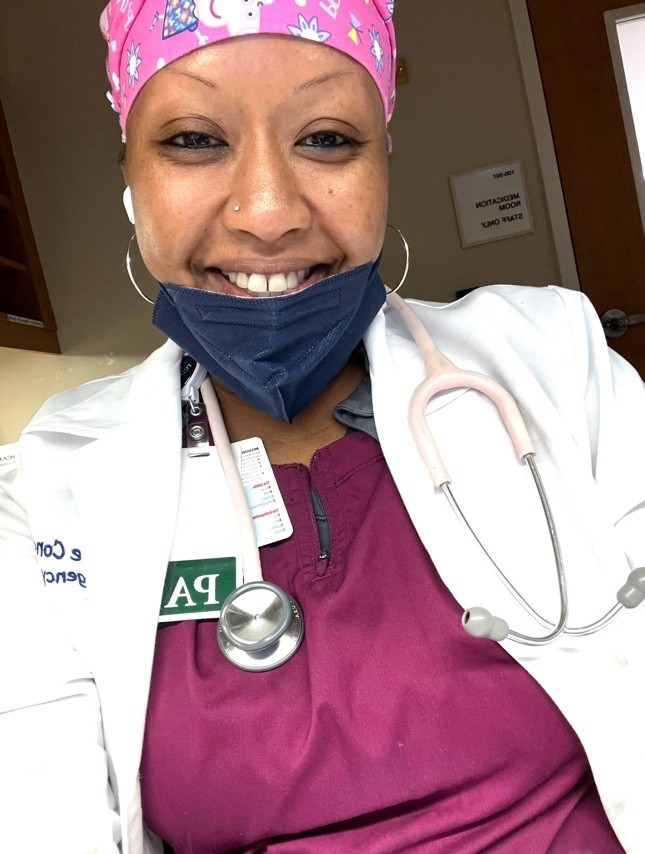
“It was not just the medicine that stayed with me,” Natalie reflects. “It was the compassion, presence, and humanity in how care was delivered.”
That philosophy continues to define both her clinical practice and leadership approach.
BUILDING CLINICAL EXCELLENCE ACROSS SPECIALTIES
Natalie’s career reflects a rare breadth of clinical exposure, each specialty contributing a unique perspective to her approach to patient care.
Her trauma-focused residency laid the foundation for rapid clinical judgment, adaptability, and decision-making under pressure. Emergency medicine taught her how to act decisively when patients are at their most vulnerable, often with incomplete information and limited time.
Hospital medicine offered a broader lens revealing the importance of continuity, coordination, and long-term recovery beyond the initial crisis. Cardiology sharpened her focus on prevention and patient education, while obesity medicine reinforced the complexity of metabolic health and the importance of compassionate, judgment-free care.
Across every setting, one principle remained constant: no patient should be treated in isolation.
“Clinical knowledge matters,” she explains, “but so does understanding the full journey of the patient.”
Her multidisciplinary experience also reinforced the power of collaboration. Working closely alongside physicians, nurses, and interdisciplinary teams shaped her belief that healthcare excellence is built through partnership, not hierarchy.
TELEMEDICINE AS A HEALTHCARE EQUALIZER
If Natalie Conde’s early clinical career was shaped by bedside medicine, her leadership legacy has increasingly been defined by virtual care innovation.
As telemedicine evolved from emerging concept to mainstream necessity, Natalie recognized its power not merely as a convenience tool, but as a healthcare equalizer.
For underserved populations, access to healthcare is often constrained by geography, transportation, work schedules, childcare responsibilities, and provider shortages. Telemedicine addresses many of these barriers by bringing care directly to patients, wherever they are.
The COVID-19 pandemic accelerated virtual healthcare adoption, but for Natalie, the transformation represented something larger: a structural shift in how care could be delivered.
During her leadership in virtual urgent care operations, she saw firsthand how telemedicine created critical access points for patients who might otherwise delay or forgo treatment altogether.
“Innovation should never distance us from patients,” Natalie says. “It should bring care closer to where they are.”
Telemedicine also strengthened a different kind of clinical skill set. Without relying on traditional physical exams, providers had to refine observation, communication, and intentional listening skills Natalie believes are central to meaningful care.
LEADING HEALTHCARE OPERATIONS AT SCALE
Building accessible telemedicine systems requires far more than digital platforms it demands operational precision, regulatory awareness, and clinical governance.
As a telemedicine leader overseeing large-scale virtual care operations, Natalie navigated a rapidly evolving environment shaped by technology changes, reimbursement complexities, provider workflows, and patient experience expectations.
One of the greatest challenges was ensuring accessibility without creating new barriers.
Digital literacy, platform usability, patient education, and workflow simplicity all became critical considerations. Telemedicine could only succeed if technology served as a bridge not an obstacle.
At the same time, regulatory compliance required constant vigilance. CMS requirements, billing structures, clinical documentation standards, and platform integrations demanded ongoing adaptation.
But amid the operational complexity, Natalie remained focused on the human side of care.
“Technology is only effective when the systems behind it are designed with patients and providers in mind,” she notes.
Her leadership philosophy emphasizes clarity, adaptability, and frontline engagement ensuring strategic decisions translate effectively into day-to-day care delivery.
QUALITY WITHOUT COMPROMISE
For Natalie, accessibility alone is not enough. Virtual care must also deliver consistency, safety, and high clinical standards.
That means ensuring patients receive a seamless experience regardless of where they access care or which provider they encounter. Clinical workflows must be standardized, providers supported, and escalation pathways clearly defined for situations requiring in-person intervention.
Equally important is continuity.
Virtual care should not function as an isolated transaction, but as an integrated extension of the broader healthcare journey. Shared documentation, clear follow-up plans, and aligned clinical protocols help prevent fragmented experiences.
Natalie also places strong emphasis on provider development.
Just as patients need support navigating telehealth platforms, clinicians need training, communication, and feedback systems that help them deliver confident, effective virtual care.
Her operational mindset reflects a central truth: convenience should never compromise quality.
WOMEN LEADING THE FUTURE OF HEALTHCARE
As a woman in healthcare leadership, Natalie’s journey has also included advocacy.
One recurring challenge has been addressing misunderstandings around the Physician Assistant profession and ensuring the role’s clinical value is properly recognized.
Rather than allowing those experiences to create limitation, they strengthened her leadership voice.
She developed a leadership philosophy rooted in respect, collaboration, and ensuring every healthcare professional feels seen and valued for their contribution.
Healthcare, she believes, performs best when leadership moves beyond hierarchy and creates environments where diverse expertise is genuinely respected.
Her leadership style combines empathy with accountability supporting teams while maintaining operational excellence.
“People perform at their best when they feel heard, respected, and included,” she says.
This collaborative mindset has become a defining feature of how she leads.
THE FUTURE OF CONNECTED CARE
As digital health technologies accelerate, Natalie sees telemedicine evolving far beyond video consultations.
Artificial intelligence, remote monitoring, and predictive analytics are reshaping the future of healthcare delivery creating opportunities for more proactive, personalized, and connected care.
AI can enhance decision-making efficiency by identifying patterns and surfacing risks. Remote monitoring extends clinical visibility into patients’ daily lives, enabling earlier intervention for chronic conditions. Data analytics helps healthcare organizations identify gaps, improve outcomes, and strengthen operational performance.
Yet for Natalie, technological progress must remain grounded in equity.
Innovation should reduce barriers not create new ones.

The future, she believes, lies in hybrid healthcare ecosystems where virtual and in-person care function seamlessly as one integrated patient experience.
THE LEGACY OF HUMAN-CENTERED INNOVATION
Natalie Conde’s vision for healthcare is not defined by technology alone it is defined by how technology serves humanity.
Her legacy is rooted in expanding access without losing compassion, embracing innovation without sacrificing trust, and building systems that recognize healthcare as both science and service.
As healthcare becomes increasingly digitized, her message remains clear: technology should enhance connection, not replace it.
Because at the heart of every platform, workflow, and clinical decision is still a person seeking care, reassurance, and dignity. And for leaders like Natalie Conde, ensuring that humanity remains central may be the most important innovation of all