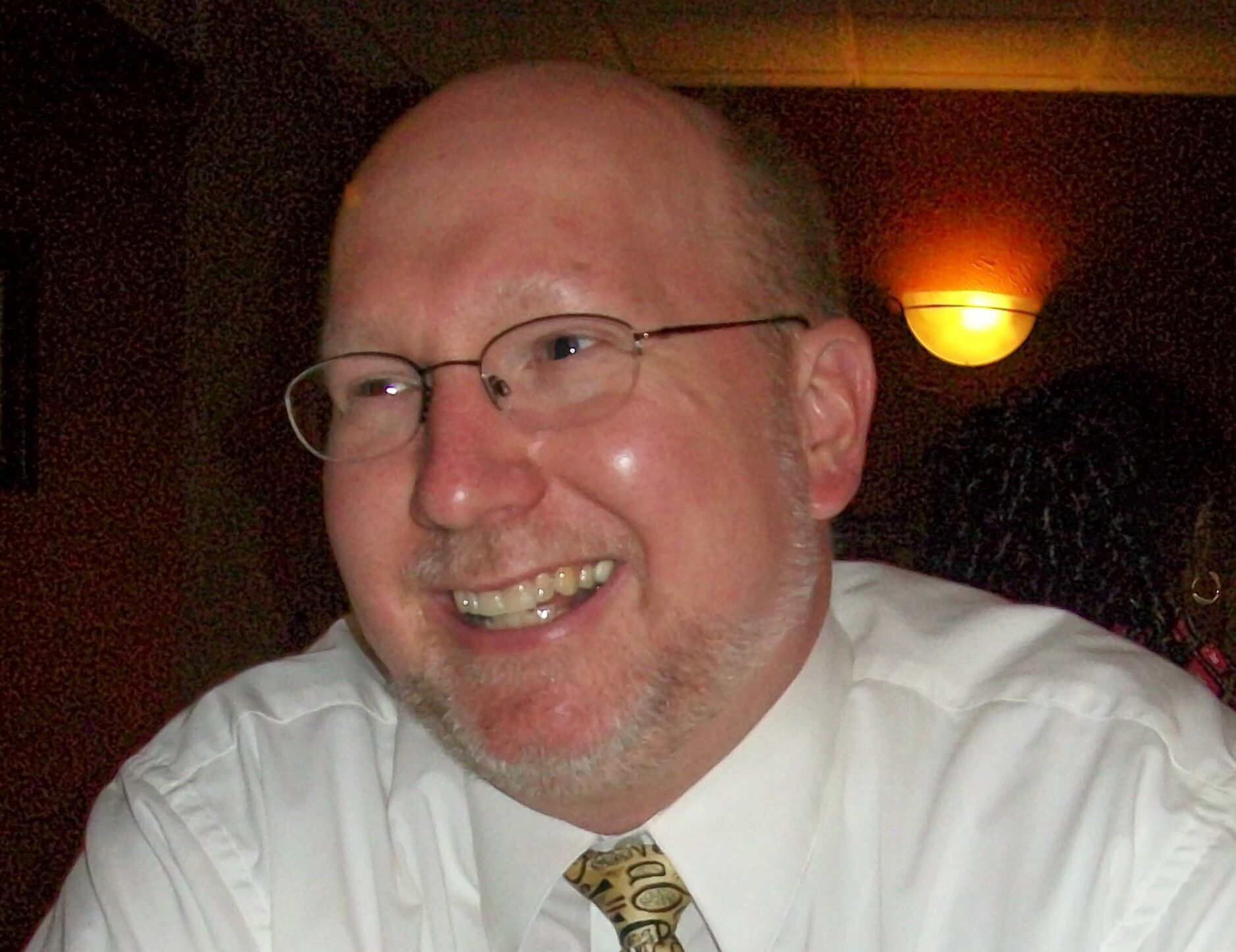
“Teenagers are more creative than adult experts. My job is simply to give them the right amount of knowledge, then get out of the way.”
When a teenager proposed capturing orbital space debris using the tentacle mechanism of a movie monster, Dr. Tony McCaffrey did not dismiss the idea. He refined it. Hidden inside the seemingly implausible suggestion was a working mechanical concept, one that a NASA aerospace engineer later called fantastic. That moment captures the core of what Dr. McCaffrey has spent his career proving: teenagers are not just capable of solving the world’s most serious problems. In many cases, they are better equipped to do so than the adult experts we have been waiting on.
Why Teens, and Why Now
Dr. McCaffrey’s Teens Solving Global Problems curriculum was born from four converging convictions. He had long suspected that teenagers possessed untapped creative capacity exceeding that of domain experts. He was deeply concerned about the mental health of a generation confronting climate change, AI disruption, uncertain employment, and environmental degradation. He believed that channeling that anxiety into purposeful problem-solving could be genuinely transformative. And he remembered, with considerable clarity, what it felt like to reach graduate school before anyone told him he was creative.
“In high school and college, they never gave us problems that did not already have solutions in the back of the book,” he reflects. “In graduate school, they did, and I solved them. That changed my life. I want to help teenagers discover their creative abilities much earlier.”
Results That Exceeded Expectations
His teen groups have solved three of the five global problems they attempted in a single year, including designs for space debris removal, flood protection systems, and healthier social media platforms. One submission is currently under evaluation by NASA. Dr. McCaffrey describes being “joyfully surprised” by the results, and his explanation for why teens outperform experts is grounded in cognitive science, not sentiment.
Adult experts, he argues, face three compounding disadvantages: they are past their creative prime, they are over-knowledged in ways that constrain novel thinking, and they are deeply familiar with every prior attempt to solve the problems they study, a phenomenon he calls design fixation. Teens, equipped with just enough foundational knowledge and none of the accumulated limitations, are structurally freer to innovate. His proposed model: teens innovate, adult experts refine, test, and implement the best ideas.
“Adult experts are not as creative. They are past their creative prime, over-knowledged, and too familiar with all the failed attempts. Teens have none of those limitations.”
The Science Behind the Method
Dr. McCaffrey’s interdisciplinary background, spanning a PhD in cognitive psychology, graduate training in AI, and work in computational complexity theory, provides the theoretical architecture beneath the curriculum. His Obscure Features Hypothesis holds that any innovative solution is built upon at least one rarely noticed feature of a problem. From that theory, he developed practical tools now used with students:
- Lateral Thinker: An app that searches patent databases and journals for solutions using synonym-expanded queries, cutting across disciplinary jargon to surface approaches from unrelated fields.
- Overlooked Features: An app that identifies the most commonly neglected feature categories for any given object, prompting designers to work from angles others consistently miss.
- BrainSwarming: A silent, visual group problem-solving method where participants build connected idea pathways from both goal and resource directions simultaneously, keeping all thinking visible and organized.
These tools address the most common barrier to creative thinking: functional fixedness, the tendency to see objects only in terms of their designed purpose. By training students to describe things generically rather than by function, Dr. McCaffrey opens up solution spaces that conventional thinking forecloses.
The Limits of Machine Creativity
Dr. McCaffrey’s 2017 proof in computational complexity theory established something significant: no machine can fully represent the features of any object, because the number of possible interactions between that object and all other objects, forces, energies, and conditions exceeds the number of atoms in the universe. A computer running since the Big Bang could not complete the calculation. David Cropley’s 2025 mathematical proof extended this finding, demonstrating that no large language model can exceed the creativity level of an average human being.
“Turn Angst Into Purpose: Teens Are the Innovators the World Has Been Waiting For”
For students, the implication is empowering: AI is a useful tool for knowledge retrieval and guided technique prompting, but it cannot replace the pre-verbal, image-and-feeling-based cognitive work that human innovators, including Einstein, have described as the origin of their most important ideas. Machines rearrange existing language and symbols. Humans access something deeper. Dr. McCaffrey builds that understanding directly into how he prepares students to work.
A Vision for What Comes Next
Dr. McCaffrey is writing a how-to book to enable schools everywhere to launch their own Teens Solving Global Problems programs, and he is actively supporting institutions ready to start. His long-term vision is a fundamental restructuring of how innovation is organized: not a passive waiting for credentialed experts to deliver solutions, but a model in which teen creativity drives discovery and adult expertise shapes its application.
“I want all tech companies to reach out to groups of teens to help solve the big problems,” he says. “That is the legacy I am hoping for.” For a generation confronting an uncertain future, it is a legacy that begins with a single reframe: turn your anxiety about the future into a purpose to change it. It is a blueprint.
“Teens Innovate. Experts Refine. The Future Gets Built.”