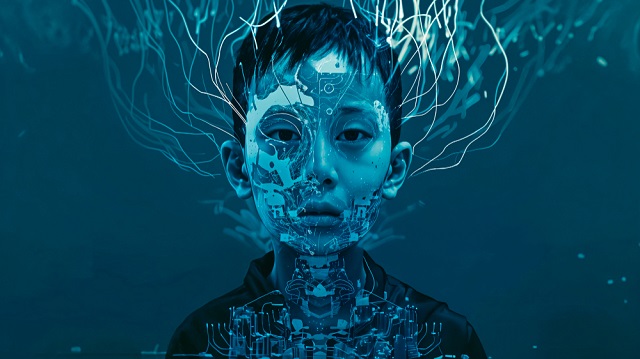
In the sprawling tech hubs of Shanghai and Singapore, where digital empires rise and fall within months, Loïck Tanguy discovered a fundamental truth that would reshape his entire approach to business: velocity without depth creates noise, but depth without velocity creates irrelevance. This revelation came during his transformative decade in Asia, a period that would crystallize his philosophy of marrying Eastern speed with Western strategic thinking.
Today, as he leads sales and marketing at Workait.com, Loïck stands at the forefront of a quiet revolution in artificial intelligence. But this isn’t just another story about AI disruption. It’s the journey of a strategist who learned to see technology not as a replacement for human capability, but as its greatest amplifier.
“My career journey has always been about where technology meets humanity,” Loïck reflects, his voice carrying the confidence of someone who has navigated both Asia’s breakneck innovation cycles and Europe’s methodical approach to sustainable growth. “What inspires me most is how people adapt, create, and thrive with these changes.”
This human-first philosophy drives everything Loïck does at Workait.com, where he’s building something unprecedented: an ecosystem where artificial intelligence amplifies human expertise rather than replacing it. Just as Airbnb shifted value back to homeowners, Workait.com aims to ensure that the human experts who design, train, and guide AI systems are the ones who benefit from the knowledge economy they create.
THE ASIAN ACCELERATION: LEARNING SPEED WITHOUT LOSING SUBSTANCE
Loïck’s Asian odyssey began over a decade ago, but its impact reverberates through every strategy he crafts today. In Europe, he had grown accustomed to structured processes and methodical development cycles. Asia shattered those assumptions with its relentless pace of innovation.
“In Shanghai or Singapore, if you don’t test fast, you miss the wave,” he explains. “Products and platforms rise and fall in months, not years. That pace trained me to think in terms of scalability from day one: every content strategy must be modular, localized, and capable of jumping borders quickly.”
But speed alone wasn’t the lesson. Asia taught him the art of contextualization, the understanding that successful global expansion requires more than translation. It demands cultural embedding. A marketing campaign in Bangkok might lean on community trust, while in Seoul, gamified experiences resonate more powerfully. This nuanced understanding of cultural adaptation would later prove invaluable as he worked across cutting-edge sectors like Web3, XR, AI, and Blockchain.
The return to Europe brought synthesis. “Asia taught me speed, Europe taught me depth. My approach is to combine both,” Loïck notes. This hybrid methodology now defines his strategic framework: the urgency to prototype and iterate quickly, balanced with the critical thinking and regulatory rigor that ensures long-term sustainability.
NAVIGATING THE HYPE CYCLE: FROM BUZZWORDS TO BREAKTHROUGH
In an industry notorious for chasing the latest technological trend, Loïck has developed a remarkably disciplined approach to evaluating emerging technologies. His methodology cuts through the noise with surgical precision, focusing on three critical filters that separate genuine innovation from mere novelty.
The first filter is utility over novelty. “New tech always comes wrapped in hype cycles. My role is to strip that away and ask: does this solve a recurring problem for businesses or audiences?” This practical approach has guided his work across XR implementations that actually improve training outcomes, blockchain applications that create verifiable trust, and AI systems that enhance decision-making without overwhelming users with complexity.
The second filter examines interoperability. Having witnessed countless promising technologies die in isolation, Loïck looks for solutions that can integrate seamlessly into existing ecosystems. “Emerging tech that operates in silos rarely survives. The real game-changer is when AI, XR, and Web3 work together.”
His third filter monitors adoption signals from the ground up. Are small and medium enterprises experimenting with it? Are creators adopting it without subsidies? These grassroots indicators often predict long-term viability better than corporate pronouncements or venture capital investments.
“The question isn’t whether a technology is new,” Loïck emphasizes. “The question is whether it’s useful, interoperable, and adoptable.”
REDEFINING AI ECONOMICS: THE WORKAIT.COM REVOLUTION
At Workait.com, Loïck is spearheading what may be the most significant philosophical shift in artificial intelligence since its mainstream adoption began. The platform creates AI-powered digital workers, but these aren’t simple chatbots or automated scripts. They’re context-aware collaborators that can adapt and learn over time, designed by domain experts to handle complex business tasks with nuance and intelligence.
What makes Workait.com revolutionary isn’t just its technical capabilities, but its economic philosophy. The platform operates on a human-first principle that ensures experts are rewarded for their knowledge, not overshadowed by the AI tools they create. “Don’t reward the tool, reward the talent. AI is just the vessel; the value comes from human expertise,” Loïck explains.
This philosophy addresses one of the most pressing concerns about AI adoption: the fear that technological advancement will devalue human contribution. Instead of competing with human intelligence, Workait.com’s AI workers are designed to amplify it, creating an ecosystem where expertise becomes more valuable, not less.
From a business perspective, this approach bridges SaaS economics with media strategy principles. Rather than simply selling features, the company tells the story of how AI workers create measurable impact while ensuring fair compensation for the human expertise behind them. It’s a model that combines subscription-based growth with storytelling-led adoption and human-first economics.
“Workait.com isn’t about replacing people with AI. It’s about making sure people get paid fairly for the knowledge they give to AI,” Loïck states, articulating a vision that could reshape how we think about artificial intelligence and human collaboration.
MASTERING SATURATED MARKETS: THE ART OF RELEVANT DIFFERENTIATION
Loïck’s experience leading marketing and sales across highly competitive industries like OTT, IPTV, and gaming has honed his ability to find space in seemingly overcrowded markets. His approach challenges the conventional wisdom that success in saturated markets comes from being the loudest voice.
Instead, he’s developed a three-pillar strategy built around relevance rather than reach. The first pillar focuses on community-first approaches, a strategy he pioneered in the gaming industry long before community management became a recognized discipline. By building loyal communities around content, he created organic growth engines that turned customers into ambassadors.
The second pillar leverages data-led differentiation. “Saturated markets punish assumptions,” he observes. His reliance on granular analytics helps identify underserved niches, optimal engagement windows, and unexplored geographic opportunities. The right insight can unlock competitive advantages that pure volume cannot match.
The third pillar innovates on experience rather than content alone. Whether exploring VR demonstrations in gaming, interactive features in OTT platforms, or localized recommendation engines in IPTV, Loïck understands that how people experience content can be as differentiating as the content itself.
“In crowded markets, the winners aren’t the loudest, they’re the most relevant,” he notes, summarizing a philosophy that has driven success across multiple industries.
DATA AS STORYTELLER: BEYOND DASHBOARDS TO INSIGHTS
For Loïck, data isn’t just measurement; it’s narrative archaeology. His approach to growth marketing automation goes beyond traditional analytics to uncover the stories hidden in user behavior, market trends, and engagement patterns. This perspective has shaped how he develops both inbound marketing campaigns and strategic business decisions.
He operates on three levels of data interpretation: descriptive analysis that reveals what happened, predictive modeling that forecasts likely outcomes, and prescriptive insights that guide optimal next actions. This layered approach transforms raw metrics into strategic intelligence.
At Workait.com, this data philosophy creates a virtuous cycle. The AI workers deployed for clients also power internal sales processes, helping qualify leads, personalize onboarding experiences, and optimize relationships with dormant accounts. Every campaign becomes an experiment that informs the next iteration, creating continuous improvement loops that compound over time.
“Data doesn’t replace intuition, it sharpens it,” Loïck explains, describing how quantitative insights enhance rather than override strategic thinking.
CULTURAL INTELLIGENCE IN A CONNECTED WORLD
Loïck’s international experience has revealed fascinating patterns in how different cultures consume and interact with digital content. These insights have become crucial as he navigates global markets and develops strategies that resonate across diverse audiences.
In Asia, mobile dominance creates a fundamentally different content ecosystem. Streaming, gaming, and social interactions often converge on single devices, demanding content that is snackable, shareable, and optimized for rapid consumption. Asian audiences also demonstrate higher tolerance for hybrid monetization models that combine advertisements, subscriptions, microtransactions, and gamification elements.
Western audiences, while increasingly mobile-first, maintain stronger multi-device consumption patterns and prefer clearer value exchanges between content providers and consumers. They tend to favor either subscription-based or advertising-supported models rather than complex hybrid approaches.
Perhaps most significantly, Loïck has observed different patterns of social influence. Asian audiences show greater responsiveness to collective trends and influencer ecosystems, while Western consumers place higher emphasis on individuality and niche community connections.
“In Asia, trends spread like wildfire. In the West, niches thrive like gardens. Both require different cultivation,” he notes, describing how these cultural insights inform everything from product development to marketing strategy.
At Workait.com, these observations shape how AI workers are localized not just linguistically but behaviorally, trained to respond appropriately to the cultural norms and communication styles of their target audiences.
THE INVISIBLE COLLABORATOR: AI’S NEXT EVOLUTION
Looking toward the next three to five years, Loïck envisions artificial intelligence evolving into what he calls an “invisible collaborator.” This represents a fundamental shift from current AI applications, which often announce their presence through interfaces and interactions, toward systems that enhance human capability so seamlessly that users barely notice the underlying complexity.
In content production, he sees AI reducing friction rather than replacing creativity. Editing, subtitling, translation, and preliminary storytelling drafts will become automated, freeing creators to focus on originality and strategic thinking. Personalization will evolve beyond simple recommendation algorithms to context-aware systems that consider mood, time of day, location, and even biometric signals in immersive environments.
User experience will shift toward anticipatory design, where platforms understand needs before users articulate them. The boundary between content consumption and service interaction will blur, creating more fluid and responsive digital experiences.
“The future of AI isn’t about replacing creativity, it’s about removing the friction so creativity can flow,” Loïck explains, describing a vision where technology amplifies human potential rather than competing with it.
PROVING IMPACT: THE EPRESSPACK TRANSFORMATION
When Loïck joined Epresspack, the company was operating in a traditional model that was rapidly becoming obsolete. Press releases were static PDFs, corporate communications followed predictable formats, and engagement was measured by distribution reach rather than actual audience interaction.
His leadership transformed this approach entirely. Working with major clients like BNP Paribas Real Estate and Sanofi, he spearheaded the transition from static press releases to dynamic, multimedia-rich digital newsrooms. These interactive content hubs were SEO-optimized, modular in design, and adaptable to multiple distribution channels.
The results were dramatic. For BNP Paribas Real Estate, page views multiplied by 300 and downloads increased eightfold within a single year. But the transformation went beyond metrics. Loïck had guided both his internal team and clients through a cultural shift that required them to reimagine how corporate content should travel in digital ecosystems.
“The challenge wasn’t technical,” he recalls. “It was convincing stakeholders to invest in what was then a radical departure from traditional PR practices.” The success of these initiatives established new industry standards and demonstrated how strategic leadership could drive both innovation and measurable business outcomes.
More recently, at Workait.com, he deployed AI workers for inbound customer qualification at a B2B SaaS client. The system engaged prospects in natural conversation, understood their context, and routed them to appropriate sales funnels. Conversion rates improved significantly, proving that thoughtfully implemented AI systems enhance rather than replace human judgment.
BUILDING TOMORROW’S GLOBAL LEADERS
For young professionals aspiring to build global careers in digital media strategy and business development, Loïck offers guidance shaped by his own journey across continents and industries. His advice cuts through conventional wisdom to focus on principles that remain relevant despite rapid technological change.
First, he encourages professionals to chase friction rather than hype. “Don’t get distracted by buzzwords; instead, find the real pain points companies or consumers face, and use technology to solve them.” This approach leads to sustainable career growth because it focuses on creating genuine value rather than riding temporary trends.
Second, he emphasizes the critical importance of cultural intelligence. Global careers thrive on empathy and adaptability, qualities that can only be developed through genuine cross-cultural immersion. Whether through international experience or participation in diverse teams, professionals must develop the ability to understand and navigate different cultural contexts.
Third, he advocates for relentless curiosity. “Technology changes weekly, so the only way to stay ahead is to experiment constantly.” This means launching projects, testing tools, engaging with users, and learning from both successes and failures. Continuous learning becomes a competitive advantage in rapidly evolving industries.
Finally, he stresses the importance of fearless collaboration. “The era of solo heroes is over. Ecosystems, partnerships, and shared innovation are where real growth happens.” At Workait.com, this collaborative philosophy extends to ensuring that human experts are fairly compensated for their contributions to AI development, creating sustainable innovation cycles that benefit all participants.
“Don’t chase hype, chase friction. Where there’s friction, there’s opportunity,” Loïck summarizes, offering a framework that transcends specific technologies or market conditions.
A VISION FOR HUMAN-FIRST INNOVATION
As artificial intelligence continues to evolve at an unprecedented pace, Loïck remains focused on a fundamental principle: the most advanced technology in the world is useless if it doesn’t make people’s lives better. This human-centric approach distinguishes his work from purely technical innovations and positions him as a thought leader who understands that sustainable technological progress must serve human flourishing.
At Workait.com, this philosophy translates into concrete systems that honor human potential while scaling innovation. Every AI worker is shaped by expert knowledge, and every deployment reinforces the value of human contribution to technological advancement. The platform’s success will be measured not just by efficiency gains or cost reductions, but by its ability to create fair compensation structures for the experts who make AI systems intelligent.
Looking ahead, Loïck envisions a future where technology and humanity evolve together, each amplifying the capabilities of the other. His work represents a bridge between the rapid innovation cycles of Asia and the thoughtful development approaches of Europe, between the promise of artificial intelligence and the irreplaceable value of human expertise.
“The future of work belongs to humans empowered by technology, not overshadowed by it,” he concludes, articulating a vision that could reshape not just businesses, but entire societies.
In an era of unprecedented technological change, leaders like Loïck Tanguy provide essential guidance on maintaining human values while embracing innovation. His example demonstrates that the most successful strategies don’t choose between technology and humanity, they find ways to make each more valuable through intelligent integration.