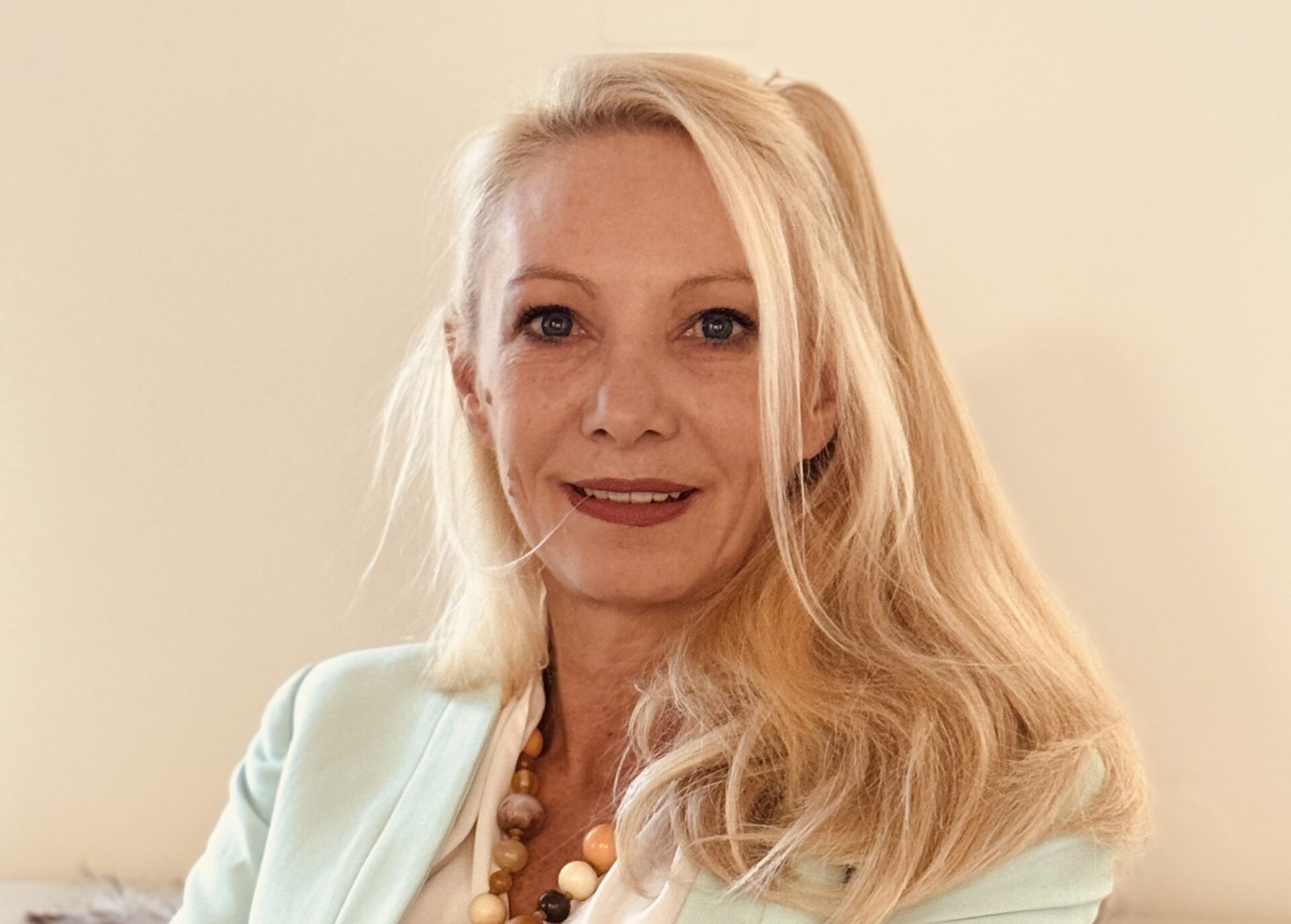
There are pivotal moments when a career doesn’t just shift direction but transforms entirely, revealing a deeper calling that was waiting beneath the surface. For Dr. Cindy Erasmus, that moment arrived in the quiet space between helping traumatic brain injury patients reclaim fragments of their lives and recognizing an untapped frontier of human capability. Where others saw the end of potential, she began to envision its beginning.
Her early career as a neuropsychologist focused on determining residual capability of persons with traumatic head injuries provided profound insights into the resilience of the human brain. The work was deeply rewarding, watching patients rebuild cognitive pathways and reclaim independence. Yet it was also emotionally taxing in ways that demanded reflection. “It was very rewarding to help patients reclaim parts of their life lost due to the injury however it was quite taxing emotionally,” she recalls. “I decided to switch things around and focus on capability of high potential persons and so the journey into human capital began.”
This wasn’t abandonment of her neuropsychological foundation but rather its evolution. The same neural pathways she studied in recovery became the roadmap for unlocking executive excellence. The brain’s remarkable plasticity that allowed trauma survivors to adapt became the framework for helping leaders navigate complexity, build resilience, and transform organizational cultures.
THE ARCHITECTURE OF POTENTIAL
Dr. Erasmus’s perspective on human potential is rooted in the profound complexity of neuroscience. “I am always struck by the capability and potential of the human brain,” she reflects. “Our capability is profound and almost incalculable. As they say, ‘more connections in the brain than stars in the sky.’”
This isn’t motivational rhetoric but scientific reality. The challenge, she explains, isn’t whether potential exists but how to extract it effectively. Everyone possesses strengths and development areas, and modern leaders bear the responsibility for recognizing and supporting both elements. The contemporary organization must view human potential as a vast repository encompassing cognitive, emotional, social and purpose-driven dimensions.
Her career developed over the next two decades in the corporate world before she made another transformative decision to begin consulting. This shift in October 2023 with the establishment of Cognitive Dimensions in Dubai opened doors to advising clients across all industries. “This provides me with the opportunity to advise many clients in all industries,” she notes. “It adds to the variety and broader sense of contribution.”
READING THE EXECUTIVE LANDSCAPE
From her vantage point working with C-suite leaders globally, Dr. Erasmus identifies three critical challenges defining contemporary executive leadership. The first centers on generational dynamics within aging organizations, compounded by fierce competition for analytical thinkers who also possess creative, innovative thinking and adaptability. “There is also a significant amount of competition for analytical thinking resources which also have the ability to think creatively, innovatively and show adaptability,” she observes.
The second challenge involves cultivating cultures of psychological safety where intelligent risk-taking and even failures become learning opportunities rather than career-limiting events. The third addresses succession planning amid multitudes of factors influencing talent attraction, development and retention.
These challenges emerge against a backdrop of revolutionary change in how organizations view human capital. Over the past decade, the field has undergone what Dr. Erasmus characterizes as revolution rather than rapid evolution. “Human capital has shifted from a cost center dealing with ‘personnel’ to a strategic partner with an equal seat at the table of executives,” she explains. The function has transformed from expense to revenue enabler, with HR information systems enabling data analytics and decisions driven by reliable information.
THE DIAGNOSTIC IMPERATIVE
Dr. Erasmus’s approach to unlocking executive potential begins with a fundamental principle borrowed from her neuropsychological training: measure first, then intervene. “In order to know what you are dealing with, you need data, you need to measure,” she states matter-of-factly.
She employs diagnostic and organizational development tools to establish baselines, from which information emerges to guide actionable interventions. Yet data alone proves insufficient. Conversations with relevant stakeholders provide critical context, sentiment and vision that numbers cannot capture. This dual approach of quantitative assessment and qualitative understanding forms the foundation of her methodology.
The question of balancing organizational goals against individual executive development dissolves under this framework. “These are not mutually exclusive,” Dr. Erasmus insists. “It is imperative that the goals be clear, that you are aware of the developmental needs of the executives and that you find the intersection between this that will derive benefit for both parties.”
Success lies in finding where organizational imperatives and individual growth paths converge, creating win-win scenarios that advance both agendas simultaneously. It returns, always, to data and conversations.
TRANSFORMATIVE VERSUS TRANSACTIONAL
What distinguishes truly transformative leaders from merely good ones? Dr. Erasmus points to qualities that extend beyond traditional management competencies. Transformative leaders inspire, develop, invest and cultivate environments allowing people to deploy their full capability. Trust, autonomy, emotional intelligence and the ability to create purpose and meaning in work emerge as key elements.
Emotional intelligence, far from being a “soft skill,” functions as a core leadership competency. “In essence EQ is the ‘how’ of leadership,” Dr. Erasmus explains. Emotional intelligence correlates directly with enhanced leadership and influence, superior decision-making, effective conflict resolution and negotiations, positive high-performance cultures, more effective communication, the ability to navigate change and uncertainty, and resilience and wellbeing.
She makes this concrete by building emotional intelligence into performance management systems, ensuring it gets measured, tracked and linked to rewards. What gets measured gets managed, and what gets rewarded gets repeated.
REWRITING THE RULES
Dr. Erasmus’s ability to shift leadership cultures manifests clearly in her work with a traditional law firm. Law firms typically operate through hierarchical structures with lockstep progression for talent. She took the partnership agreement and reconfigured it toward a new culture where not every partner served as a manager.
“Some senior partners are better with clients and the deals/structure than managing a pyramid of lawyers beneath them,” she recognized. To ensure high performance culture without negatively impacting partners’ participation percentages, she implemented project-based teaming where lawyers joined deals then returned to their original teams with strong leadership partners after transactions completed.
“It was a radical shift from traditional law firm structures and cultures,” she reflects. The change required courage to challenge conventions and the analytical rigor to demonstrate that alternative structures could deliver superior outcomes. It exemplified her philosophy that leadership approaches must be fit for purpose, with all human capital activities supporting that vision.
BRIDGING THE GAPS
The leadership pipelines Dr. Erasmus observes today contain both longstanding and emerging gaps driven by rapid technological development. The most prominent include the gap between expert and leader, between operational and strategic leadership, the human skill gap in emotional intelligence, the change leadership and agility gap, and the digital literacy gap.
Addressing these requires comprehensive strategies touching many processes and procedures. Fundamentally, solutions involve redefining leadership capability, proactively implementing development programs, institutionalizing coaching and mentoring, building feedback cultures and formalizing succession planning.
Traditional succession planning, she warns, can be biased and rely on informal networks, producing homogenous leadership teams lacking the cognitive diversity needed for innovation. This fails to reflect customer bases and society, limiting organizational perspective and credibility. Multiple HR practices must contribute to enabling cultures of diversity, equity and inclusion, from interview conduct to development approaches, policies requiring diverse candidate referrals, succession planning, performance appraisal systems and reward structures.
THE RESISTANCE REFRAME
When executives initially resist change or feedback, Dr. Erasmus employs a nuanced approach recognizing individual differences. “You need to approach each leader differently,” she emphasizes. “We are all different and that is the richness of diversity.”
Each leader possesses unique “levers,” motivational drivers that move them to action. She relies on objective, valid and reliable assessments to ground these conversations in data rather than opinion. “When you can reframe the change or feedback in accordance with their drivers, the message usually lands,” she explains.
This mirrors her broader philosophy about understanding motivational drivers across generations. First, leaders must know what these differences are. Once you understand what engages people, you gain insight into their effort and performance. Job security versus recognition, for instance, may drive different generational cohorts. Managers require agility and flexibility in their styles to extract the most from their teams.
THE DIGITAL IMPERATIVE
In a rapidly digitalizing world, leaders face a stark reality. Those lacking digital literacy cannot effectively sponsor technology-driven initiatives, assess tech-related risks, or make informed decisions about AI, data analytics and automation. They become bottlenecks to digital transformation.
Dr. Erasmus offers two paths: upskill in the area or leverage valuable institutional knowledge through redeployment to other roles. There is no third option of remaining digitally illiterate in leadership positions.
This connects to her broader conviction about continuous learning and upskilling as non-negotiable for leadership excellence. “I always tell people that everything they learn is one more bit of knowledge or one more skill that can never be taken away from them,” she states. She draws the parallel to medical professionals, noting that patients want doctors with the latest, most progressive knowledge for diagnosis and treatment. “It should be no different for any other profession, organization or leader.”
BUILDING RESILIENCE FROM THE INSIDE OUT
Dr. Erasmus’s approach to leader resilience and wellbeing begins with organizational culture. First and foremost, environments of psychological safety must exist. She strongly advocates measuring this element along with mental and physical wellness in organizations. When problem areas get identified, strategies can be implemented that build resilience.
Her advice to senior leaders remains consistent: measure what you have first, then build the cultural change initiatives necessary to ensure resilience becomes a core competency in every employee. This data-driven, systematic approach to wellbeing reflects her neuroscientific background where diagnosis precedes treatment.
The shift to remote and hybrid work has required leadership evolution, though Dr. Erasmus notes some unfortunate regression toward full-time office work. While benefits of physical togetherness exist, she believes the hybrid model better suits engagement, flexibility and performance. It does require a leadership shift, and at the heart sits trust.
“Leadership in a remote and hybrid world is less about command and control, and more about communication, connection, and context,” she observes. The most successful leaders will be those who can build and maintain trust without physical proximity, foster strong inclusive cultures across digital and physical spaces, empower teams with clarity and autonomy, and focus relentlessly on outcomes.
THE TRIAD OF HIGH PERFORMANCE
When developing high-performing leadership teams, Dr. Erasmus emphasizes three foundational principles. First, unwavering alignment on the “what” and “how” to achieve strategic goals. Second, a culture of constructive conflict and psychological safety where dissent gets welcomed as path to better solutions. Third, accountability and trust as key drivers ensuring commitments translate to action.
These principles become particularly crucial as organizations navigate the complexity ahead. Looking toward the next decade, she identifies critical leadership skills including navigating complexity and change, mastering human and ethical leadership, leveraging technology and new ways of working, creating agile but human-centric leadership, and inclusive leadership with cultural fluency.
While some variations exist across industries and geographies, these capabilities form the foundation of effective leadership in an increasingly interconnected, rapidly evolving global landscape.
THE WHISPER THAT CHANGES WORLDS
Dr. Erasmus’s message to aspiring leaders carries the weight of her journey from neuropsychological clinics to executive boardrooms, from healing trauma to unlocking potential. Her words deserve to be heard in full:
“Remember, the greatest global changes never started with a roar in a crowded room. They began as a whisper in a single heart, a stubborn, unwavering belief that things can be better. They whispered to a young teacher in a rural classroom, to an engineer sketching a solution on a napkin, to a founder believing a small team could change an entire industry. That whisper is your first and most powerful tool. Nurture it.”
She continues: “Our impact will not be measured by the title you hold, but by the lives you elevate. It won’t be found in a single grand gesture, but in the relentless courage to take the next right step, especially when it’s hard. So, lead from a place of service, not status. Build bridges, not walls. And never, ever underestimate the power of a small, dedicated group of people to change the world. In fact, it’s the only thing that ever has.”
Her final exhortation carries urgency tempered with encouragement: “The world is waiting for your version of brave. Start where you are. Use what you have. Begin.”
A LEGACY BEING WRITTEN
Dr. Cindy Erasmus represents a new generation of leadership advisors who ground their practice in rigorous science while never losing sight of human potential’s profound mystery. Her journey from healing broken brains to unleashing extraordinary capability demonstrates that the most powerful transformations often emerge from unexpected transitions.
Through Cognitive Dimensions, she continues expanding her impact across industries and geographies, bringing neuroscience-informed insights to executive development, organizational transformation and leadership culture. Her insistence on data-driven approaches combined with deep stakeholder engagement creates sustainable change that outlasts consulting engagements.
The brain contains more connections than stars in the sky. Within every executive, every organization, every team lies potential waiting to be extracted and directed toward meaningful impact. Dr. Erasmus has dedicated her career to bridging the gap between that potential and its realization, one leader at a time, one conversation at a time, one breakthrough at a time.
The whisper she heard years ago, urging her to shift from healing trauma to unleashing capability, has become a roar transforming how organizations develop their most critical asset: their people. And the transformation has only begun.