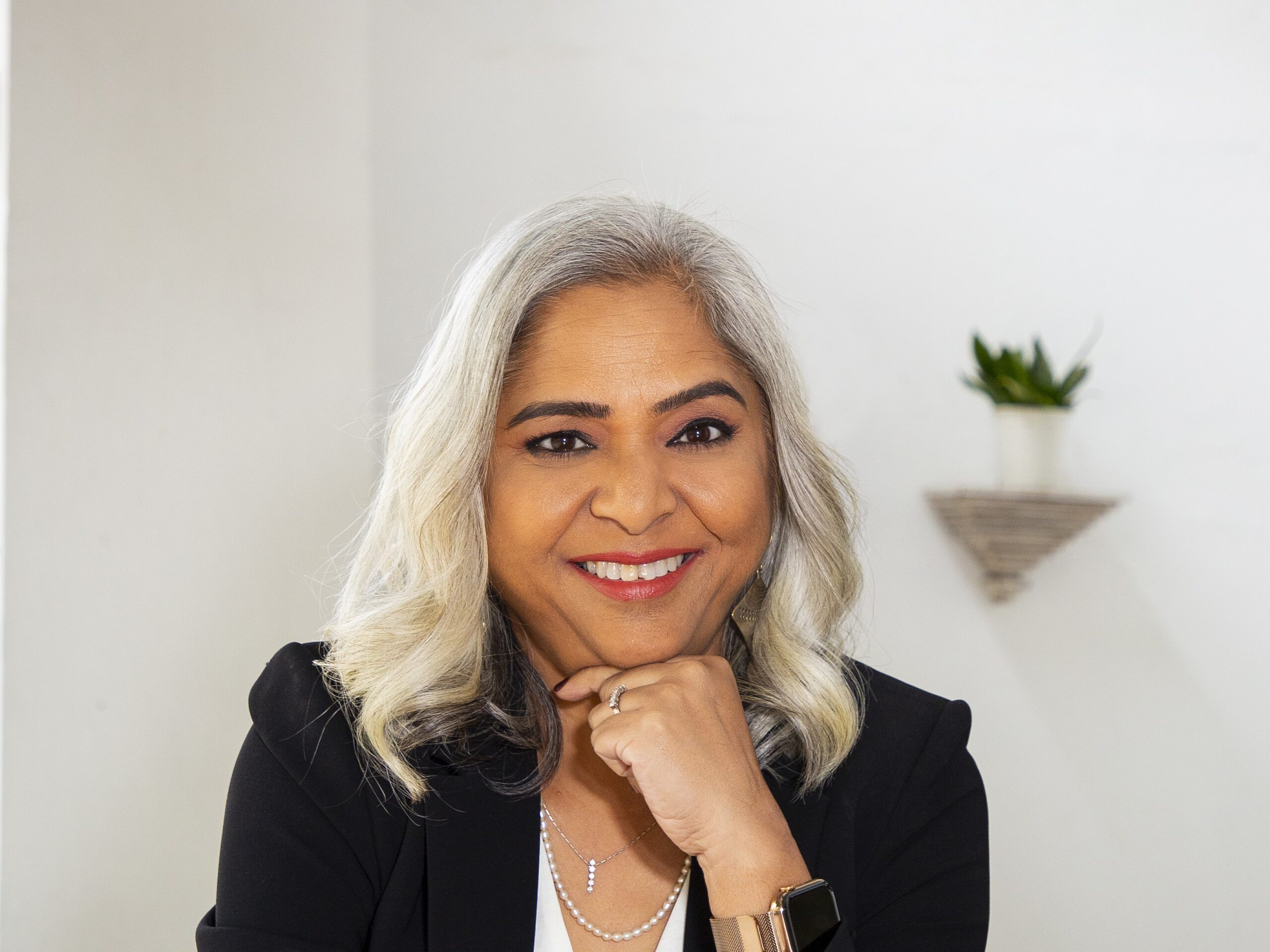
In a world where leadership often means navigating complexity across cultures, time zones, and organizational challenges, some leaders stand out for their ability to adapt, connect, and transform. At this critical intersection of coaching, emotional intelligence, and cross-cultural communication stands a remarkable pioneer who has built her career on helping others lead more effectively.
Asha Sridhar has never approached leadership development conventionally. She doesn’t simply apply existing frameworks—she integrates, adapts, and personalizes them to meet the unique needs of each leader and organization she works with. From IT training to global leadership development, from Hong Kong to multinational corporations across Asia, she has consistently pushed boundaries to forge connections between theory and practice, between cultural understanding and business results.
From IT Trainer to Global Leadership Coach

After beginning her career as an IT trainer, Asha Sridhar has established herself as a leading expert in leadership development and coaching. As Director of Active Communication Pvt. Ltd. in Hong Kong, she embodies the rare combination of business acumen, cross-cultural expertise, and coaching mastery.
Asha’s journey began with a natural affinity for learning and teaching. “I have always been inspired by learning. As a young teen, I used to tutor younger children. My first job was as an IT trainer,” she reflects. After nine years in this role, she felt at a dead end and sought something different—an opportunity that came in the form of designing and delivering communication skills workshops.
This pivot led to her first leadership training course—SLII®—a moment of professional clarity. “This is when I realized that I had found my true north,” Asha shares. The transition to coaching came naturally as training participants returned seeking additional support, prompting her to pursue certifications as a Master Coach in NLP and as a Stakeholder Centered Coach under Marshall Goldsmith’s methodology.
Her career trajectory took a significant turn when she joined Tesco PLC in their India operations. Though officially designated as a “Training Manager,” a supportive leader allowed her to expand her horizons. “I got the opportunity to work on multiple projects that exposed me to different aspects of Human Resources,” she explains. “I worked on career planning projects—defining career paths for specialists and generalists, business continuity planning, and even on a massive change project.”
This experience led to another pivotal moment: relocating to Hong Kong to work with Tesco’s global supply chain operations. “I was based in HK, but my work took me to countries like China, Turkey, Sri Lanka, Bangladesh, and Egypt. This cross-culture exposure helped me become more flexible and agile. It helped me develop my global leadership canvas and become a much more effective trainer, coach, and leader.”
When the founder of Active Communication, MJ Jennings, decided to pursue a different life journey, Asha saw an opportunity to build on their shared values and approaches. “Having been a client of Active Communication and then an associate, I knew that there were synergies between our beliefs and ways of working,” she explains. “I acquired Active Communication as I felt this was a natural next step in my professional life.”
Transformative Philosophy to Leadership Development
The transition from managing to leading represents a fundamental shift in Asha’s leadership development philosophy. “Most business leaders begin life as managers, and a lot of them continue to remain managers,” she observes. “Managing is what needs to be accomplished; leadership is how we achieve them. Leadership is how we build the people around us, the impact we have on others through our behaviors and actions.”
For Asha, leadership transformation begins with self-awareness. “When one is unconscious of their responsibility for how they think, feel, and behave, they are not being good leaders. Self-awareness is therefore key to start transforming into an effective leader.”
This insight guides her approach to coaching for behavioral change, which starts by exploring the reasons behind current behaviors. “Behavioral change happens only when the individual understands the need for making the change and completely commits to it. It requires a shift in mindset and beliefs,” she explains.
She illustrates this approach with a coaching example: “I was coaching a senior leader for whom it was very important to be seen as a ‘nice guy’ by his team. He went out of his way to help his stakeholders with their work. He did not have firm boundaries for himself—he was extremely flexible with them.”
When this leader encountered a new stakeholder who didn’t respond well to this approach, he felt disrespected and taken advantage of. “Keeping the goal of flexibility in mind, we worked on building his skills to give feedback and draw and enforce personal boundaries for himself, which helped him to build a more mutually respectful relationship with his stakeholder.”
Neuro-Linguistic Programming (NLP) serves as a powerful tool in Asha’s coaching methodology. “NLP has helped me to articulate better the cause-effect equation with my coaching clients. I also use NLP to help my clients elicit their values and build strategies that incorporate those values into their leadership,” she explains.
Values integration forms a cornerstone of her development approach. She often facilitates Blanchard’s Leadership Point of View process, which “begins with eliciting our values. It then goes on to integrating those values into our leadership point of view and helps leaders articulate this point of view. It is a powerful interaction, one that I would strongly recommend to aspiring and experienced leaders.”
Leading Through Complexity and Change
In a world characterized by unprecedented levels of volatility and uncertainty, Asha thrives by maintaining resilience and open communication. “Change is never easy, and change is constant,” she acknowledges. “Change requires a high level of mental toughness, especially as leaders, when we are ourselves dealing with a lot of unknowns, dealing with our own fears and demons, and at the same time, leading people who are battling their own fears and demons.”
Her approach during organizational transformations prioritizes business goals as the north star that guides people strategies. “I believe that if we have clarity on these goals, other strategies will fall into place,” she explains. “When I headed talent and organization design, my focus was on the business goals, the longer-term business strategy, and most importantly, the business values.”
This business-centered approach facilitates difficult conversations about talent development, promotions, and high-potential identification. “Focusing on business goals also helped us to get more buy-in from business leaders about their own time investment in coaching and mentoring future leaders,” she notes.
Bridging Cultural Divides Through Emotional Intelligence
Having worked across more than ten nationalities throughout her career, Asha has identified common cross-cultural leadership challenges: communication difficulties, judgment based on personal biases, and actions driven by preconceived notions.
Her advice to leaders navigating multicultural teams reflects her nuanced understanding of cultural complexity: “Use culture as a foundation, not as a standard. While it is important to know the broad strokes of a culture, it would be naïve to base your actions completely on the generalized information available about a national culture.”
She emphasizes the importance of individualized approaches: “Remember that people are different—culture is multi-layered, and no two people are going to have the same wants, interests, and needs. Invest time in getting to know your team members—what does trust and respect look like for them.”
Asha recommends using the leadership skills of LITE (Listen, Inquire, Tell your truth, Express Confidence) to build strong relationships. “When faced with a reaction that is different to how you would react in a situation, respond with empathy, rather than judgment,” she advises. “Lastly, recognize your own unconscious biases regarding culture, and do not use culture as an excuse for your decisions.”
Measurable Impact Through Coaching
The impact of Asha’s coaching extends beyond individual transformation to organizational culture change. “Senior leaders that I have coached have shared success stories of how they have been able to bring about a change in their organizational culture,” she reports. “They have seen a significant change in their own resilience, how they handle frustrations, and have difficult conversations.”
These improvements cascade through organizations: “As a result, they see their own teams becoming more resilient, and they say they have been able to develop more leaders around them. Knowing and sharing their Leadership Point of View has also helped them build stronger teams. They feel they are more empathetic and compassionate without losing sight of their goals.”
One particularly striking success story involved a senior woman leader who was technically successful but interpersonally challenged. “She was seen as tough, uncompromising, and results-driven. At the same time, she was feared by her people. She was given to bouts of anger, and her emotional intelligence was seen as negligible. The staff turnover on her team was high.”
Through an anonymous interview-based 360-degree feedback process and coaching focused on the four pillars of emotional intelligence, this leader transformed her approach while maintaining her results orientation. “When she started to see how her team’s responses to her changed, and rapport started getting built, the journey became easier. Staff turnover on her team has definitely gone down. An internal anonymous 360 also showed a huge improvement in how she was being perceived.”
Personal Leadership Evolution
Asha’s coaching expertise is informed by her own leadership journey, which began with significant limitations. “My first time as a manager was characterized by rigidity. I used just one style in all my interactions with my team. I did not know how to flexibly adapt my style to suit different situations. I did not have the capability to manage my emotions, and I would have angry outbursts. I can—in all honesty—say that I was a poor leader.”
Over twenty years of professional development have transformed her approach: “I have consistently applied my learnings to my personal leadership style. I am now using my natural strengths better—I listen to learn—to understand the other person’s perspective rather than confirm my biases. I can better regulate my emotions, and often, I am able to balance emotion and rational when making decisions.”
Values continue to guide her leadership: “I have always been values-driven, and I have valued fairness and freedom of choices above everything. I know I still have a lot of edges, which I am continuously working on.”
Vision for Future Leadership
Looking ahead, Asha sees leadership evolving to meet increasingly complex global challenges. “If Covid taught us one thing, it is that the world is more interconnected than we thought. VUCA is a thing of the past. What we are seeing today is something much more than that.”
She believes modern complexity demands new leadership capabilities: “Leadership in this new world needs to be highly adaptable, highly resilient, ready to dive in with both feet without knowing exactly what one is diving into, listen, stay curious, and stay hungry for knowledge. A successful leader is one who can be a consummate chess player.”
Her advice to every aspiring leader is succinct but profound: “Choose to create leaders, not followers.”
For Asha, success transcends conventional metrics: “Success for me is not about riches or fame. I also don’t view success as the end-game—it is about continuously living as per my values, doing what feels ‘right’ for me. Success is about living and making intentional choices.”
She emphasizes balance as essential to meaningful achievement: “Success is when I can balance the needs of my family, friends, colleagues, and clients with my own needs and do it without feeling like I have compromised. I strongly believe that success is not permanent and failure is not fatal.”
Through her work at Active Communication, Asha Sridhar continues to build bridges between cultures, between emotional intelligence and business results, and between present challenges and future leadership needs—helping leaders navigate complexity with greater clarity, confidence, and compassion.