FROM ENCYCLOPEDIA PAGES TO EDUCATIONAL STAGES
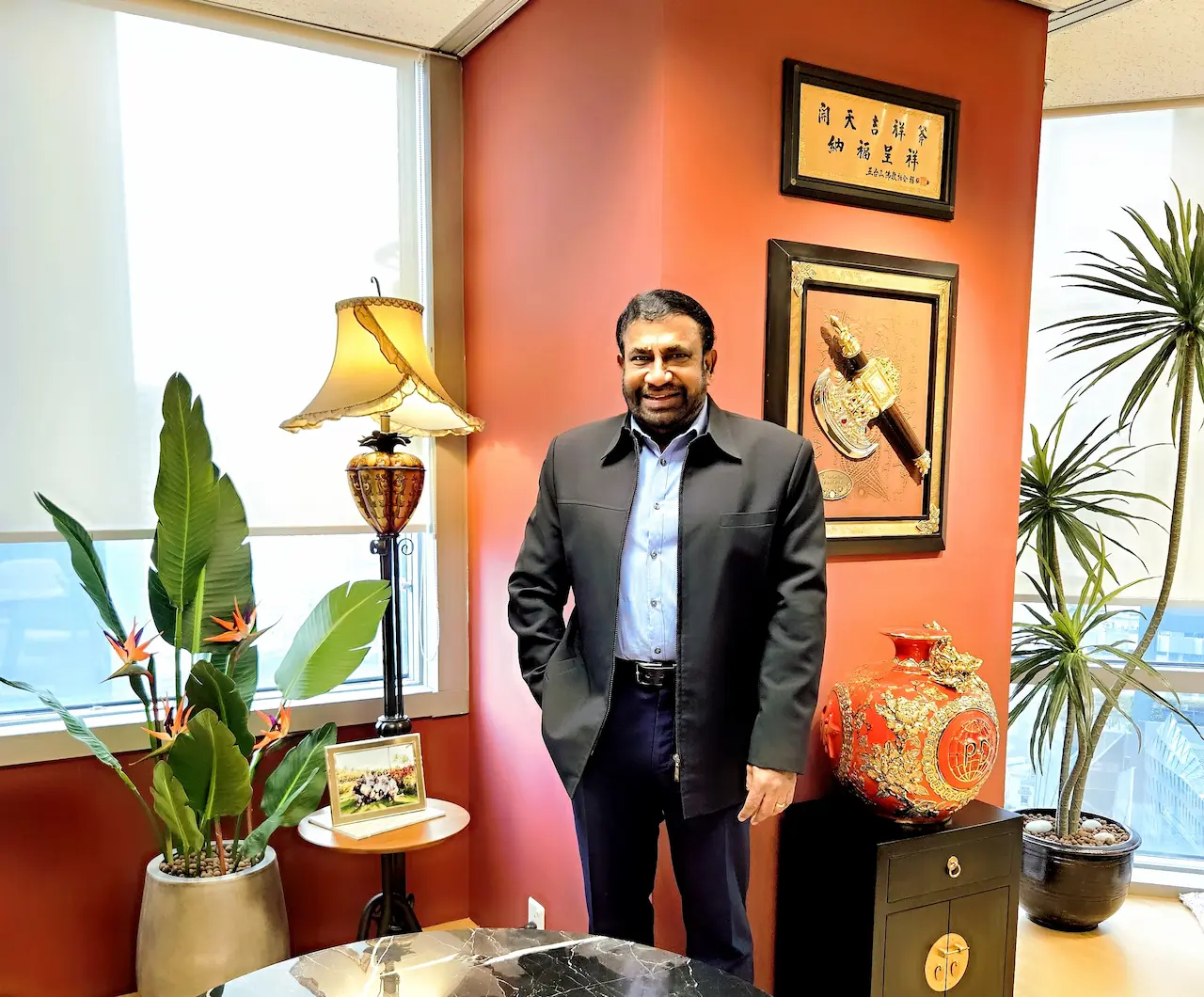
In the bustling educational landscape of Singapore in the late 1980s, a gap existed between parents’ aspirations for quality early childhood education and what was available. One man saw this opportunity not just as a business venture but as a mission to transform how children learn globally. Dr. T Chandroo, now Chairman and CEO of Modern Montessori International (MMI) Group, has built an educational empire that spans 15 countries across three continents since the organization’s establishment in 1989.
What began as a master franchise agreement with a UK company has evolved into a global education giant under Dr. Chandroo’s leadership. His journey into Montessori education came through an unexpected route—selling Encyclopedia Britannica and Sesame Street products in the 1980s. This early exposure to childhood education revealed the significant disparity between demand and supply in quality early education options.
“I fell in love with Montessori education,” Dr. Chandroo explains about his research into various early childhood methodologies. “It is a method that taps on a child’s natural inclination and promotes long-lasting impacts on his/her development. A child can develop freely in the Montessori world without any kind of undue pressure from our society.”
THE ALCHEMY OF EDUCATION: TRANSFORMING TRADITIONAL MONTESSORI FOR THE 21ST CENTURY
At the heart of MMI’s success lies the core Montessori philosophy that every child is unique. “We should not adopt a cookie-cutter approach in children’s education,” Dr. Chandroo emphasizes. “We should tailor our approach to suit the child to help maximize his/her potential.”
What makes MMI’s approach distinctive is how it blends traditional Montessori methods with contemporary elements. The organization has modernized the Montessori framework by incorporating contemporary music, performing arts, modern art, sports, social norms, diverse global cultures, and current topics like climate change.
“Our approach to Montessori education is vibrant and up-to-date,” Dr. Chandroo notes. “It makes the learning of our children relevant to the environment that they live in.”
This innovative approach ensures MMI graduates aren’t just academically prepared but globally aware and culturally sensitive—critical qualities in our interconnected world.
BEYOND THE CLASSROOM: NURTURING MINDS AND HEARTS
MMI’s approach transcends traditional academic boundaries. The organization has recognized the increasing prevalence of autism and other mental health challenges in today’s children. In response, they have incorporated mental wellness programs even for neurotypical children and train their teachers to observe and address various developmental needs.
This holistic approach sets MMI apart in an educational landscape often focused solely on academic achievements. By prioritizing both cognitive development and mental wellness, MMI prepares children not just for academic success but for life’s broader challenges.
“The other emphasis of our education is about mental wellness of our children,” Dr. Chandroo points out. “We see more cases of autism and other forms of mental deficiencies in today’s children. We train our teachers how to observe and deal with such cases.”
THE FAIRNESS DOCTRINE: BALANCING THE SCALES OF LEADERSHIP
Managing a global organization with numerous stakeholders—partners, franchisees, investors, management, employees, and customers—requires a delicate balancing act. Dr. Chandroo’s leadership is guided by one overriding principle: fairness.
“Employees should receive attractive but fair compensation commensurate with their expertise and experience. Investors should receive a fair return, in the context of their investment environment. Customers (parents) should receive quality education for their child but they should not dictate terms and be abided by our rules and regulations,” he explains.
This fairness principle has allowed MMI to maintain relationships with diverse stakeholders across multiple countries, cultures, and business environments. Dr. Chandroo’s experience as the Immediate Past Chairman of the Singapore Indian Chamber of Commerce & Industry further shaped his approach to business leadership, providing insights into the minds of other successful entrepreneurs and giving him a “creative edge” in managing his organization.
CROSSING BORDERS, BRIDGING CULTURES: THE GLOBAL EXPANSION SAGA
Operating across 15 countries presents unique challenges, particularly in navigating local regulations and cultural norms. Dr. Chandroo acknowledges that while MMI’s programs are well-received globally—as most parents desire to see their children develop naturally and at their own pace—the main challenges come from external factors.
“In setting up and running a school in a foreign country, we need to comply with a multitude of laws pertaining to investment, accounting, profit repatriation, land use, education permits, fire permits, teaching of local curriculum, enforced local shareholding, appointment of local representatives, etc.,” he elaborates.
There’s no one-size-fits-all approach to overcoming these challenges, but Dr. Chandroo emphasizes that strong local connections help navigate complex regulatory landscapes. MMI also ensures cultural sensitivity by consulting with locals to avoid cultural missteps, particularly in areas like respect for elders and festival celebrations.
SEEDS OF SUCCESS: FLOURISHING IN GLOBAL SOIL
MMI’s impact is evident in its success stories across different regions. In Vietnam, where MMI established a presence in 2015 in Binh Duong province, they have become “the undisputed top kindergarten” in the region. Their graduates stand out in both academic studies and extracurricular activities.
Beyond academics, MMI engages with local communities. In Vietnam, they run an annual Christmas Charity Programme that raises funds for various causes, receiving coverage in local media and raising awareness about underprivileged groups.
The organization has also made significant inroads in markets beyond Asia, including Egypt, Kenya, Nigeria, and Cyprus, where their teacher training programs have been particularly well-received, producing skilled Montessori educators who contribute to children’s education in their communities.
THE TEACHER ARCHITECTS: BUILDING EDUCATIONAL FOUNDATIONS
A critical component of MMI’s success and global impact is its comprehensive teacher training program. Dr. Chandroo recognizes that implementing effective Montessori education requires teachers skilled in its delivery. MMI sends trainers from the UK and Singapore to regional schools to prepare teachers for proper implementation of Montessori methods.
The program is also offered to external candidates aspiring to become qualified Montessori teachers. The comprehensive nature of MMI’s training has made its graduates sought after worldwide.
Success stories from these programs abound. Marianne Bourke, who completed MMI’s teacher training, now serves as the Director of their London office, overseeing international teacher training and pre-school operations in the UK. Vicky Peng, a 20-year veteran who graduated from the training program, travels to regional training schools as a lecturer and serves as a Curriculum Designer. Bui Quynh from Vietnam, who studied the Montessori program in 2015, progressed from teacher to trainer.
WEATHERING THE STORM: LEADERSHIP IN THE EYE OF THE PANDEMIC
The COVID-19 pandemic presented unprecedented challenges to educational institutions worldwide, and MMI was no exception. Schools in some countries were shut down for up to two years, while in others, parents were reluctant to send their children to school despite institutions remaining open.
This crisis forced difficult decisions, including retrenchment, enforced no-pay leave, and temporary salary reductions. Dr. Chandroo reflects, “Through this experience, I realized that in uncertain times, people crave strong and decisive leadership.”
The organization developed country-specific plans and communicated clearly that everyone needed to contribute to keeping the company afloat. Dr. Chandroo was surprised by the level of support from his team, and eventually, MMI weathered the storm and returned to normal operations.
This experience highlights the importance of adaptable leadership during crises—a quality that has served Dr. Chandroo well throughout his career.
CRAFTING TOMORROW’S LEADERS: THE MENTORSHIP BLUEPRINT
Dr. Chandroo’s approach to developing future leaders within MMI is systematic and hands-on. Once potential leaders are identified, they rotate through different departments, portfolios, and countries to hone their leadership skills. He personally mentors promising individuals, placing them “directly under my wings to learn my leadership style.”
This mentorship approach ensures continuity of MMI’s mission and values as the organization continues to grow. Dr. Chandroo believes that leading a global team requires “a combination of strong leadership, vision, creativity, and adaptability.”
He emphasizes that strong leadership is particularly important when implementing management practices from headquarters, as resistance often emerges. A strong leader can effectively explain and convince local management to embrace new approaches wholeheartedly.
PIXELS AND PEDAGOGIES: TECHNOLOGY’S ROLE IN MONTESSORI’S FUTURE
Despite rapid technological advancement, Dr. Chandroo maintains that technology will not replace teachers in early childhood education. “Children need loving and caring teachers for their optimal development—in cognitive, physical, and behavioral development,” he asserts.
However, MMI does leverage technology for content delivery, using graphics and videos to enhance educational experiences, such as exploring the solar system. This balanced approach acknowledges both the irreplaceable human element in early education and the benefits technology can bring to the learning environment.
CHARTING NEW HORIZONS: THE NEXT DECADE OF MMI
Looking ahead, Dr. Chandroo has ambitious plans for MMI’s future, focusing on both geographic and product expansion. He’s targeting Central Asia, particularly Kazakhstan and Uzbekistan, which have experienced strong economic growth in recent years. By establishing a presence early, MMI aims to become a leader before other international schools enter these markets.
For product expansion, Dr. Chandroo is exploring K-12 education in current markets like Vietnam and Indonesia, where demand for international schools is robust. He envisions being a pioneer in bringing Montessori K-12 education to Asia.
To fund these expansions, he’s considering listing MMI on the Singapore or London Stock Exchange within the next 5-10 years—a move that would mark a significant milestone in the organization’s evolution from a single master franchise to a publicly traded global education provider.
THE EDUCATIONAL TAPESTRY: WEAVING A LEGACY OF TRANSFORMATION
Dr. Chandroo hopes to be remembered as “the leader that developed the best education model to benefit all children in the world.” This vision drives his continued investment in research and development, particularly in special needs education. “I believe that all children are entitled to good education, and I hope to contribute my part,” he states.
His commitment to making Montessori training accessible to as many countries as possible reflects his understanding that quality teachers are the backbone of educational expansion. By focusing on both geographic reach and teacher development, MMI is positioned to continue influencing early childhood education globally for generations to come.
In a world where education often prioritizes standardized academic achievements, Dr. Chandroo and MMI offer a different perspective—one that values each child’s unique development path and prepares them not just academically but holistically for life’s challenges. As MMI continues to expand its global footprint, this philosophy will touch the lives of countless more children across diverse cultures and communities, potentially reshaping the future of early childhood education worldwide.
Every child is unique, and their education should reflect that uniqueness